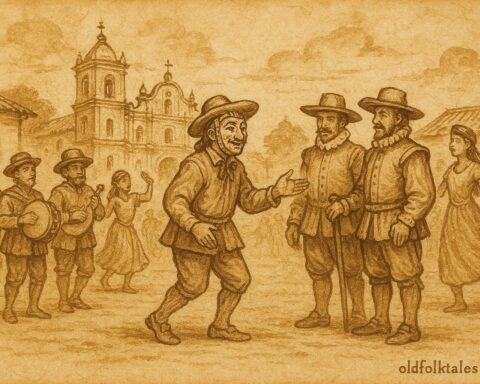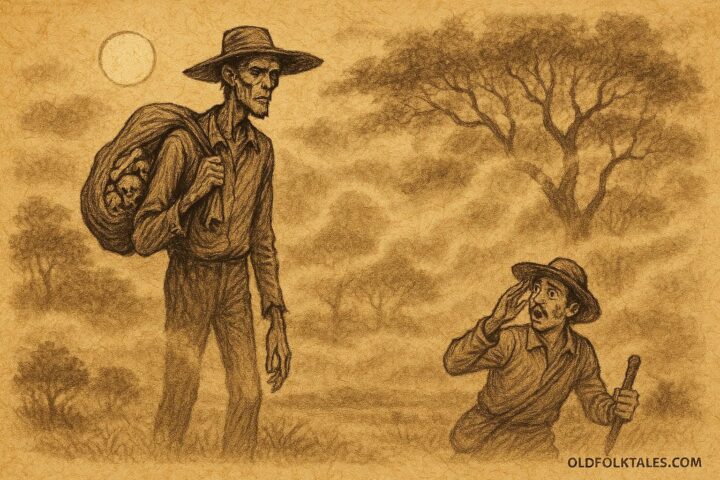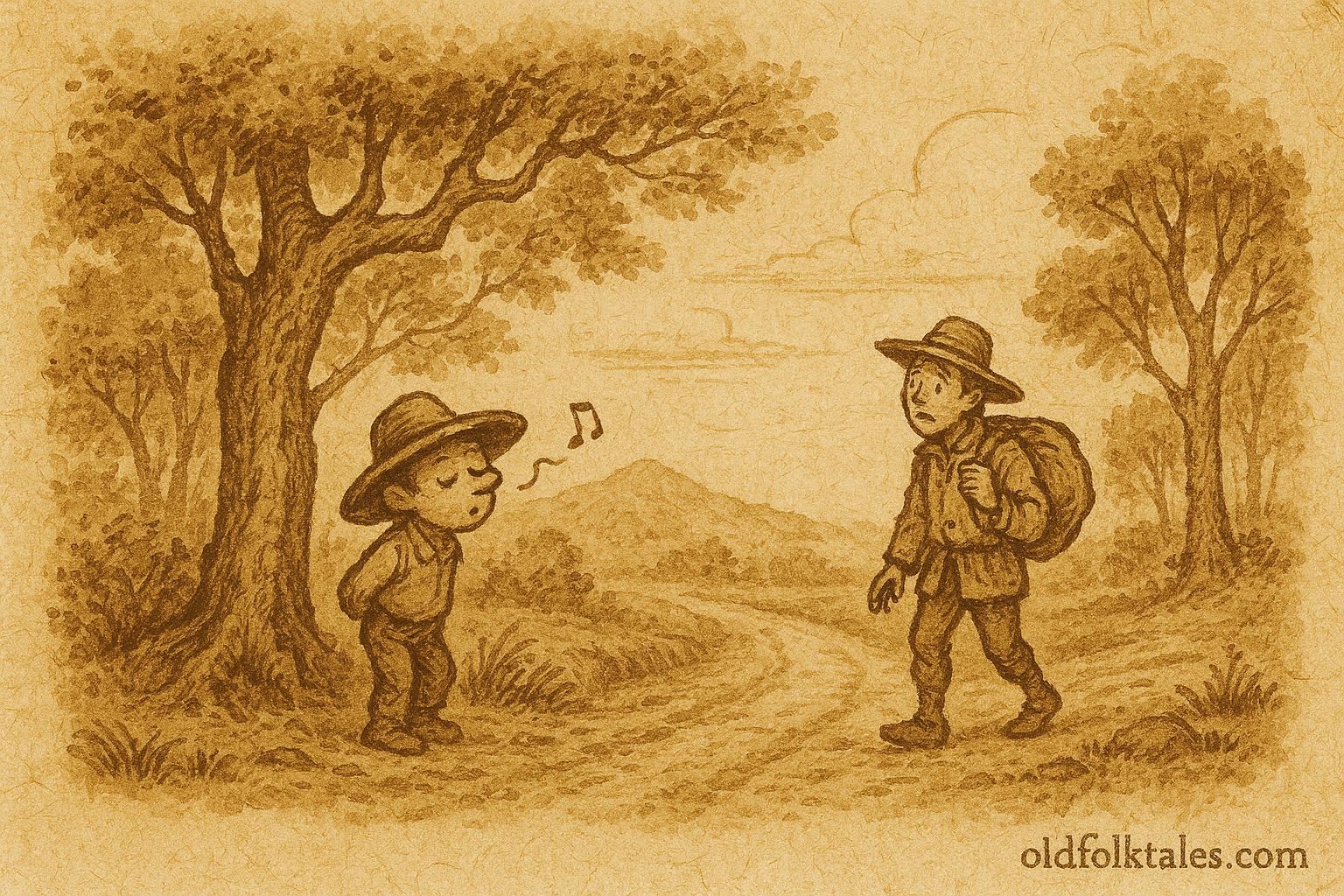
Duende is the name travelers whisper along the old Camino Real, the colonial road that once carried traders, messengers, and families across the heart of Nicaragua. Long before paved highways existed, this road wound through forests, fields, and villages, and it was here that stories of El Duende took root. To walk the Camino Real without caution was to risk crossing paths with the small, mischievous being said to guard its forgotten stretches.
El Duende is described as short in stature, quick in movement, and clever beyond measure. He wears a wide-brimmed hat pulled low over his face, hiding his features in shadow. Those who claim to have seen him never agree on his expression, only that his presence feels unsettling. He announces himself not with words, but with a soft, lilting whistle that drifts through the trees and along the road, sounding close even when no one is in sight.
Travelers who respond to the whistle often regret it. The moment they turn toward the sound, the road seems to shift. Paths that once appeared straight begin to twist. Landmarks vanish. Hours pass, yet no progress is made. People walk until their legs ache, only to find themselves standing where they began. It is said that the Duende delights in confusion, feeding on the panic and frustration of those who lose their way.
Children are especially vulnerable to the Duende’s tricks. In rural communities, elders warn the young never to follow strange sounds from the forest. The Duende is known to hide small objects, tangle hair while children sleep, and leave tiny footprints that lead nowhere at all. Though his actions are rarely violent, they are deeply distressing, leaving victims shaken and disoriented.
Careless travelers fare no better. Those who set out unprepared or mock the old warnings are said to draw the Duende’s attention. Tools disappear from packs. Food goes missing. A sense of being watched settles over the road. Some swear they hear soft laughter echoing from the trees as they struggle to find their way.
Despite his mischief, the Duende is not unstoppable. Traditional knowledge offers protection. Travelers carry seeds or coins in their pockets, knowing that the Duende cannot resist counting them. When he stops to tally each piece, the spell breaks, allowing the lost traveler to escape and return to the proper path.
The story of El Duende del Camino Real is told not only to entertain, but to instruct. It reminds listeners that the road demands respect, preparation, and humility. The Camino Real remembers those who walk it lightly and punishes those who do not.
Even today, when modern roads have replaced much of the old path, the legend endures. In quiet rural stretches, when a whistle drifts through the air and no one is there, some still quicken their pace, clutching coins or seeds, unwilling to test whether the Duende still watches the road he once ruled.
Moral Lesson
This folktale teaches the importance of preparedness, attentiveness, and respect for tradition. It warns that carelessness and arrogance invite misfortune, while knowledge and humility offer protection.
Knowledge Check
1. Who is El Duende?
He is a mischievous supernatural being who misleads travelers along old roads.
2. Where does the story take place?
Along the Camino Real in central and northern Nicaragua.
3. How does the Duende attract his victims?
By whistling softly to draw attention.
4. What happens to those who follow him?
They become disoriented and wander without making progress.
5. How can travelers escape the Duende?
By carrying seeds or coins, which distract him into counting.
6. What cultural purpose does the story serve?
It warns travelers to be prepared and respect traditional knowledge.
Cultural Origin and Source
Source: Nicaraguan folktale, Nicaragua
Adapted from rural folklore archives cited in Revista Universitaria del Caribe.
Cultural Origin: Central and northern Nicaragua.