Ayomide Adekilekun

Ayomide Adekilekun

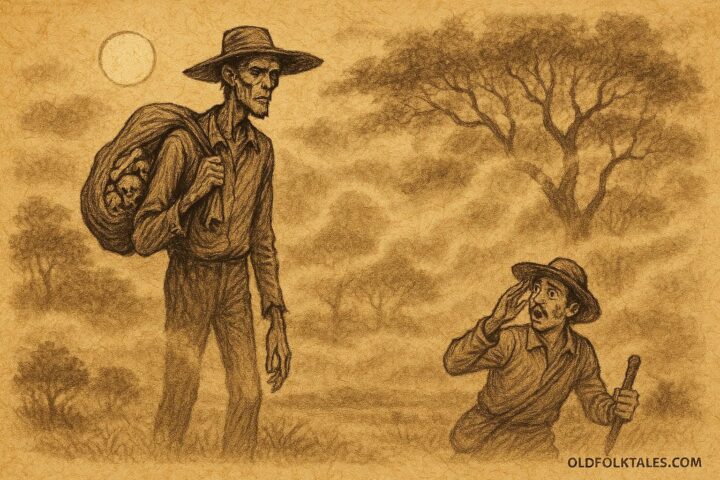
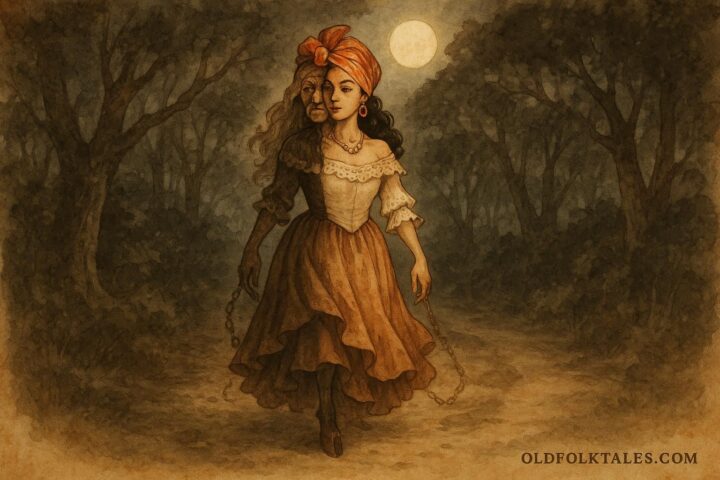
Parchment-style artwork of La Diablesse, Trinidad devil woman, luring traveler on forest path.

La Diablesse: Trinidad Folktale of the Devil Woman

In the twilight shadows of Trinidad, travelers whisper of a figure both alluring and terrifying: La Diablesse, the devil woman. Tales of her have passed down through generations, blending African, French-Creole, and plantation-era folk traditions into a singular legend of caution and fascination. She is a woman of dual faces. At times, she appears as an old crone, her twisted
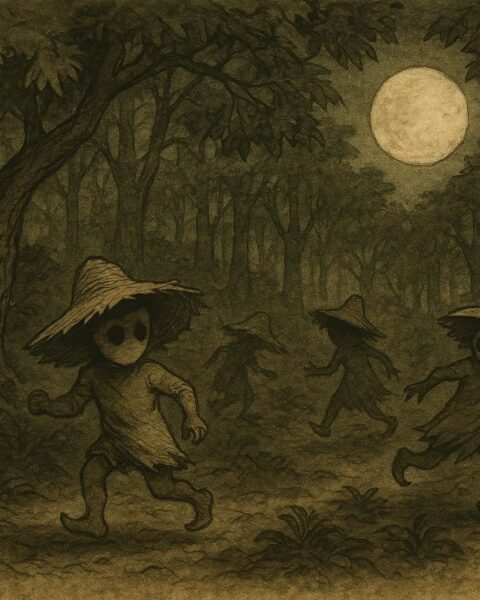
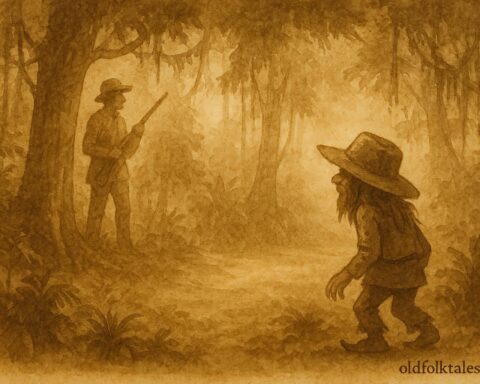
Parchment-style illustration of faceless Douen spirits in a Trinidad forest at twilight.

Douen: Trinidad Folktale of the Forest Spirits

Deep within the dense forest and winding by‑ways of Trinidad, there lurk spirits unlike any other. These are the Douen, sometimes called Duenns, the lost children who never received baptism and now wander between the worlds of the living and the dead. Their presence is whispered in every rustle of
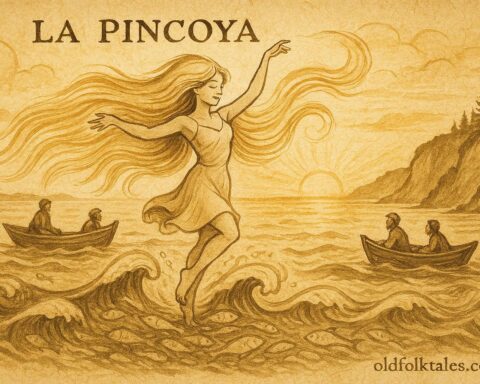
Parchment-style illustration of La Pincoya dancing over waves, Chilote legend, Chilean sea spirit.

La Pincoya: Chilote Sea Spirit Folktale

January 8, 2026
Along the windswept coasts of Chiloé, where waves crash against jagged cliffs and sea mists weave through the pine forests, fishermen tell a tale older than the villages themselves: the story of La Pincoya. She is not an ordinary sea spirit. Her form is that of a luminous, mermaid-like being,
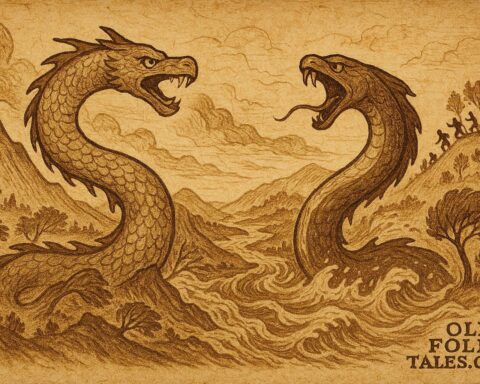
Parchment-style artwork of Trentren Vilu and Caicai Vilu battling, Mapuche legend, Chilean landscape.

Trentren Vilu and Caicai Vilu

January 8, 2026
Long ago, when the world was young and the lands of southern Chile were still being formed, the Mapuche people tell that two colossal serpents shaped the earth and seas through a battle of cosmic proportions. These were Trentren Vilu, the serpent of the land, and Caicai Vilu, the serpent
Parchment-style illustration of El Duende whistling on a colonial road in Nicaragua.

El Duende del Camino Real

January 8, 2026
Duende is the name travelers whisper along the old Camino Real, the colonial road that once carried traders, messengers, and families across the heart of Nicaragua. Long before paved highways existed, this road wound through forests, fields, and villages, and it was here that stories of El Duende took root.
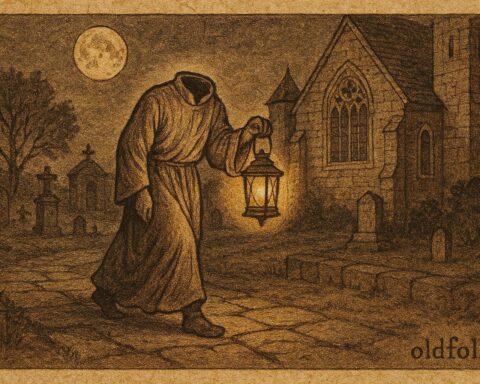
Parchment-style illustration of El Padre sin Cabeza carrying a lantern in León, Nicaragua.

El Padre sin Cabeza

January 8, 2026
Padre is the name whispered with unease in the old city of León when the streets grow silent and the church bells have long ceased their tolling. Long after midnight, when doors are bolted and lanterns extinguished, there are those who claim to see him moving through the shadows. He
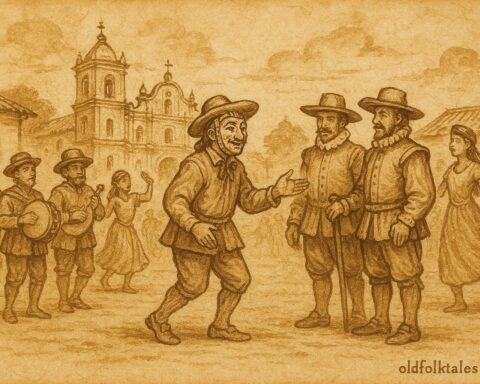
Parchment-style illustration of El Güegüense confronting colonial officials, Nicaraguan folktale scene.

The Clever Defiance of El Güegüense

January 8, 2026
Gueguense was already an old man when his name became a whisper of quiet resistance across the towns of western Nicaragua. Known formally as El Güegüense, and mockingly as Macho Ratón, he was an indigenous merchant who traveled the dusty colonial roads with mules, goods, and a sharp tongue hidden
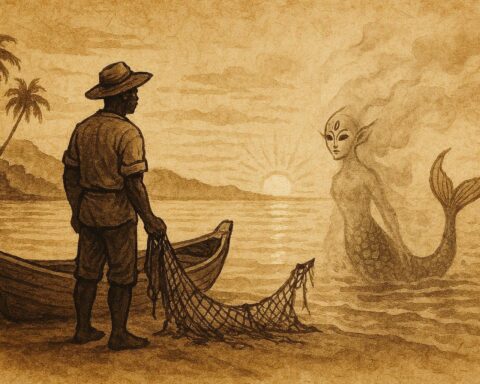
Parchment style illustration of Garífuna fisherman and sea spirit near Trujillo, Honduran folktale.

The Mermaid’s Debt

January 8, 2026
The Mermaid first appeared to the fisherman at dawn, when the Caribbean Sea lay calm and pale beneath the rising sun. He was Garífuna, born to the rhythms of tide and drum, and his canoe moved easily across the familiar waters near Trujillo. That morning, as he hauled in his
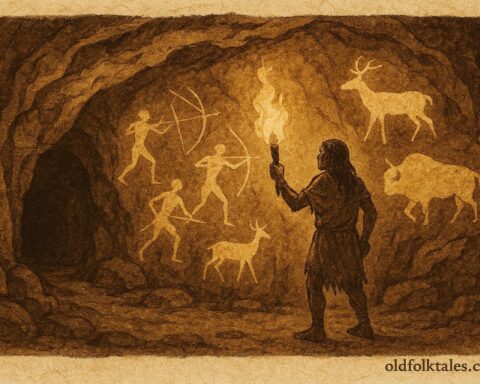
Parchment style cave art of Pech ancestors and hunters, Honduran indigenous folktale.

The Cave of the Howling Portraits

January 8, 2026
The Cave lay deep within the green silence of the Mosquitia, hidden behind curtains of vines and stone shaped by time older than memory. To the Pech people, it was not merely a hollow in the earth, but a sacred chamber where the living and the dead remained bound together.
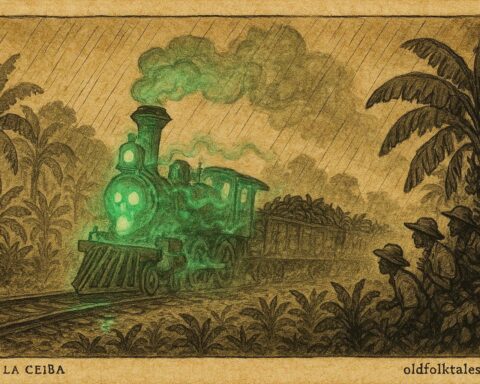
Parchment style artwork of ghost train hauling bananas, Honduran Creole folklore scene.

The Ghost Train of the Standard Fruit Company

January 8, 2026
The train once ruled the northern coast of Honduras, its iron tracks cutting through banana plantations like veins carrying the lifeblood of an empire. In the early twentieth century, steam locomotive Number 47 belonged to the Standard Fruit Company, hauling endless loads of green banana stems from the lowland fields
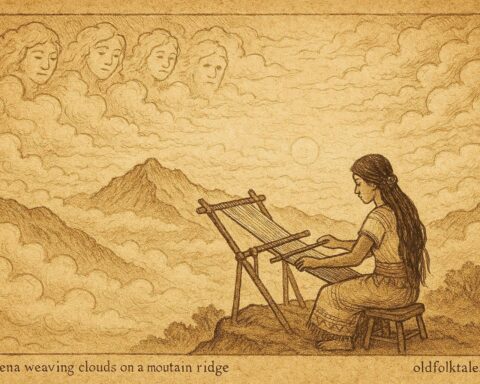
Parchment style artwork of Ixmena weaving clouds, Lenca Indigenous Honduran folktale.

The Woman Who Wove Clouds

January 8, 2026
Clouds did not always move across the sky above the highlands of Intibucá. In the earliest time remembered by the Lenca people, the sky was bare and hard, exposed to the burning gaze of the sun. The mountains stood unprotected, and the earth cracked under relentless heat. It was during
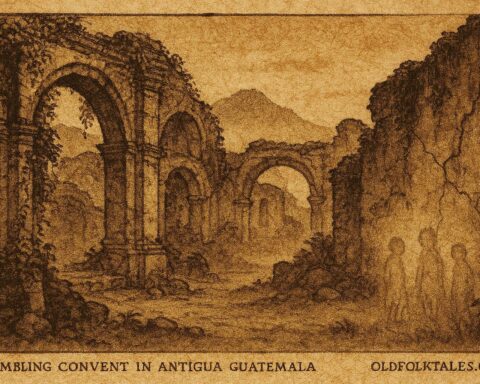
Parchment style artwork of haunted convent ruins with whispering children, Guatemalan folktale.

A Colonial Criollo Folktale from Guatemala

January 7, 2026
Silence ruled the convent long before death ever entered its walls. In eighteenth century Antigua Guatemala, the cloistered convent near what are now the Capuchinas and Santa Clara ruins was known for its rigid devotion to quiet. The nuns who governed it believed that discipline of the tongue purified the
1 2 3 13

Popular

Go toTop