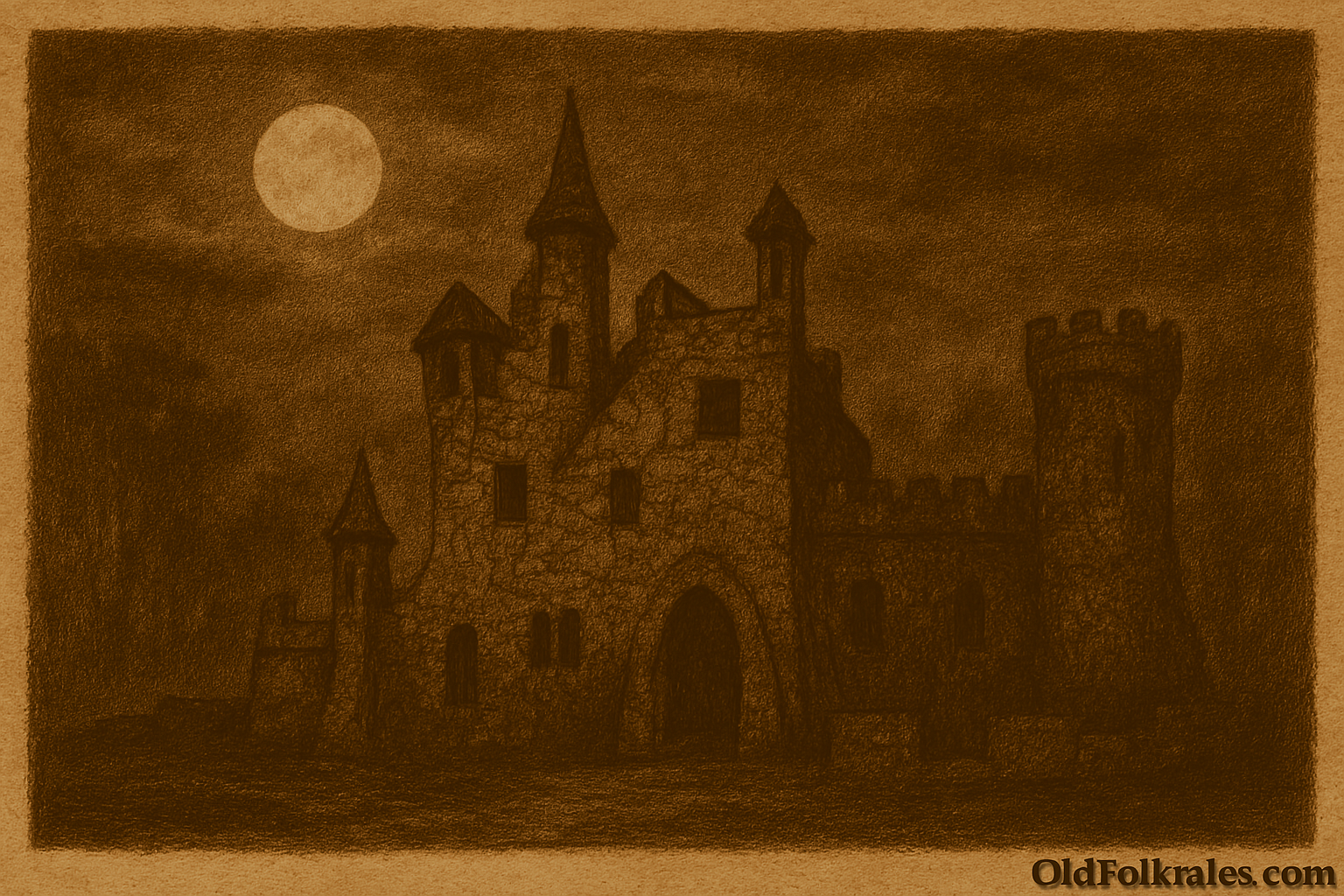
In the heart of Montevideo, Uruguay, where the old city meets the whispers of the past, there stands a peculiar structure that has captured the imagination of locals for generations. The Castillo Pittamiglio, also known as the Castle of Borda, rises from the corner like a fever dream carved in stone, a labyrinth of towers, hidden passages, and architectural mysteries that seem to defy conventional logic.
The castle’s story begins with Humberto Pittamiglio, an alchemist, architect, and philosopher who poured his obsessions into every brick and beam. He designed the building according to esoteric principles, filling it with symbols only he understood. Staircases led to nowhere. Doors opened onto solid walls. Secret chambers were tucked behind false panels, their purposes known only to their creator. It was said that Pittamiglio was searching for something, perhaps the philosopher’s stone, perhaps immortality itself, perhaps simply answers to questions the rest of humanity had long ceased to ask.
Click to read all South American Folktales — timeless stories from the Andes to the Amazon.
But Pittamiglio died before his masterwork was complete, leaving his castle frozen in a state of perpetual becoming. The rooms that should have held his greatest discoveries remained empty. The rituals that might have unlocked his secrets were never performed. And so, the locals began to say, his spirit and the spirits of those who had lived and worked within those strange walls could find no rest.
As the decades passed and the castle fell into abandonment, the stories multiplied like shadows at dusk. Neighbors reported seeing lights flickering in the upper windows long after electricity had been cut to the building. Not the steady glow of modern bulbs, but the wavering, uncertain illumination of candles or oil lamps, as if someone were still conducting experiments in those dusty chambers. The lights would appear in one room, then another, moving through the castle in patterns that suggested purpose, intelligence, intention.
Those brave or foolish enough to approach the castle at night spoke of footsteps, clear, distinct, and utterly impossible. The measured tread of boots on wooden floors would echo from within, climbing stairs that led nowhere, pacing halls where no living person walked. Sometimes the footsteps were hurried, as if their owner rushed to complete some urgent task. Other times they were slow and methodical, the deliberate steps of someone deep in contemplation or searching for something perpetually lost.
Local children dared each other to touch the castle’s iron gates after dark, and those who accepted the challenge returned with stories of cold spots that defied the warm Uruguayan nights, of whispers in languages they couldn’t identify, and of an overwhelming sensation of being watched by unseen eyes. Some claimed to have glimpsed shadowy figures moving behind the grimy windows, tall, angular forms that might have been human but somehow weren’t quite right, as if the very architecture had given birth to its own inhabitants.
The legend took deeper root when a young journalist attempted to spend a night within the castle’s walls. She brought modern recording equipment, determined to debunk the supernatural tales with cold, rational evidence. But she emerged at dawn, pale and shaken, her equipment mysteriously drained of power. She spoke of doors that opened by themselves, revealing rooms that seemed to change configuration when she wasn’t looking directly at them. She described hearing a voice, cultured, patient, tinged with an accent from another era, explaining alchemical processes in meticulous detail, though she was utterly alone.
Most unsettling was her account of the castle’s heart: a central chamber where all the strange geometry seemed to converge. There, she said, the air itself felt thick with unfulfilled potential, charged with the electric sensation of work left eternally incomplete. She sensed the presence of Pittamiglio himself, still laboring at his great project, unable or unwilling to accept that death had claimed him before he could finish what he’d begun.
The people of Montevideo came to understand that the Castle of Borda was more than just a building. It was a monument to obsession, a physical manifestation of what happens when ambition becomes so all consuming that it outlasts the flesh that harbored it. The restless spirits within were trapped not by supernatural forces, but by their own inability to let go, their refusal to accept that some secrets would remain forever sealed, some transformations would never be completed.
Even today, the castle stands as a cautionary presence in the neighborhood. Passersby quicken their step as they move past its shadow. Parents warn their children to stay clear. And on certain nights, when the moon hangs low and the air grows still, those same lights still flicker in the empty rooms, and those same footsteps still echo through abandoned halls, searching endlessly for something that was lost the moment its creator drew his final breath.
Discover the sacred tales of llamas, condors, and gods who guard the Andes
The Moral Lesson
The legend of the Enchanted Castle of Borda teaches us that obsession, when left unchecked, can become a prison that outlasts even death itself. Humberto Pittamiglio’s single minded pursuit of esoteric knowledge and his grand architectural vision consumed him so completely that his spirit and those connected to his work remain trapped in a cycle of incompletion. The story reminds us that there is wisdom in acceptance, in knowing when to release our grip on worldly ambitions, and in understanding that some mysteries are meant to remain unsolved. True peace comes not from achieving every goal or answering every question, but from learning to let go with grace.
Knowledge Check
Q1: Who was Humberto Pittamiglio and what made his castle unusual?
A1: Humberto Pittamiglio was an alchemist, architect, and philosopher who built the Castillo Pittamiglio (Castle of Borda) in Montevideo, Uruguay. The castle was unusual because it was designed according to esoteric principles and filled with architectural mysteries, staircases leading nowhere, doors opening to walls, and secret chambers. Pittamiglio died before completing his masterwork, leaving it frozen in an unfinished state.
Q2: What paranormal phenomena are reported at the Castle of Borda?
A2: Locals report seeing mysterious lights flickering in the castle’s windows despite no electricity, hearing distinct footsteps echoing through empty halls, encountering cold spots and whispers in unknown languages, and glimpsing shadowy figures moving behind windows. These phenomena suggest the presence of restless spirits unable to find peace.
Q3: What does the castle symbolize in Uruguayan folklore?
A3: The Castle of Borda symbolizes the dangers of unchecked obsession and ambition. It represents what happens when someone becomes so consumed by their goals that they cannot let go even in death. The castle serves as a physical manifestation of unfinished business and unfulfilled dreams that trap spirits between worlds.
Q4: Why are the spirits said to be trapped in the castle?
A4: The spirits, particularly that of Humberto Pittamiglio, are believed to be trapped because they cannot accept that their great work remained incomplete at death. Their obsessive attachment to unfinished ambitions and undiscovered secrets keeps them bound to the physical location, unable to move on or find rest.
Q5: What lesson about ambition does the Castle of Borda legend teach?
A5: The legend teaches that excessive ambition and obsession can become prisons that outlast even death. It emphasizes the importance of balance, acceptance, and knowing when to release our grip on worldly pursuits. True peace comes from learning to let go gracefully rather than clinging desperately to incomplete goals.
Q6: What role does the castle’s architecture play in the haunting legend?
A6: The castle’s bizarre architecture with its nonsensical staircases, false doors, and hidden chambers reflects the confused and trapped state of the spirits within. The building itself becomes a character in the legend, its strange geometry mirroring the psychological labyrinth of obsession and the impossible maze of unfulfilled ambitions that keep the spirits bound to this world.
Source: Adapted from Uruguayan urban folklore records and EspookyTales Uruguay legends; local oral traditions from Montevideo’s Borda neighborhood.
Cultural Origin: Urban legend from Montevideo, Uruguay, South America; based on the historical Castillo Pittamiglio built by Humberto Pittamiglio (1887 to 1966).