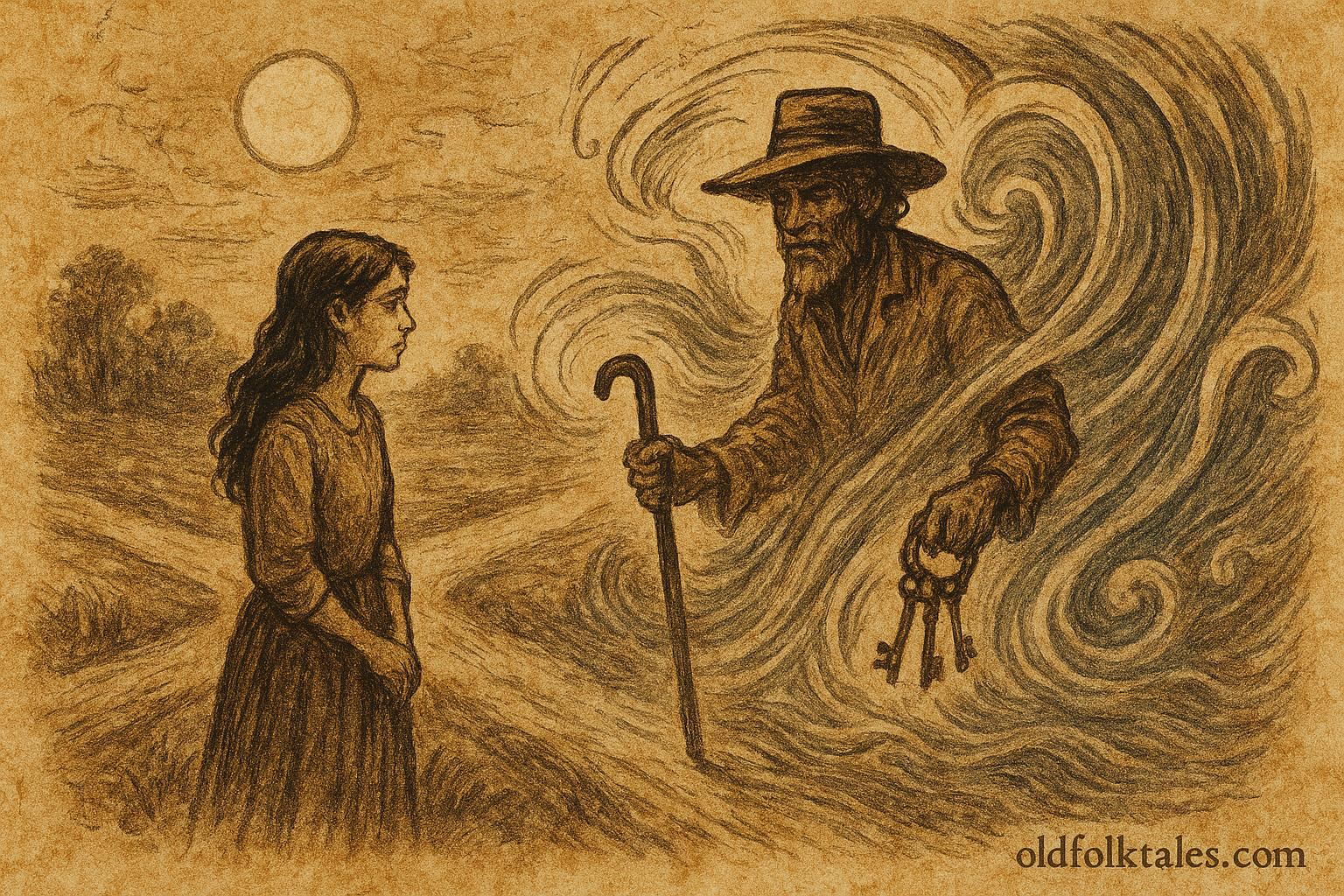
In the hard years when hunger lingered like a shadow over the land, there lived a woman whose poverty pressed upon her more heavily than the heat of the sun. She owned no fields, no animals, and no family who could help her. When she discovered she was with child, fear filled her heart, for she could barely keep herself alive. Each night she lay awake, listening to her own breathing, wondering how she could protect a life not yet born.
In her desperation, the woman went to the crossroads, the sacred place where the worlds touch. There, beneath the open sky, she called upon Papa Legba, the great lwa who opens and closes the gates between the human and spiritual realms. With trembling voice, she made a promise. If her child were allowed to live, if she herself were spared starvation and despair, she would give her unborn daughter to the lwa when the time came. The wind stirred, the night grew still, and the woman believed her plea had been heard.
Explore the ancestral legends of Canada, Mesoamerica, and South America’s Indigenous tribes.
Her survival followed. Food came when it was most needed, and sickness passed her by. In time, she gave birth to a daughter of remarkable beauty and gentleness. The girl grew strong and kind, known for her respectful nature and quiet generosity. Yet her mother never spoke of the promise. She carried it alone, heavy as stone, hoping against hope that it might somehow be forgotten.
Years passed, and the girl reached the age when childhood fades into womanhood. One evening, as the moon rose full and bright, Papa Legba came to collect what had been promised. The air thickened, and the ground itself seemed to hum. The girl, confused but calm, was taken from the human world into the spiritual realm, known as anba dlo, the world beneath the waters, or ville les Morts, the city of the dead.
There, she lived in splendor beyond imagining. She wore fine clothes, ate rich food, and wanted for nothing. Spirits attended her, and music drifted endlessly through the halls. Yet despite the luxury, sadness settled in her heart. She missed the warmth of human voices, the uneven ground beneath her feet, and the freedom to choose her own path. Wealth could not replace belonging.
Seeing her sorrow, the lwa set her tasks. She was not treated cruelly, but she was tested. She was asked to complete difficult labors that required patience, wisdom, and compassion rather than strength. Animals spoke to her, offering guidance when she showed them kindness. When she listened carefully and acted with humility, each task was completed without force or defiance.
Through her conduct, the girl demonstrated respect for the lwa and understanding of the spiritual laws that bound both worlds. She never denied the promise made on her behalf, but she proved that devotion did not require eternal captivity. At last, Papa Legba acknowledged her worth. He released her from servitude, allowing her to return to the human world.
Before she departed, one condition was set. Each year, she must honor the lwa with an offering, remembering the promise that once saved her life. The girl agreed, understanding that freedom did not erase obligation.
She returned home, reunited with her mother, and lived among her people once more. From that day forward, she kept her annual offering faithfully, and her life remained protected. The promise, once born of desperation, became a bond of respect rather than fear.
Discover the blend of magic and wisdom that defines the folktales of the Caribbean islands
Moral Lesson
This folktale teaches that spiritual promises carry lasting power and must be honored with humility and respect. Obligation, when acknowledged sincerely, can transform hardship into protection rather than punishment.
Knowledge Check
1. Why does the mother promise her unborn daughter to the lwa?
She is desperate for survival and seeks spiritual aid.
2. Who is Papa Legba in the story?
A lwa who governs crossroads and spiritual passage.
3. What is the spiritual realm called in the tale?
Anba dlo or ville les Morts.
4. Why is the daughter unhappy despite luxury?
She longs for freedom and human connection.
5. How does she earn her release?
Through kindness, cleverness, and respect during spiritual trials.
6. What obligation remains after her return?
An annual offering honoring the lwa.
Source & Cultural Origin
Source: Haitian folktale, Haiti
Collected from Vodou oral tradition in ethnographic sources
Cultural Origin: Haiti (Vodou folklore)