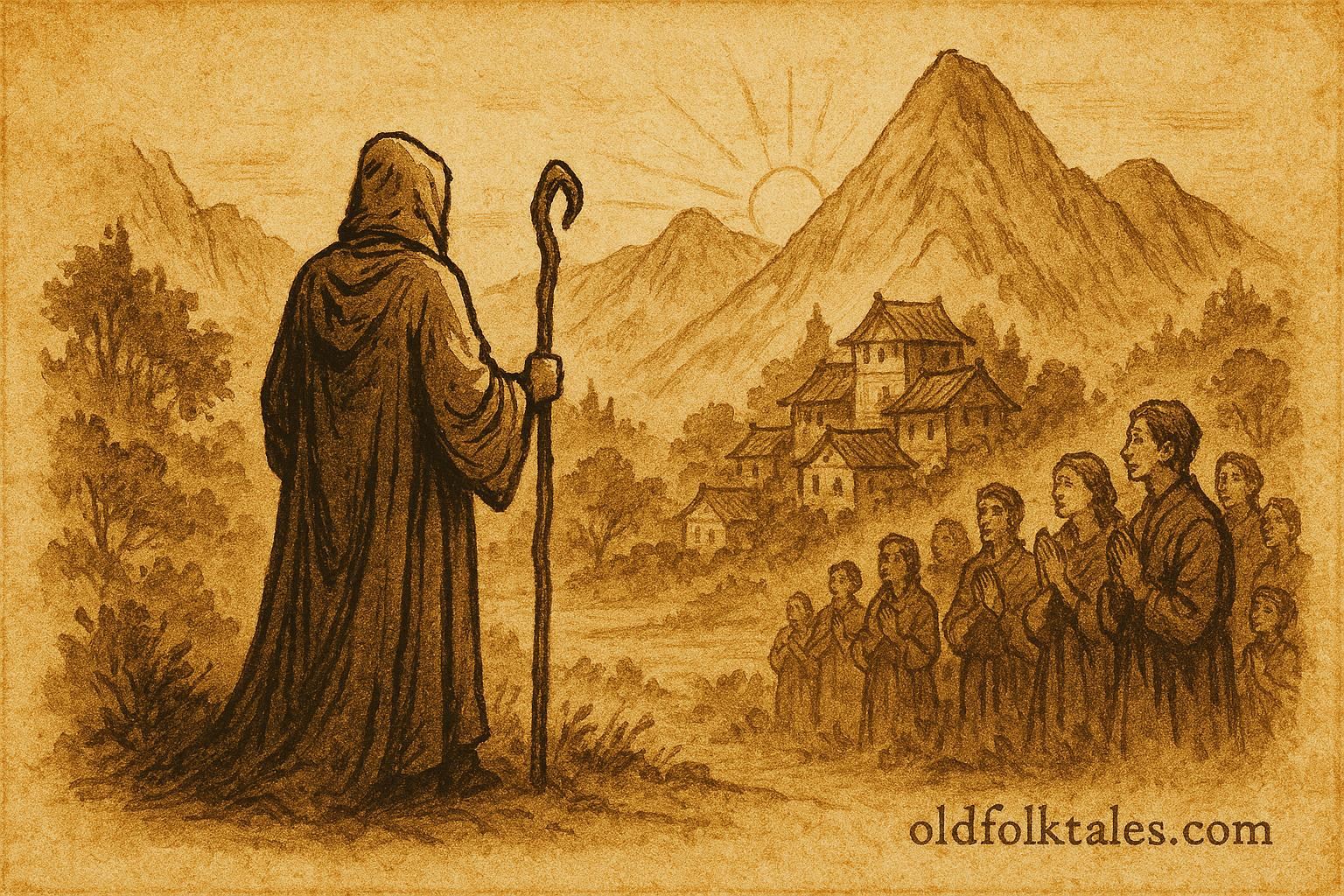
In the time of Spanish rule, when roads were little more than dust paths winding through forests and mountains, there walked a wandering monk. He carried no possessions beyond a simple robe, a staff worn smooth by years of travel, and a small satchel of herbs and bread. Wherever he went, he offered prayer, healing, and gentle counsel, never asking for payment.
Some said he had once belonged to a distant monastery. Others whispered that he was no ordinary man at all, but a saint sent by God to walk among the poor. The monk himself never spoke of his past. He walked where he was needed.
One season, while traveling through a remote region of Mexico and Central America, he heard troubling rumors in a roadside settlement. Villagers spoke of a hidden village deep in the hills, unseen by outsiders and avoided by those who knew of it. Its people lived in fear, cut off from trade, worship, and fellowship.
Drawn by concern, the monk followed narrow trails into the mountains. After days of travel, he came upon the village, small houses clustered tightly together, their doors shut even in daylight. The air was heavy with silence.
The villagers greeted him with suspicion. Years of isolation had taught them to trust no one. They believed misfortune followed strangers, and fear ruled their lives more strongly than faith.
The monk stayed.
He tended the sick with herbs and prayer. He listened patiently to old grievances and quiet sorrow. He taught children simple hymns and reminded parents that faith grows stronger when shared. At night, he spoke of compassion, not as weakness, but as strength that binds people together.
Slowly, fear loosened its grip.
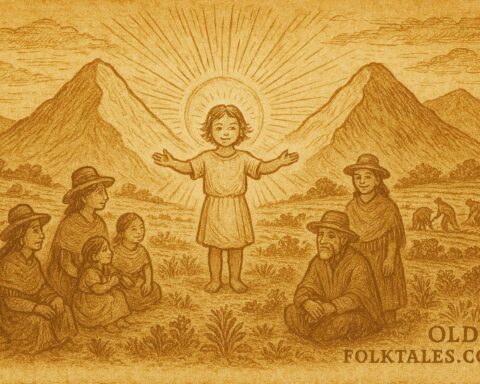
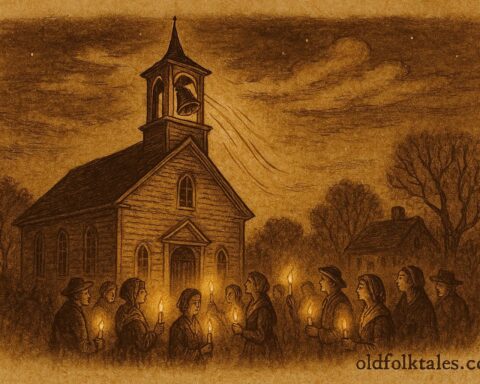
Neighbors began speaking again. Families shared food. The village gathered for prayer beneath the open sky, as the monk led them not with authority, but with humility. He taught that faith was not meant to isolate, but to unite.
When harmony returned, the monk prepared to leave.
At dawn, the villagers awoke to find him gone. Only his staff remained, standing upright at the edge of the village path. Some claimed they saw a faint glow where he had stood. Others said he vanished like morning mist.
From that day forward, the hidden village was hidden no more.
Moral Lesson
This folktale teaches that compassion, faith, and cooperation restore balance to fearful communities. True guidance comes quietly, asking nothing in return.
Knowledge Check
1. Who is the wandering monk believed to be?
A saint in disguise or divine messenger.
2. Why was the hidden village isolated?
Fear and mistrust of outsiders.
3. How does the monk help the villagers?
Through healing, prayer, and teaching compassion.
4. What cultural traditions shape this story?
Catholic saint legends and Indigenous spiritual traveler beliefs.
5. Why does the monk disappear at the end?
To signify divine intervention rather than personal reward.
6. What is the central lesson of the tale?
Community and faith overcome fear and isolation.
Source: Colonial missionary legends; oral tradition
Cultural Origin: Mexico and Central America (Spanish Colonial folktale)