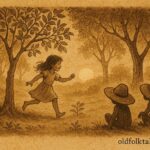
In the quiet countryside of Trinidad, where forests stretch thick and ancient beyond the reach of roads, there stands a tree unlike any other. The Silk Cotton tree rises higher than the surrounding canopy, its massive trunk braced by wide buttress roots that seem to grip the earth itself. To those who know the old ways, this tree is not merely wood and leaves. It is alive with spirits, memory, and power.
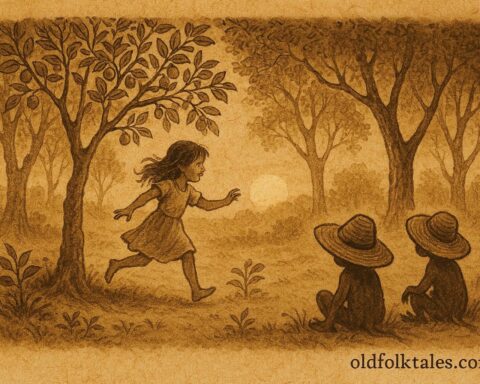
From childhood, people are taught never to treat the Silk Cotton tree lightly. Elders speak of it in hushed voices, pointing from a distance rather than standing beneath its branches. They say the tree is a dwelling place for unseen beings, a vessel that holds spirits both benevolent and dangerous. Among its roots live the duennes, mysterious forest children with backward feet who wander at dusk. Other spirits, including Papa Bois, guardian of the wild, are believed to move freely through its shadow.
The tree is said to stand at the boundary between worlds. Its roots reach deep into the earth, touching the realm of spirits, while its branches stretch toward the sky. Because of this, it acts as a bridge, allowing forces unseen to pass between the human world and the spirit world. This power demands respect, and the Silk Cotton tree does not forgive arrogance.
Folklorists such as J D Elder recorded warnings passed down through generations. The message was always the same. You must never cut down or damage a Silk Cotton tree without proper offerings, prayers, and permission from the spirits. To ignore this rule is to invite disaster.
Stories tell of those who dismissed these warnings. A man seeking lumber once looked upon the massive tree and saw only profit. Ignoring the advice of elders, he struck its trunk with his axe. The sound echoed unnaturally through the forest, and birds scattered as if fleeing a storm. That night, strange noises filled his home. His family fell ill soon after, and misfortune followed them relentlessly. Though the tree still stood, the spirits had been disturbed.
Others tried to use Silk Cotton wood for building. The result was always the same. Homes constructed from its lumber became places of fear. Illness, accidents, and unexplained deaths were said to plague the occupants. It was believed that the spirits released from the tree did not simply vanish. They followed the wood, carrying their anger into every place it touched.
Because of this, wise people avoided the tree entirely. If one had to pass near it, they did so quietly and with respect. Offerings of food or rum were sometimes left at its base, accompanied by whispered prayers. These gestures were not acts of worship, but acknowledgments of the tree’s power and presence.
The Silk Cotton tree also served as a warning about balance. Nature was not something to conquer, but something to live alongside. The spirits within the tree were guardians of the land, reminders that the forest had its own laws. Disrespecting those laws disrupted harmony, not just for the individual, but for the community.
Even in daylight, the tree commanded attention. Its towering form cast deep shadows, and the air around it felt heavy and still. At night, no one lingered nearby. Children were warned that wandering too close could draw the attention of duennes, who might lead them astray, never to return.
Though feared, the Silk Cotton tree was also respected. It was not evil, but powerful. Those who honored it lived without trouble. Those who ignored its significance paid dearly. In this way, the tree stood as both protector and judge, silently watching over the land.
To this day, the belief endures. The Silk Cotton tree remains untouched in many places, its presence a living reminder of the spiritual ecology that once governed human interaction with the natural world.
Moral Lesson
The Silk Cotton tree teaches that nature is sacred and demands respect. Those who act with humility and honor toward the natural world live in harmony, while those who exploit it without reverence invite lasting consequences.
Knowledge Check
-
What is the Silk Cotton tree believed to represent in Trinidadian folklore
It represents a spiritual bridge between the human and spirit worlds -
Which spirits are said to dwell in or near the tree
Duennes and forest spirits such as Papa Bois -
Why is cutting down the Silk Cotton tree considered dangerous
It releases spirits that bring misfortune and illness -
What actions are required before showing any disrespect to the tree
Offerings and prayers to the spirits -
What happens to those who use Silk Cotton wood
They experience repeated misfortune and tragedy -
What lesson does the folktale teach about nature
Nature must be respected as a living spiritual force
Source: Afro Trinidadian and Taíno Arawak folktale, Trinidad
Referenced by: J D Elder and Caribbean folkloric traditions