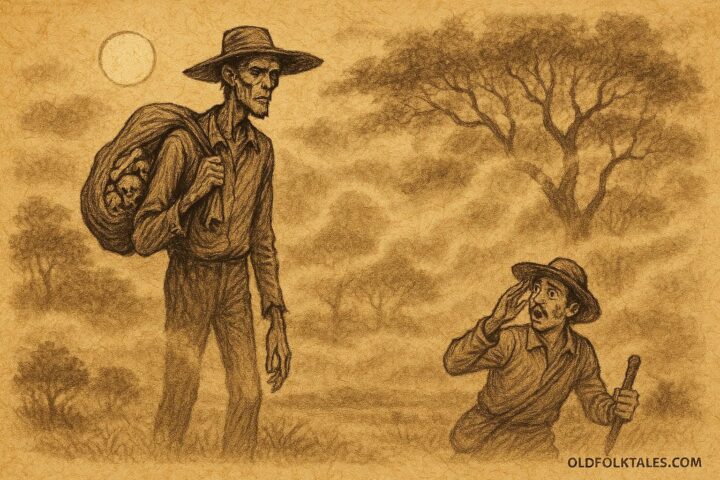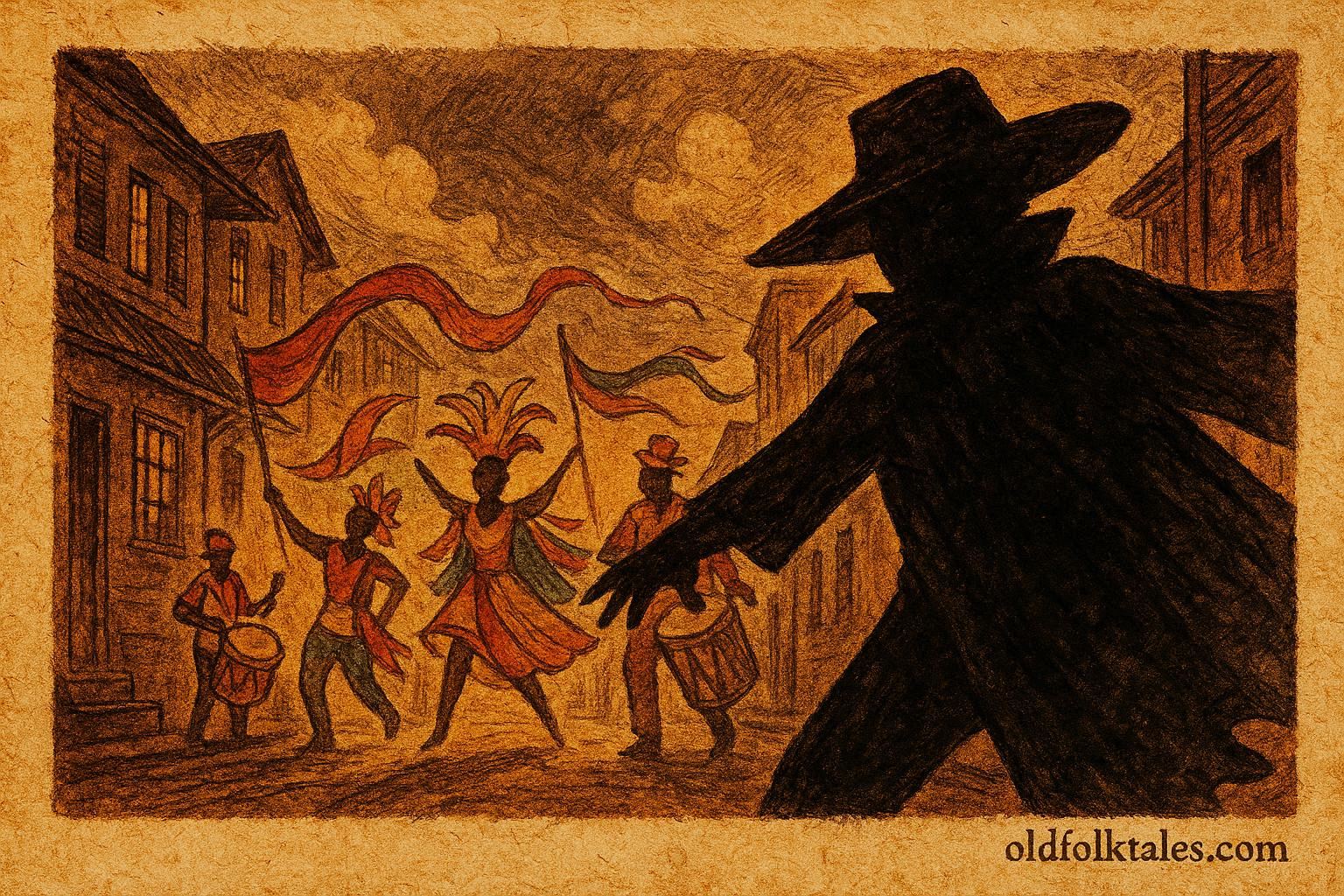
In the streets of Trinidad, where the air hums with drums, steelpan, and the riot of Carnival colors, a figure emerges whose presence demands attention and awe. He is known as the Heartman, a Midnight Robber whose performances are legendary. From dusk until the shadows stretch across the streets, he delivers his boasts in a slow, raspy voice, each word dripping with menace, humor, and creativity.
The Heartman is not merely a man but a theatrical embodiment of Trinidadian Carnival’s performative spirit. He claims origins as wild and improbable as his feats: the Bow of God’s Cemetery, the Valley of the Dry Bones, places as eerie as they are grand. Every boast is a story, a vivid brushstroke painting him as larger than life.
“I am the man who robbed the bank, gave the money to the poor, and then arrested myself!” he declares, his voice rolling like thunder over the cobblestones. Spectators gasp, laugh, or step back in mock fear, caught in the rhythm of the tale. He continues, each line more outrageous than the last: “I have a heart of stone. I suck the blood of babies for breakfast and eat dynamite for dinner! My shadow is so feared, it once killed a man who saw it! Before I was born, my mother gave me a knife and told me to cut my own umbilical cord!”
The heart of this tradition is performance: the Midnight Robber does not merely tell stories; he acts them, moving with exaggerated gestures, pointing his finger like a weapon, spinning, bowing, and raising imaginary swords. The crowd becomes part of the narrative, gasping at his claimed exploits and laughing at the audacity of his lies. His language is rhythmical, drawn-out, and playful, blending African oral storytelling with the carnival culture of Trinidad.
Every boast has layers: menace and humor, exaggeration and truth. The Heartman is simultaneously terrifying and entertaining, a figure whose “robbery” is verbal rather than physical. He steals attention, coins tossed into his hat, and admiration, all while reminding the audience of the imaginative power of words.
From the streets of Port of Spain to small towns across Trinidad, the Midnight Robber tradition carries the legacy of post-emancipation communities, where humor, creativity, and bravado became tools for survival, amusement, and social commentary. Performers craft elaborate personas, challenging listeners to suspend disbelief while celebrating skill, ingenuity, and heritage.
The Heartman’s tale is not a single story but a series of boasts woven together into an epic display. Each exaggeration reflects the creativity of the speaker, the tension between fear and laughter, and the African roots of oral storytelling that survived and transformed in Caribbean culture. He teaches that words, like swords, can wield power, and that bravery comes not only in deeds but in the confidence to claim impossible feats.
Carnival audiences leave the performance invigorated. They have been entertained, thrilled, and reminded that folklore is alive, evolving, and rooted in both community memory and personal invention. The Heartman may vanish into the night, leaving behind only the echoes of his voice and the inspiration of his audacious words.
Moral Lesson
This folktale celebrates the power of creativity, language, and performance. It teaches that confidence, wit, and imagination can captivate audiences, and that folklore is not only about truth but about the joy of storytelling and communal experience.
Knowledge Check
1. Who is the Heartman?
The Heartman is a Midnight Robber, a theatrical Carnival figure known for exaggerated, imaginative boasts.
2. Where does the Heartman claim his origins?
He claims origins from places like the Bow of God’s Cemetery or the Valley of the Dry Bones.
3. What is the purpose of his boasts?
To entertain, captivate audiences, and display skill in verbal performance.
4. How does the Heartman interact with his audience?
Through exaggerated gestures, rhythmic speech, and humorous threats that engage and thrill spectators.
5. What cultural tradition does the Heartman reflect?
He reflects Trinidadian Carnival, African oral storytelling, and post-emancipation performance art.
6. What lesson does the story convey about language and creativity?
It shows that words and imagination can wield power, influence, and community engagement, celebrating cleverness and confidence.
Cultural Origin
Source: Trinidadian folktale, Trinidad and Tobago
Documented from Calypsonian and Midnight Robber oral traditions in C.R. Ottley’s Tales of the Trinidad Calypsonian
Cultural Origin: Afro-Caribbean post-emancipation oral performance and Carnival tradition