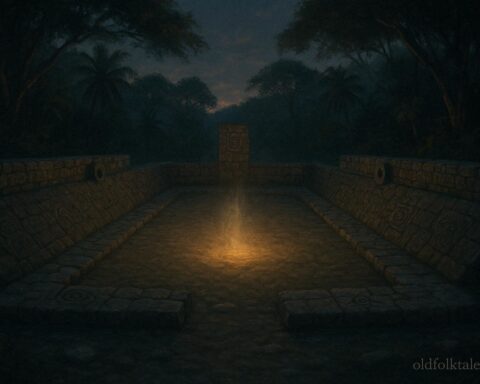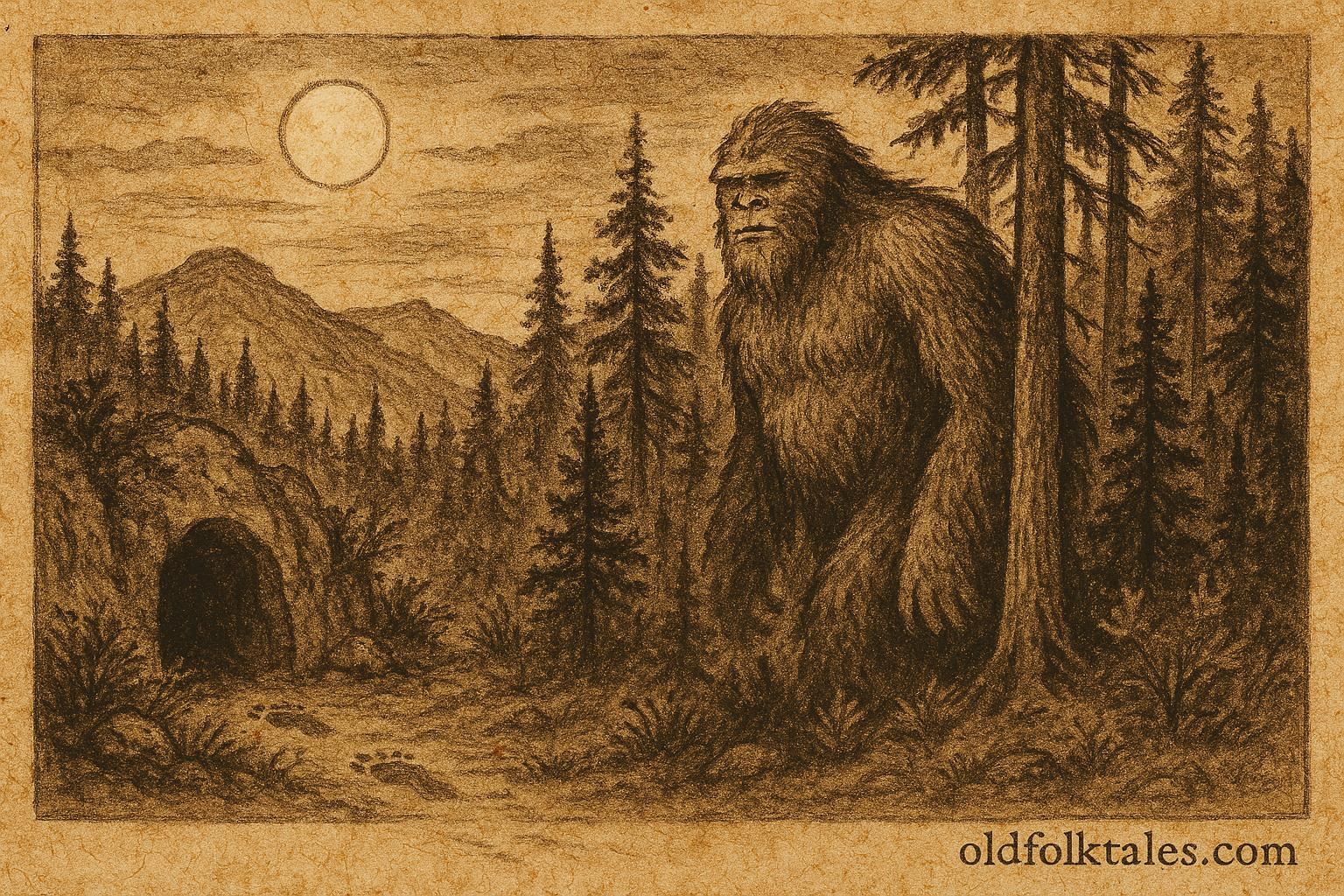
Deep within the remote mountains and dense forests of Honduras, where steep ridges cut the sky and ancient trees close tightly around narrow paths, there lives a being feared and whispered about for generations. This creature is known as El Sisimite, sometimes called Itacayo, a giant humanoid whose presence belongs to the oldest stories of the land. Long before roads reached the highlands, his name served as a warning to those who ventured too far into the wilderness.
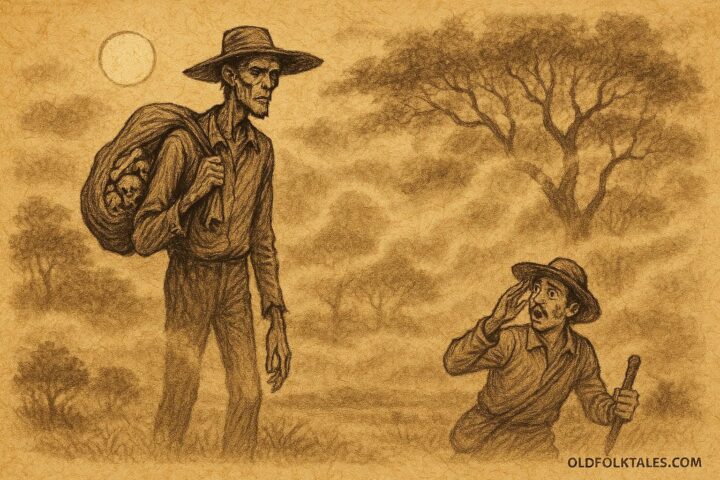
El Sisimite is described as enormous in size, far taller and broader than any man. His body is covered from head to toe in thick, coarse hair that blends into the shadows of the forest. His strength is said to be immense, capable of breaking branches with ease and moving through rugged terrain without hesitation. Yet the most unsettling feature of all lies in his feet, which face backward. This strange trait confounds even the most skilled hunters, as his footprints lead in the opposite direction of where he has gone, making pursuit nearly impossible.
Hunters who claim to have encountered El Sisimite speak not only of his size, but of his intelligence. He is not described as a mindless beast. Instead, he is cunning, alert, and deeply familiar with the mountains he inhabits. He knows when he is being watched and vanishes silently into the forest long before danger can approach him. His backward feet are said to be part of this clever design, a natural defense that ensures his freedom in lands no outsider can fully master.
According to legend, El Sisimite rarely descends from the mountains during the day. It is at night, when darkness settles over the valleys and villages, that his presence is most feared. Under the cover of night, he is said to come down from the high forests toward the edges of human settlement. His movements are quiet despite his size, and his knowledge of hidden paths allows him to approach unseen.
One of the most disturbing elements of the legend tells of El Sisimite abducting women and carrying them away into the mountains. These women are taken to remote caves, deep within the wilderness, places untouched by human life. There, they are held beyond the reach of their communities, surrounded by forest and stone. The caves are described as dark, isolated spaces that mirror the complete separation between civilization and the untamed world El Sisimite inhabits.
From these unions, the stories say, children are sometimes born. These children are believed to inherit wild traits, neither fully human nor fully of the forest. They are said to grow quickly, moving with unusual agility and showing little attachment to village life. In many tellings, such children eventually disappear into the mountains, drawn by instinct back to the wilderness that shaped them. Their fate reinforces the belief that the forest claims what belongs to it and does not release it easily.
Despite these frightening tales, El Sisimite is not portrayed as purely violent. While his actions inspire fear, he is often described as deliberate rather than cruel. He acts according to the laws of the wilderness, not the customs of human society. To the people who tell his story, this distinction matters. El Sisimite represents the untamed power of nature itself, indifferent to human boundaries and expectations.
The legend of El Sisimite reflects deep-rooted indigenous beliefs about the dangers of the unknown wilderness. For communities living near the mountains, the forest was both a source of life and a place of great risk. It provided food, shelter, and materials, but it also concealed threats that could not be controlled. El Sisimite became the embodiment of that uncertainty, a living reminder that the land beyond familiar paths demanded respect.
Parents told the story to children to keep them from wandering too far from home. Elders shared it with young hunters as a warning against arrogance and carelessness. To underestimate the mountains was to invite disaster, and El Sisimite stood as proof that not everything in the world could be conquered or understood.
Over time, the tale endured through oral tradition, passed down across generations in the indigenous and rural mountain regions of Honduras. Each telling preserved the same essential elements: the giant covered in hair, the backward feet, the night journeys, and the ever-present wilderness. Though details might shift slightly from village to village, the core meaning remained unchanged.
El Sisimite continues to occupy a powerful place in Honduran folklore. He is not merely a monster, but a symbol of the ancient relationship between humans and the land they inhabit. His story reminds listeners that the natural world is vast, mysterious, and deserving of caution. In the depths of the forest, where paths vanish and echoes linger, El Sisimite still walks unseen.
Moral Lesson
The story of El Sisimite teaches respect for nature and warns against venturing recklessly into unknown lands. It reminds us that the wilderness holds powers beyond human control and must be approached with humility and caution.
Knowledge Check
1. Who is El Sisimite in Honduran folklore
El Sisimite is a giant, wild humanoid believed to live in the mountains and forests of Honduras.
2. What physical trait makes El Sisimite difficult to track
His feet face backward, causing his footprints to mislead hunters.
3. Where does El Sisimite live according to legend
He inhabits the deepest mountains, forests, and remote caves of Honduras.
4. What actions make El Sisimite feared by rural communities
He descends at night and is said to abduct women into the wilderness.
5. How is El Sisimite portrayed beyond his fearsome nature
He is described as cunning and intelligent, not purely violent.
6. What cultural lesson does the legend of El Sisimite convey
The story warns against disrespecting the wilderness and venturing too far into unknown lands.
Source: Ethnographic records by Jesús Aguilar Paz and Anne Chapman
Cultural Origin: Honduras
Adapted from indigenous and rural mountain oral traditions of Honduras