On moonlit nights in rural Honduras, when the roads grow quiet and the rivers breathe with mist, travelers speak in hushed voices of a woman who appears without warning. She is known as La Siguanaba, a figure whose beauty is so arresting that it unsettles the heart before it ever invites desire. Her presence belongs to the old paths and flowing waters, places where human certainty weakens and ancient rules still hold power.
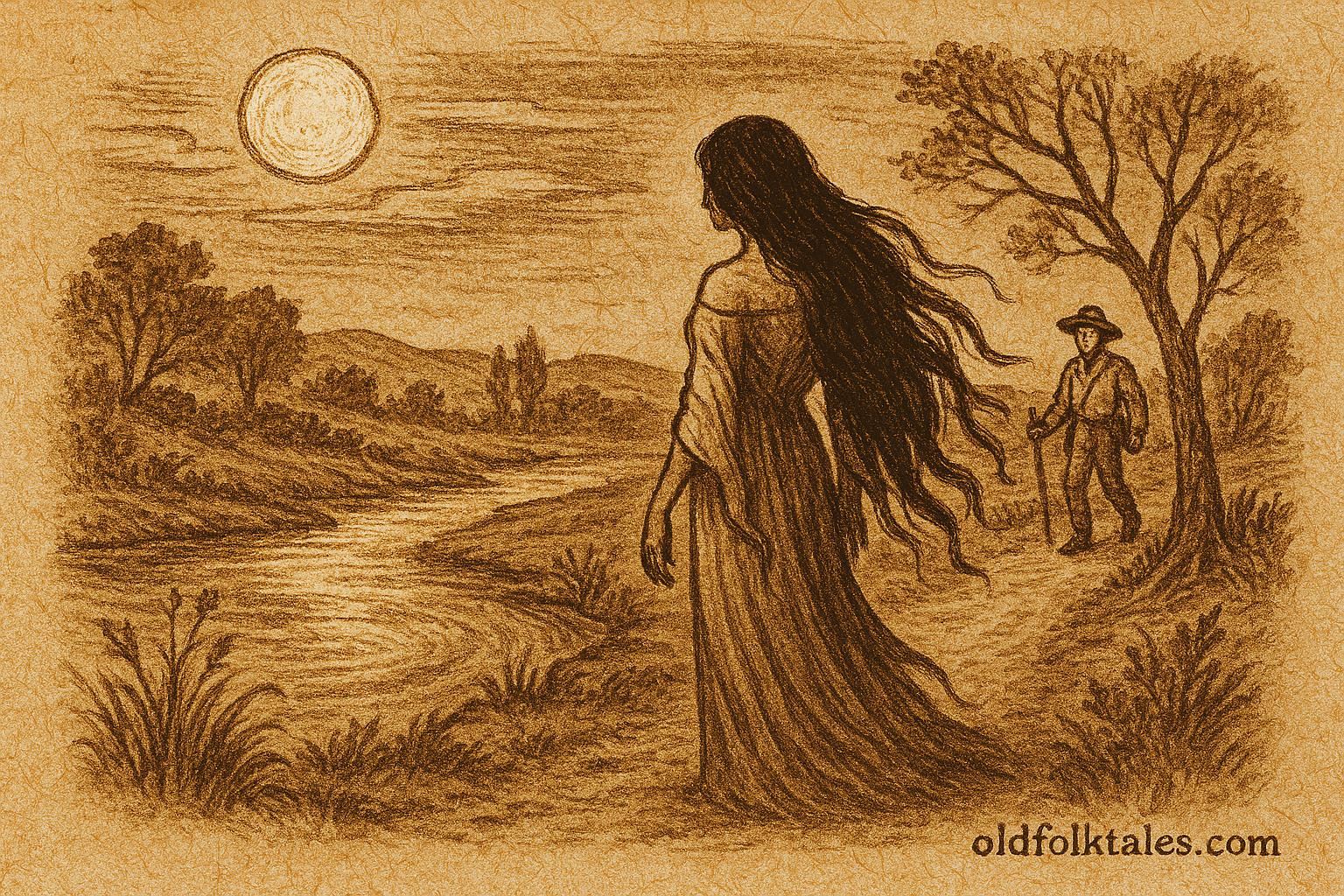
La Siguanaba is first seen from a distance. She stands near a riverbank, her bare feet touching the water as if she belongs to it, or she waits along a lonely road where the moon casts long silver shadows. Her hair falls thick and dark down her back, shining softly in the night light. Her posture is calm, almost sorrowful, and her silence suggests modesty rather than threat. To those who glimpse her, she appears entirely human, a woman alone in the night.
It is said that she reveals herself most often to men who have lost their moral footing. Those who are intoxicated, arrogant, or unfaithful are the ones who notice her first. Their judgment is already clouded, their pride already loosened, and the stillness of the night sharpens their curiosity. Believing her to be a lost traveler or a mysterious beauty, they follow her without question. The sound of the river masks their footsteps, and the darkness hides the danger ahead.
As they draw closer, her beauty only deepens. Her movements are slow and graceful, and she never turns her face fully toward them. This deliberate distance keeps the illusion intact. The men feel drawn forward, compelled by desire or pride, certain that they are in control. Yet with every step, the world around them seems to thin, as though the familiar rules of night and land are quietly withdrawing.
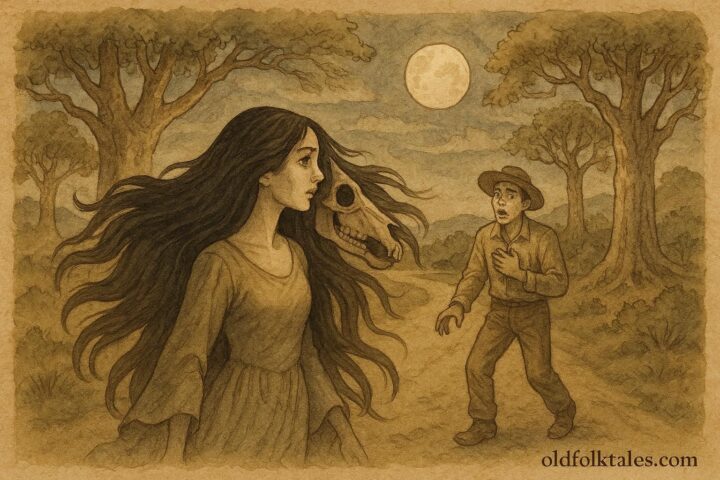
When the moment comes, it arrives without warning. La Siguanaba turns to face her pursuer, and the illusion collapses. Where beauty once rested, terror now takes hold. Her face is no longer human. Some say it becomes skeletal, stripped of flesh and mercy. Others describe it as animal-like, twisted and unnatural, bearing no resemblance to the woman who moments before stood by the water. The shock of the transformation strikes deeper than fear alone. It unravels the mind.
Those who survive such an encounter are rarely the same. Villagers have found men wandering at dawn, trembling and speechless, their eyes wide with confusion. Some cannot recall what they have seen, while others remember too clearly and are driven into madness by the memory. Even those who recover carry the weight of the encounter for the rest of their lives, marked by a sudden humility or an enduring fear of the night.
In many Honduran tellings, La Siguanaba was not always a wandering spirit. She was once a woman who abandoned her responsibilities and betrayed the trust placed in her. Whether as a mother, a partner, or a member of her community, she chose selfish desire over duty. Her actions disrupted the balance that held her world together, and for this, she was cursed. The punishment was not death, but eternal wandering, bound to the very desires that led to her fall.
Condemned to appear as temptation itself, La Siguanaba now serves as a living warning. She mirrors the weaknesses of those who approach her, drawing them in with what they most seek, only to reveal the consequences hidden beneath unchecked desire. Her curse is not merely to frighten, but to remind. The roads and rivers where she appears become places of judgment, where character is tested in silence.
Within rural Honduran communities, her story is told as a lesson passed from one generation to the next. Elders speak of her to caution young men against arrogance and infidelity. Travelers are warned to respect the night and to mistrust easy beauty found in lonely places. La Siguanaba belongs to the land, shaped by pre-colonial and colonial oral traditions, and her presence continues wherever stories are remembered.
She remains a figure of fear, but also of order. In her wandering, she enforces moral boundaries that human law cannot always reach. The night may hide her until the final moment, but her purpose is always clear. Those who walk with humility pass unnoticed. Those who do not may hear the river call their name.
Moral Lesson
The tale of La Siguanaba teaches that unchecked desire, arrogance, and betrayal carry lasting consequences. True danger often hides behind temptation, and moral responsibility cannot be abandoned without cost.
Knowledge Check
1. Who is La Siguanaba in Honduran folklore
La Siguanaba is a supernatural woman who appears as a beautiful figure and reveals a terrifying true form to morally reckless men.
2. Where does La Siguanaba typically appear
She is commonly seen near rivers and along moonlit rural roads in Honduras.
3. What kind of people are targeted by La Siguanaba
Men who are intoxicated, unfaithful, arrogant, or lacking moral restraint are most vulnerable.
4. What happens when La Siguanaba reveals her true face
Her face becomes monstrous, causing terror, madness, or lasting psychological change.
5. What is the origin of La Siguanaba curse
She was once a woman punished for abandoning responsibilities and betraying trust.
6. What lesson does the story of La Siguanaba teach
The story warns against moral recklessness and the dangers of unchecked desire.
Source: Honduran folklore compilations; Tradiciones y Leyendas de Honduras
Cultural Origin: Honduras, Central America
Adapted from pre-colonial and colonial Honduran oral tradition