In the moonlit ravines and along the fog-shrouded footpaths of Guatemala, there wanders an eternal child. His name is El Cipitío, and his story is one woven from magic, mischief, and a profound, lingering sorrow. He is not a ghost, but a living legend, a boy forever trapped in the form he held at ten years old, his existence a direct curse born from a mother’s grave failure.
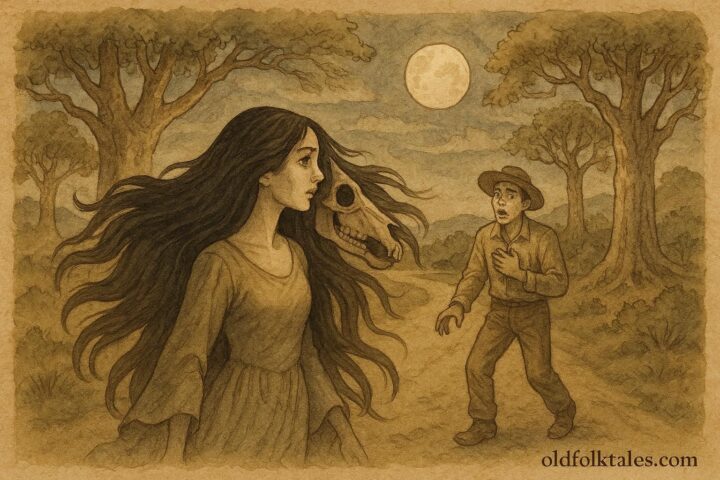
El Cipitío is the son of the infamous La Siguanaba, a beautiful spirit who lures unfaithful men to their doom. It was her profound neglect of her maternal duty that invoked a divine punishment. Not upon her alone, but cruelly upon her innocent son. He was condemned to never grow up, to wander the earth for all time as a perpetual reminder of her sin.
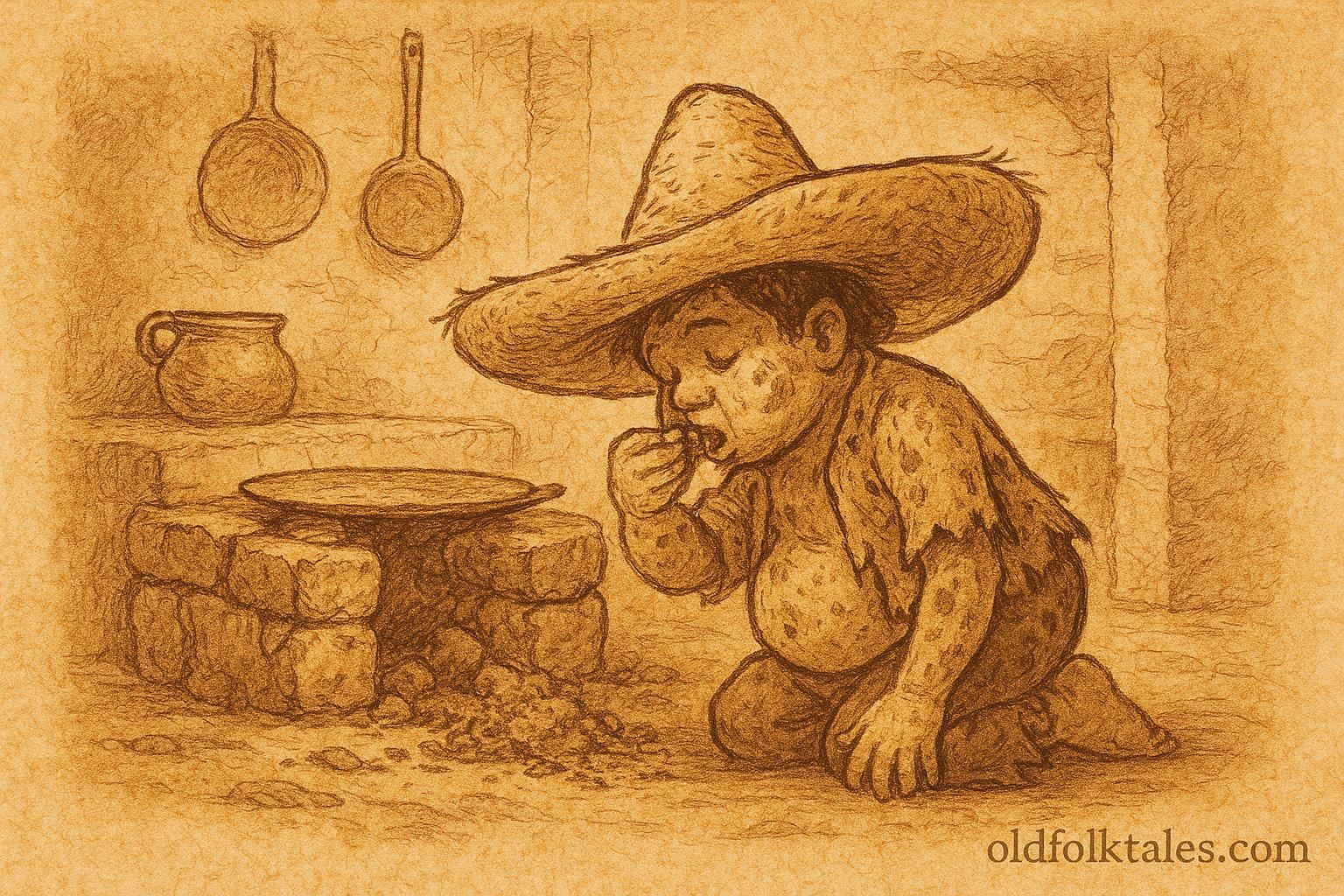
You would know him by sight. He wears the oversized, tattered sombrero of a campesino, so large it often obscures his youthful face. His simple clothes are perpetually soiled, caked in the ash and dirt of the endless road. But his most peculiar feature is his belly, which protrudes round and unyielding, as hard and smooth as a traditional comal, the clay griddle used for cooking tortillas.
He is a creature of the in-between places, the fading twilight, the edge of the milpa, the quiet kitchen after the hearth fire has died to embers. His mischief is that of a lonely, immortal child. With a faint, childlike giggle that echoes from the shadows, he delights in playing pranks on young women, magically tangling their long hair into impossible, stubborn knots as they sleep. His favorite trick is reserved for travelers. He will appear, a seemingly lost and hungry boy, and humbly ask for a morsel of food. The kind-hearted soul who offers him aid is soon dismayed to find their own stomach mysteriously and uncomfortably full of stones, dry leaves, or ashes.
For ashes are El Cipitío’s chosen feast. He is drawn to the cold hearths of homes, where he scoops and eats the gray, powdery remains of the fire. It is a meal that offers no nourishment, a fitting sustenance for a boy who can never be satisfied, forever seeking a warmth and comfort that was denied him.
While his tricks can be frustrating, he is not considered evil. Beneath the laughter and the pranks lies a deep, abiding pity. He is the eternal orphan, abandoned by the one who should have loved him most. His presence is a somber lesson: the consequence of neglect can echo through eternity. To see El Cipitío is to see a lost boy, laughing to hide his sorrow, his ash-covered form a moving testament to a love that was never given.
The Moral Lesson:
This Guatemalan folktale serves as a powerful cultural parable about responsibility and consequence. It teaches that parental neglect and the abandonment of sacred duties can have irreversible, tragic effects, extending suffering onto the innocent. While El Cipitío’s playful nature reminds us that pain can be hidden behind mischief, his eternal plight underscores the lasting damage of broken bonds and the profound importance of familial care.
Knowledge Check
Q1: Who is El Cipitío’s mother in this Guatemalan folktale?
A1: El Cipitío is the cursed son of La Siguanaba, a malevolent spirit from the same Guatemalan myth cycle.
Q2: What was El Cipitío’s curse and why did he receive it?
A2: He was cursed to remain a ten-year-old boy for eternity as a divine punishment for his mother La Siguanaba’s severe neglect of him.
Q3: What are the three key physical traits that identify El Cipitío?
A3: He is identified by his oversized tattered sombrero, clothes caked in ash and dirt, and a round belly as hard as a comal (clay griddle).
Q4: What kind of tricks does El Cipitío play on people?
A4: His signature pranks include magically tying young women’s hair into knots as they sleep and filling the stomachs of generous travelers with stones or leaves after they give him food.
Q5: What is El Cipitío’s strange dietary preference and what might it symbolize?
A5: He eats ashes from cold hearths, which symbolizes his connection to neglected homes, his search for warmth, and his existence without true sustenance or growth.
Q6: Is El Cipitío considered a purely evil figure in Guatemalan folklore?
A6: No, he is seen as a mostly benign trickster who is more often pitied. He is viewed as a lonely, eternal child and a tragic victim of his mother’s abandonment.
Source: Adapted from “Cuentos y Leyendas de Guatemala” by Francisco Monterde and tales collected alongside the La Siguanaba myth cycle.
Cultural Origin: Guatemala (Ladino/Nahua folklore).