In the deep night of Trinidad, when honest folk are safe behind their doors, the air can sometimes carry a sound that freezes the blood. It is not the wind in the palms, nor the cry of a night bird. It is the slow, heavy, methodical clank… drag… clank of heavy chains. Those who hear it know to bolt their shutters and whisper a prayer, for the Lagahoo is abroad.
The Lagahoo is Trinidad’s own unique and terrifying shapeshifter, a creature born from a potent blend of the island’s folklore. Its name whispers of the French loup-garou, the werewolf, but its nature is far more complex and unpredictable, infused with African spirits of transformation and the deep, primal fear of the dark.
It is often a man, sometimes a woman, cursed or corrupted by dark occult knowledge. By day, they may appear unremarkable, but when night falls, a horrific change occurs. Unlike a simple werewolf, the Lagahoo is a master of forms. It does not transform into one beast, but into a parade of nightmares.
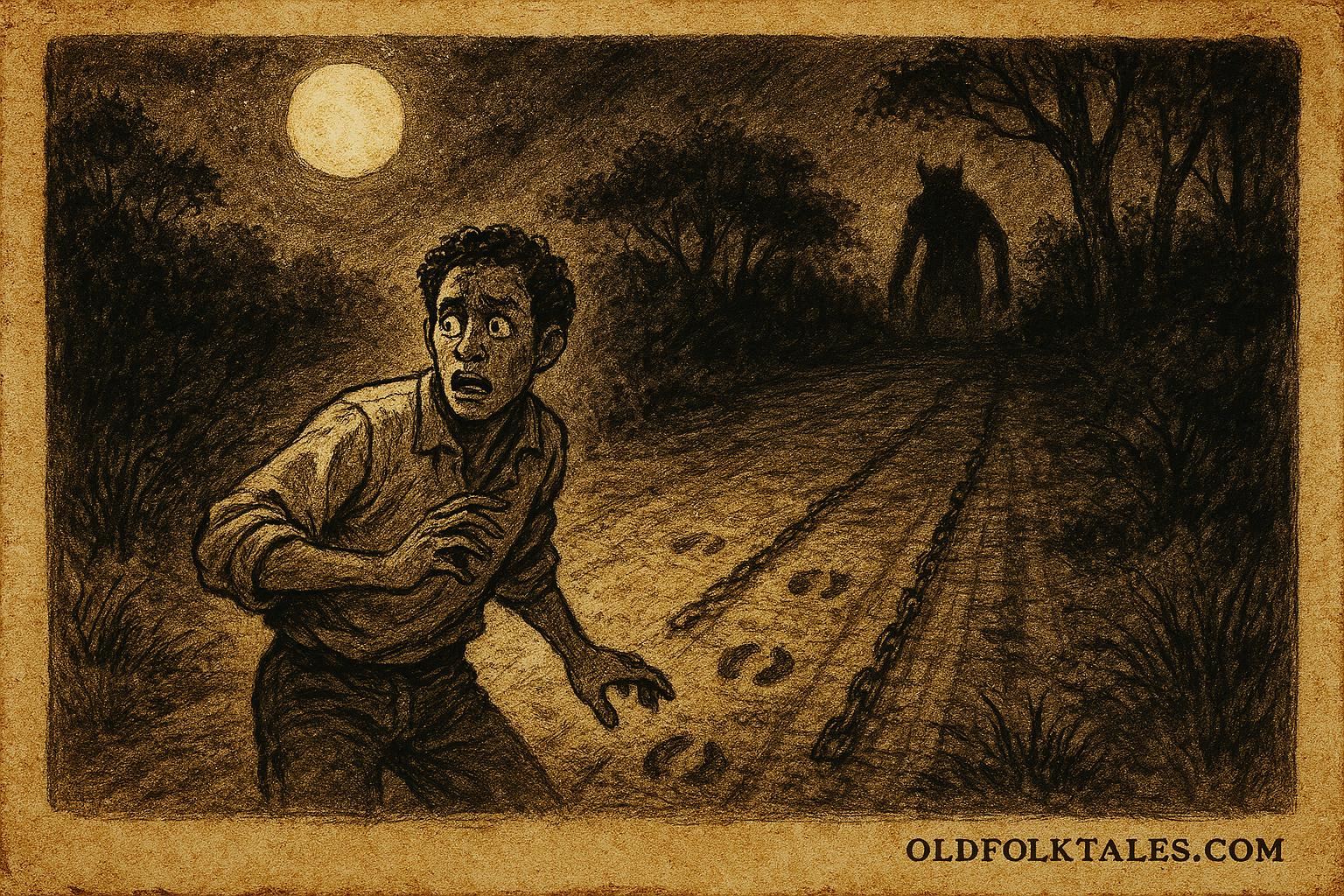
One night it may appear as a monstrous, hulking brute of a man, its powerful shoulders straining as it drags lengths of rusted, clanking chain behind it. Another night, it may be a great, headless horse that gallops silently until the awful chains at its heels give it away. It can become a bull with eyes that burn like smoldering coals, or a massive, spectral dog with a jaw that seems to unhinge. The only constant is the sound: the chilling, metallic clank and drag that announces its presence long before its form is seen.
It is a creature of pure menace, with no tragic backstory or lonely yearning. Its domain is the places of the dead and the lonely paths between them. It is said to roam cemeteries under the moon, its shadow falling over fresh graves. Some whisper that it digs, though what it seeks, none can say. Its primary sport seems to be the spreading of terror. It will stalk the lone traveler on a dark road, matching their pace, the sound of its chains growing ever closer, until the person breaks into a frantic, stumbling run, pursued by the relentless, clanking rhythm.
Facing a Lagahoo requires more than speed; it requires faith and folk wisdom. It is said to be repelled by the holy and the pure. A handful of salt, the universal purifier, thrown in its path may cause it to hesitate. The sign of the cross, made with conviction, can force it back. Fervent prayer, spoken aloud, can build an invisible wall between the creature and its prey. These are not guarantees, but lifelines, small rituals of defiance against a seemingly unstoppable force.
The Lagahoo does not kill for food in the tales; it hunts for fear. Its presence is an omen of pure dread, the explanation for every unexplained crash in the night, every feeling of being watched from a dark thicket, every chilling story of a narrow escape. It is the embodiment of the idea that the darkness is not empty, and that within it, things can change. The friendly dog by day could be the monster by night. The familiar path home could become a runway for a clanking horror. It shatters the comfort of knowing what a thing is, for the Lagahoo is everything fearful, all at once.
To hear its chains is to know that the rules of the world have softened, and that something ancient and malicious is walking under the same moon as you, its form shifting with its whims, its only constant the terrible music of its approach.
The Moral Lesson:
The legend of the Lagahoo serves as a profound warning about the dangers of the unknown and the corruption of hidden knowledge. It embodies the fear that evil can wear many faces and that darkness harbors transformative, predatory forces. The tale reinforces the importance of community (avoiding lonely travels at night), faith (using prayers and symbols for protection), and respecting the boundary between the known world and the occult.
Knowledge Check
Q1: What is the primary auditory clue that a Lagahoo is near?
A1: The chilling sound of heavy, clanking chains being dragged, which is heard before the creature is ever seen.
Q2: How does the Lagahoo’s shapeshifting ability differ from a typical werewolf?
A2: It is not limited to a wolf form. It can transform into a variety of frightening forms, such as a chained brute, a headless horse, a fiery-eyed bull, or a large dog.
Q3: What specific locations are most associated with the Lagahoo’s activities?
A3: It is strongly associated with cemeteries, where it is said to roam and possibly dig, as well as the lonely roads and paths between villages at night.
Q4: What are some traditional methods said to repel or protect against a Lagahoo?
A4: It is believed to be repelled by pure substances like salt, by holy symbols like the sign of the cross, and by fervent prayer.
Q5: What is the Lagahoo’s primary motivation according to the folklore?
A5: It is a creature of pure menace that spreads terror. It stalks and chases victims to inspire dread, rather than hunting for a specific physical purpose like feeding.
Q6: What cultural blend does the Lagahoo represent in Trinidadian folklore?
A6: It is a unique Creole amalgam: its name and concept derive from the French loup-garou (werewolf), blended with African shapeshifter traditions and possibly Indigenous beliefs about transformative spirits.
Cultural Origin: Trinidadian Folklore (Creole amalgam).
Source: Described in works by C.R. Ottley and analyses by scholars like Lise Winer.