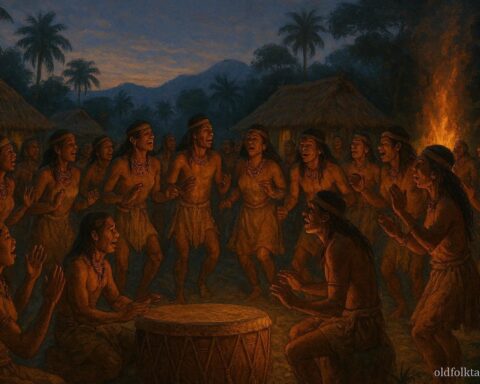
In the dense, humid forests of Suriname and the riverside settlements of Guyana, the rhythms of drums are more than music, they are the pulse of memory, communication, and survival. Among the Afro-Surinamese Maroon and Guyanese communities, drums carved from sacred wood are treasured, capable of speaking messages that transcend words, echoing ancestral wisdom and truth.
In one village, enslaved Africans lived under the oppressive rule of a greedy master. His commands were harsh, and his exploitation unrelenting. Yet the people held tight to the traditions brought from Africa, including the sacred drum, known to carry truth and spirit within its hollow body.
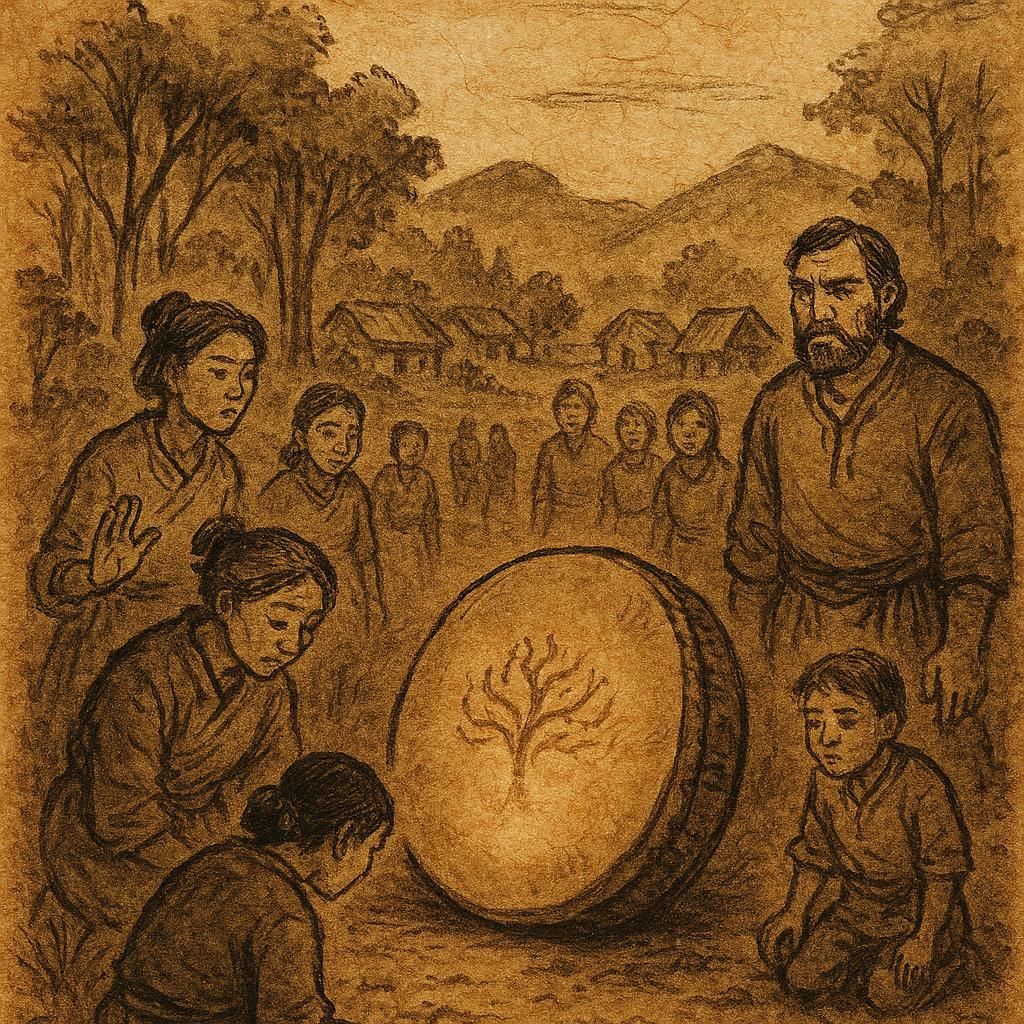
During a ceremonial gathering, the drum began to speak in ways that startled the master. Its beats carried words, revealing injustices and exposing his lies to the community. The villagers listened with awe as the drum’s voice, deep and resonant, recounted the master’s wrongdoings. His attempts to bend their minds and hide the truth were futile; the drum’s message pierced the veils of fear and secrecy.
Infuriated, the master seized a heavy stick and struck the drum, intending to silence it. But with each blow, the drum’s voice grew louder, vibrating with power, as if the spirits themselves were lending strength to its call. The forest trembled with its sound, and even those who had once hesitated felt courage rising within them.
At last, the people, united by the drum’s revelations, confronted the master. They rose against his injustice, their voices joined with the sacred rhythm, and reclaimed dignity and agency. The drum’s message had not only revealed truth but had inspired resistance. It reminded everyone that oppression, no matter how powerful, could not silence collective memory or ancestral justice.
From that day onward, the drum remained a symbol of vigilance and spiritual strength. It taught that truth resonates, and communities that honor their traditions and ancestors carry a power that cannot be subdued.
Moral Lesson
This folktale teaches that truth cannot be silenced and that collective action rooted in cultural and spiritual traditions empowers communities to resist injustice.
Knowledge Check
1. What is the drum’s special power?
It speaks the truth during ceremonies, revealing lies and injustices.
2. Where does this folktale originate?
Afro-Surinamese Maroon and Guyanese oral traditions.
3. Who tried to exploit the drum?
A greedy master seeking to oppress the enslaved community.
4. What happened when the drum was struck?
Each strike amplified its voice instead of silencing it.
5. What does the drum symbolize?
Spiritual power, resistance, and the preservation of cultural memory.
6. What lesson does the folktale convey?
That truth resonates through community memory and collective action cannot be suppressed.
Source: Afro-Surinamese and Afro-Guyanese folktale
Tradition: Akan and Bantu drumming traditions preserved by enslaved Africans
Cultural Note: The drum reflects both spiritual and political resistance, echoing historical Maroon and Guyanese uses of talking drums to maintain identity.