In the heart of Nicaragua, where the sun burns gold upon the volcanic hills and the air hums with the sound of cicadas, there lingers the sorrowful legend of La Mocuana. Her name has echoed for centuries through the streets of León and the valleys beyond, a tale born of greed, betrayal, and a love that turned to eternal vengeance.
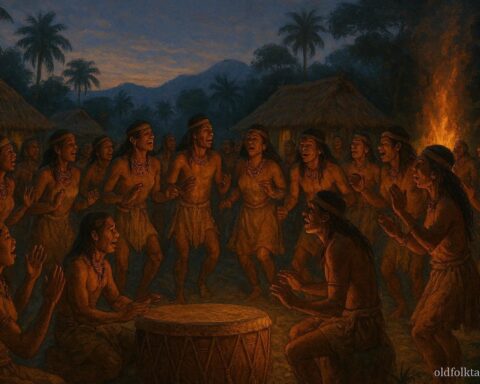
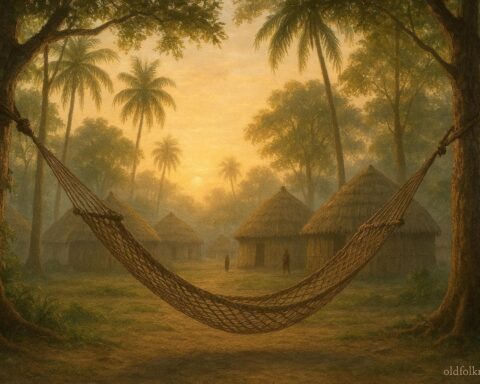
Long ago, before León’s grand churches and cobblestone plazas stood where they are today, the land was home to proud indigenous tribes. Among them was a great cacique, or chief, whose daughter, Mocuana, was famed for her beauty and wisdom. Her skin glowed like the dawn, her dark hair flowed like the river currents, and her eyes, deep and watchful, reflected both kindness and strength.
When the Spanish conquistadors arrived, bearing flags and crosses, they spoke of peace, alliance, and friendship. Yet behind their polished words lay hunger, hunger for gold, for jade, for all the hidden treasures that lay beneath the Nicaraguan soil.
One of them, a young Spaniard with gentle manners and cunning eyes, sought the chief’s favour. He charmed the villagers with tales of distant lands and gained Mocuana’s trust with whispers of eternal devotion. To her, he seemed noble, different from the others who looked at her people as savages to be conquered.
In time, she fell in love with him. Believing his promises of marriage and unity between their peoples, she shared with him the greatest secret of her lineage: the hidden treasure cave where her father kept the gold and jade of their ancestors, guarded for generations beneath the mountains of León.
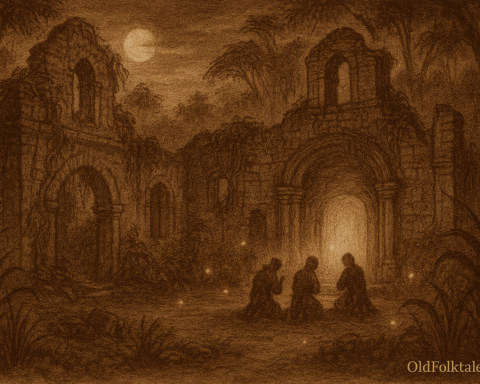
One fateful evening, under the dim glow of torches, she led him through narrow stone passages, her voice echoing softly against the cool cavern walls. The air shimmered with gold dust and the gleam of precious stones. But as soon as she turned her back, the Spaniard’s smile hardened. He seized the treasure, rushed out of the cave, and sealed the entrance behind him.
Realising too late what had happened, Mocuana cried out in anguish, clawing at the walls until her hands bled. The earth rumbled and the cave collapsed, burying her alive beneath the stolen riches. Her cries were said to echo for days through the valleys, until silence fell — the silence of death, betrayal, and broken trust.
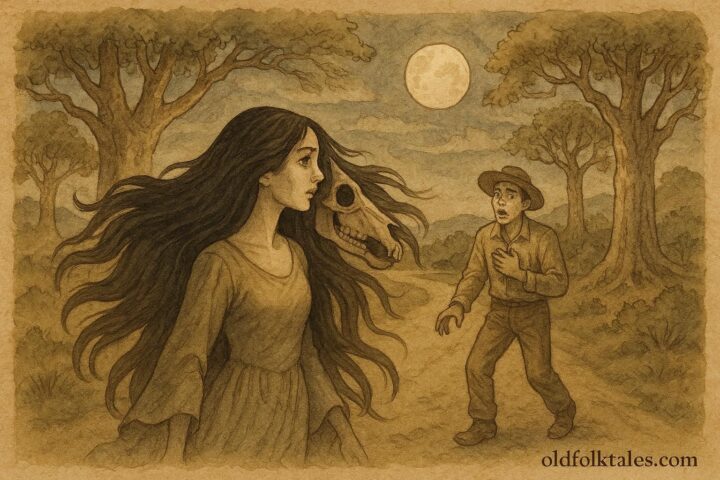
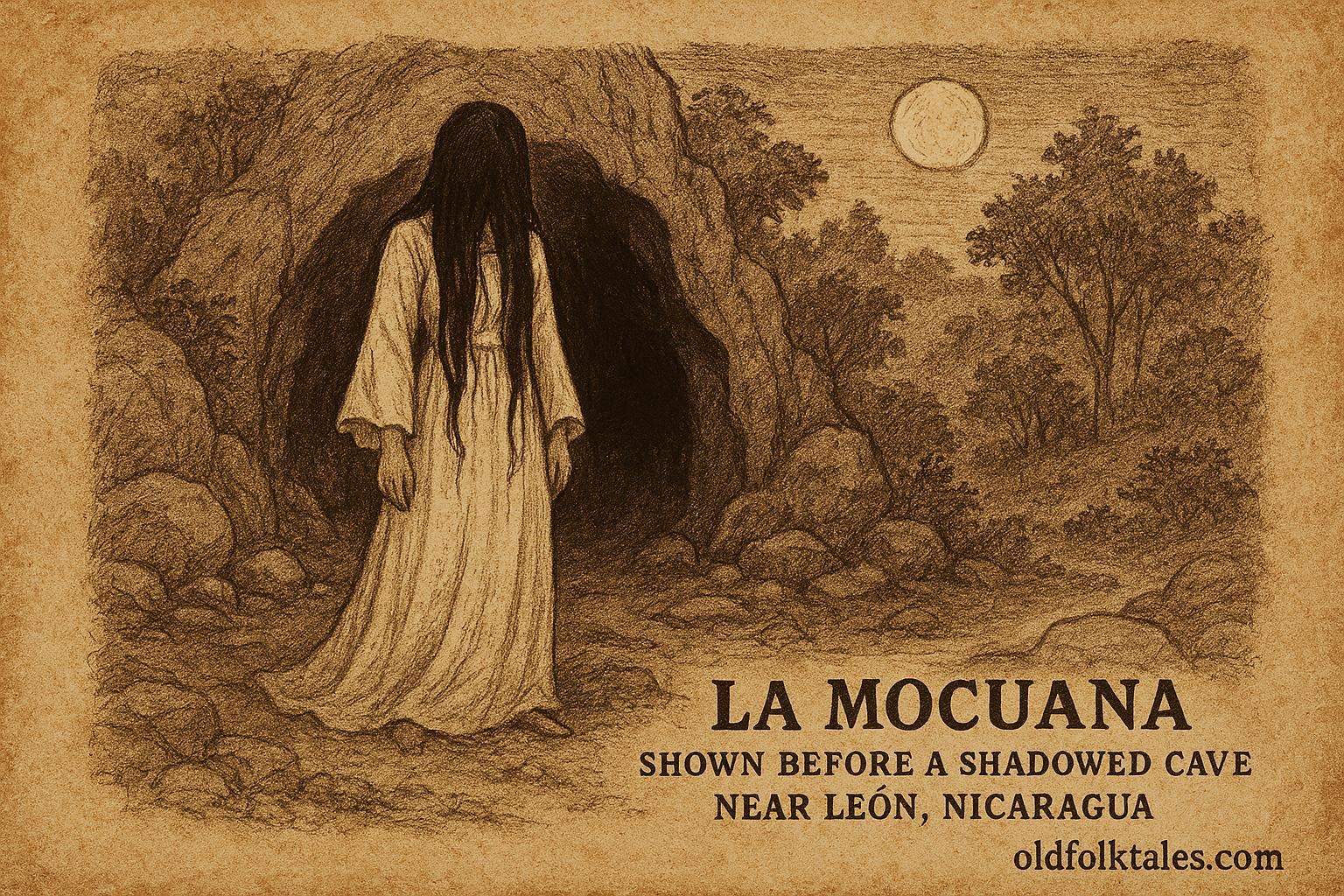
But death was not the end for La Mocuana. Her spirit, restless and wounded, rose from the ruins of that cave. Since that day, she is said to wander the forests and rocky hills of León and Sébaco. She appears as a beautiful maiden, her long black hair veiling her face, her white dress fluttering like mist in the moonlight.
Those who encounter her say she stands still at first, weeping softly as though lost and in need of help. Her voice is tender and sorrowful, drawing travelers closer. But when a man approaches, hoping to comfort her or drawn by her beauty, she lifts her hair, and beneath it is no face of flesh and sorrow, but a hollow skull, or empty sockets that stare into the soul.
Some who see her are said to vanish into the forest, never to return. Others lose their minds, forever haunted by the memory of that terrible gaze.
The people of León warn young men: beware the maiden who weeps in the dark; not every beauty is born of the living. They say that La Mocuana’s ghost seeks not love, but justice, to lure greedy or unfaithful men into the same eternal trap she once suffered.
To this day, villagers speak her name in hushed tones when the wind sweeps through the mountains. And in the quiet of night, when the rivers glimmer beneath the moon, the rustling leaves seem to whisper her sorrow: “Betrayal never dies.”
Moral Lesson
The story of La Mocuana teaches that greed and deceit bring ruin not only to the living but also to the spirit. It warns against the betrayal of trust and the exploitation of innocence. True wealth lies not in gold or jade, but in loyalty, honour, and love uncorrupted by desire.
Knowledge Check
1. Who was La Mocuana before her transformation into a spirit?
She was an indigenous princess, daughter of a local chief in León, Nicaragua.
2. What caused La Mocuana’s tragic fate?
She was betrayed by a Spanish suitor who tricked her into revealing her father’s treasure cave, then trapped her inside.
3. Where is La Mocuana said to appear?
Near caves, forests, and mountain regions around León and Sébaco, in central Nicaragua.
4. How does La Mocuana punish those who encounter her?
She reveals her hollow skull to deceitful men, causing them to vanish or go mad.
5. What cultural theme does the tale of La Mocuana reflect?
It reflects colonial-era tensions between Indigenous people and Spanish conquerors, emphasizing betrayal and lost innocence.
6. What lesson does the story impart about greed?
That greed and betrayal destroy the soul and awaken vengeance that endures beyond death.
Source: Adapted from Cuentos, Leyendas y Mitos de Nicaragua by Pedro Alfonso Morales; INTUR – Myths and Legends of Nicaragua.
Cultural Origin: Nicaragua (León and Central Highlands; Colonial-era Indigenous folklore)