The Nahual: The Shapeshifting Sorcerer of Oaxaca
In the highlands of Oaxaca, where the air carries the scent of copal and the wind hums with ancestral whispers, people still speak of the nahual, the shapeshifting sorcerer who walks between worlds. Under the moonlight, they say, a man may shed his human form and move as a jaguar, a coyote, or an owl. He may use his gift to heal, to protect, or to destroy.
For the Zapotec and Mixtec peoples, this power is neither blessing nor curse. It is a birthright, a sign that one’s spirit is bound to the natural world. To be a nahual is to live between light and shadow, guided by harmony and danger alike.
Immerse yourself in Latin America’s stories of passion, transformation, and spirit.
The Village Beneath the Ceiba
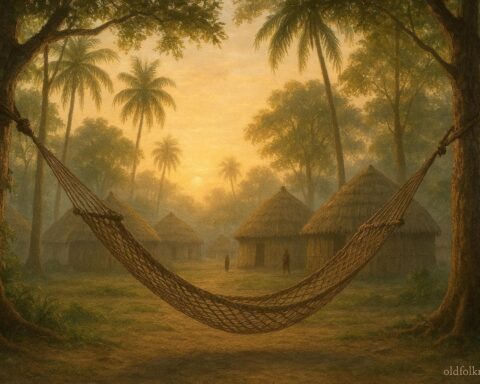
Long ago, in a small mountain village surrounded by maize fields and ceiba trees, lived a humble shepherd named Tomás. His days were simple: tending goats by day, returning at dusk to his mother’s firelit kitchen. He was known for his gentleness, for he never struck his animals or raised his voice.
But Tomás carried one fear, the night. When the sun slipped behind the mountains, the valley turned silent except for the cry of owls and the distant growl of wildcats. His grandmother had told him tales: “The nahuales roam when the moon hides. Some guard our souls, others steal them.”
Tomás tried not to believe, but each time he saw strange tracks by the river, paw prints that ended in human footprints, unease stirred in his heart.
Whispers of the Nahual
The people of the village often spoke of Don Mateo, the old healer who lived on the outskirts, beyond the cornfields. He was respected but feared. He walked barefoot even in winter, his staff carved with serpents and suns, his eyes bright as obsidian.
When storms threatened or crops failed, Don Mateo would climb the hill, burn copal resin, and murmur to the wind. By morning, the rains would come, or the sickness would pass. Some said he prayed to the saints; others whispered that he spoke to the spirits beneath the earth.
Tomás often saw him walking the paths at night, the faint glow of his lantern flickering among the trees.
A Shadow in the Fields
One dry season, misfortune struck. Chickens were found torn apart, goats vanished, and eerie howls echoed through the valley. The villagers gathered in fear, blaming a nahual turned evil.
“It is punishment,” said one.
“No,” said another, “it is Don Mateo’s doing, his magic has turned.”
Tomás felt torn between fear and loyalty. Don Mateo had once healed his mother’s fever with herbs and a whispered prayer. Could such a man be a beast of darkness?
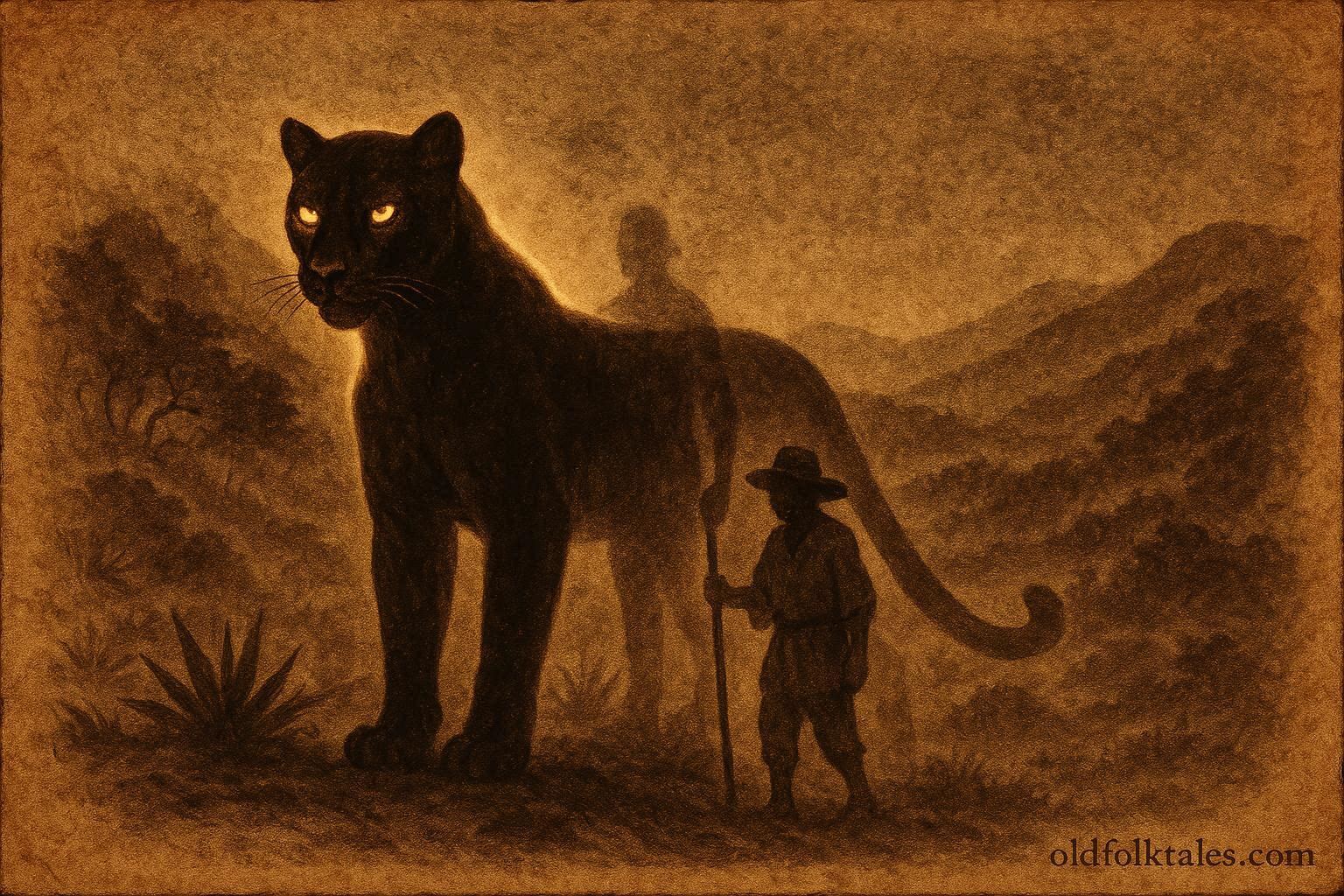
One night, as he led his herd home, Tomás heard a growl so deep it rattled his bones. He froze. From behind the ceiba tree emerged a black jaguar, larger than any he had imagined, its fur shimmering like liquid shadow. Its golden eyes fixed on him, not with hunger, but with warning.
Suddenly, a cold wind swept through the field, and from the woods came forms that looked human but had no faces, dark, shifting spirits said to feed on fear. The jaguar stepped between Tomás and the phantoms. It roared, a sound that shook the stars themselves, and the shadows scattered into the hills.
When Tomás blinked, the jaguar was gone. Only bare human footprints remained in the earth, one dragging slightly, like those of the old healer.
The Secret Revealed
The next morning, Tomás went to Don Mateo’s hut. The healer sat by the fire, bruised and weary, as though he had fought an invisible battle.
“You saw, didn’t you?” Don Mateo said, without turning.
Tomás nodded. “You are the nahual.”
The old man smiled sadly. “We all are, in part. Some just forget which side of themselves they serve.”
He lifted a hand and drew two circles in the ash, one bright, one dark, their edges touching. “The nahual is not a monster. He is the balance. My spirit walks as a jaguar because my duty is to protect. Others walk as serpents or owls. Power itself is not good or evil, only the heart that guides it.”
Tomás listened, trembling, as Don Mateo’s voice softened. “Tell the people nothing. Fear makes them blind. One day, when I am gone, another will take my place. Perhaps it will be you.”
The Last Roar
Months passed. Then, one rainy night, lightning struck the ceiba tree by the healer’s hut. When the villagers arrived, they found Don Mateo’s staff broken, but no trace of the old man.
That same night, a roar echoed across the valley, deep and thunderous, rolling through the storm. The next morning, the rain had stopped, and the fields, once dry and cracked, shimmered green again.
The people said the jaguar spirit had claimed its home.
Years later, travelers still told of a shadowed shape seen at the edge of the maize fields, silent, golden-eyed, watching over the village. When misfortune loomed, the dogs would fall quiet, and the corn would sway though no wind blew. The elders would whisper, “El nahual guarda el valle”, The nahual guards the valley.
Explore the land of La Llorona, trickster coyotes, and magical realism in Mexican folklore
Moral Lesson
The legend of the Nahual teaches that power and spirit must walk in harmony. Every person carries a dual nature, light for healing, shadow for protection. Those who understand both sides live wisely and serve their community. But those who seek to control or exploit the sacred will lose their way. The story reminds us that balance, not fear, sustains the world.
Knowledge Check
- What is a nahual in Oaxacan tradition?
A person born with a spiritual bond to an animal, able to shapeshift and use that power for protection or harm. - What animal form does Don Mateo take?
He transforms into a black jaguar, symbol of strength, protection, and divine guardianship. - What lesson does Don Mateo teach Tomás?
That true power is neither good nor evil; it depends on the wisdom and purity of the heart. - How does the village know Don Mateo’s spirit remains?
They hear the jaguar’s roar and feel his protective presence after his death. - What moral does the story carry?
Balance between human and spirit nature brings harmony; greed or fear leads to ruin. - What cultural traditions preserve the nahual legend?
Mixtec and Zapotec oral storytelling, rooted in indigenous Mexican spirituality.
Source: Fernando Horcasitas, El Nahualismo: Creencias y Tradiciones del México Indígena (1956)
Cultural Origin: Mixtec and Zapotec (Oaxaca region)