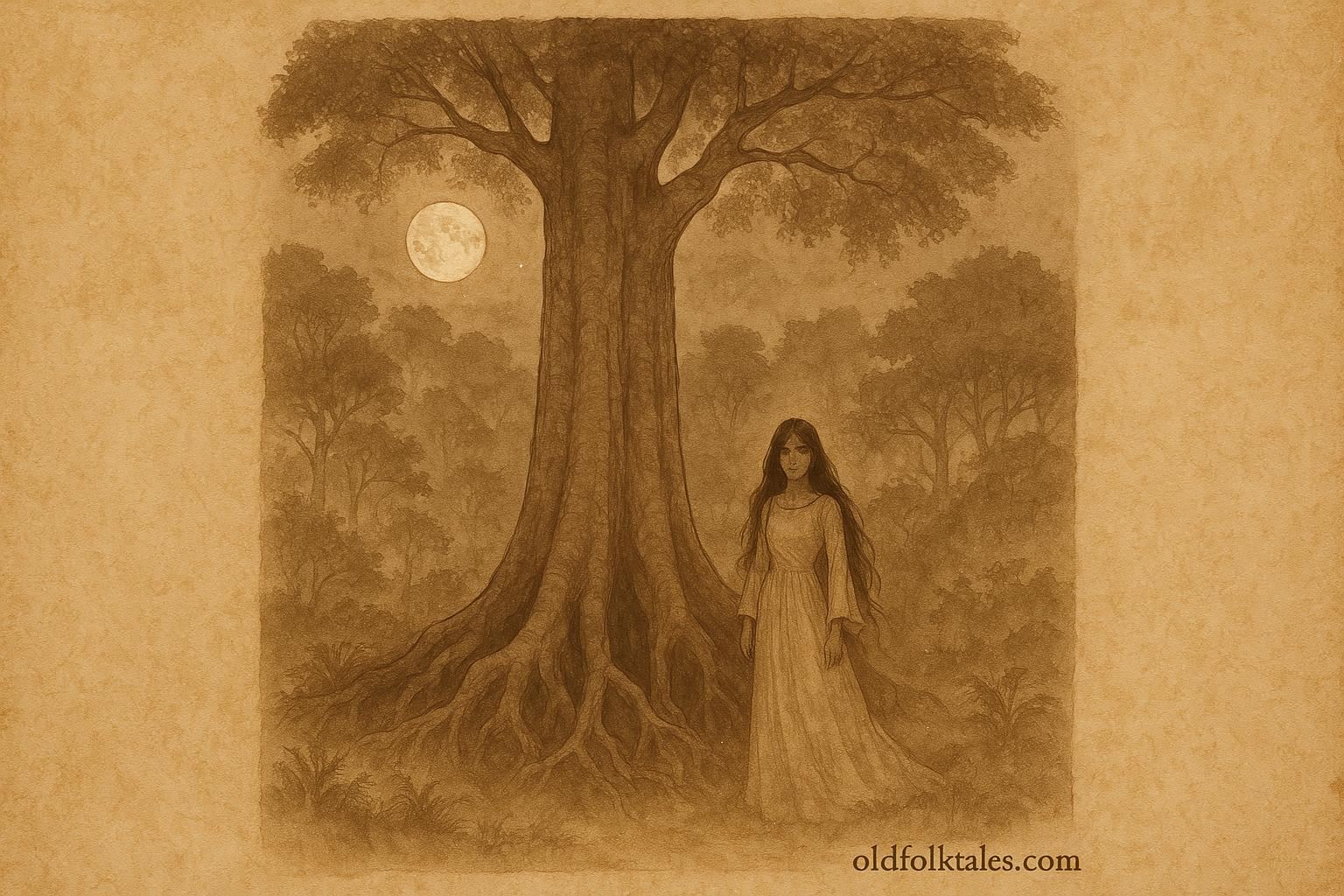
In the moonlit forests of Belize, where the silk cotton tree towers above the shadows and its roots twist like sleeping serpents, people whisper about the Xtabai. This spirit, said to dwell beneath the ancient ceiba, walks the night in the form of a breathtaking woman. Her presence is marked by the faint scent of honey and wildflowers, drifting through the still air, a perfume both inviting and foreboding.
The Xtabai is as mysterious as the jungle itself. To kind-hearted men, she appears gentle and pure, with eyes like dark pools and hair that glimmers like spun silk in the moonlight. Her voice is soft, promising comfort and love. But to the cruel, the arrogant, or the unfaithful, she reveals her true form, that of a serpent or demon cloaked in human beauty.
Click to read all South American Folktales — timeless stories from the Andes to the Amazon.
There was once a man in a northern Belize village known for his pride. He was boastful, handsome, and cruel to women, often laughing at their tears. One humid night, after a night of boasting and rum, he stumbled into the forest, humming to himself. The moon hung low, and the ceiba tree stood like a giant sentinel before him.
Then, from behind the tree, he saw her.
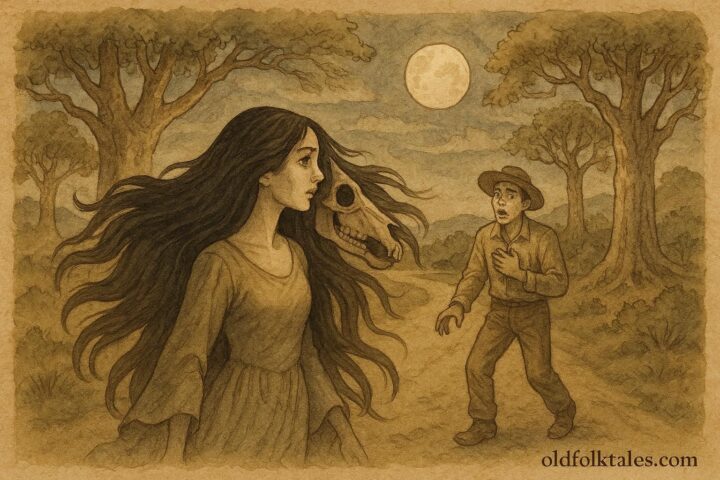
The woman’s long hair fell to her waist, and her skin glowed faintly in the pale light. The air filled with a sweet fragrance, richer than any perfume he had known. When she smiled, his heart raced. She turned and walked deeper into the shadows, her white gown trailing softly over the leaves.
The man followed, enchanted. Every few steps she glanced back at him, her eyes half-hidden, her voice whispering like wind through the reeds. “Come,” she beckoned. “Follow me, my love.”
He obeyed, lost in the spell of her beauty. The forest seemed endless, the path winding and strange. His breath quickened, but desire drowned out every warning that echoed in his memory. Soon, they reached the great silk cotton tree. Its roots bulged like coiled snakes, and its branches stretched high into the clouds.
The woman stopped, her back still to him. The fragrance grew overpowering, almost choking. “Now,” she whispered. “Look at me.”
When he did, the world spun. Her face, once beautiful, melted and twisted into horror. Her eyes burned like fire, her teeth long and jagged. From beneath her dress, a serpent’s body slithered into view. The man screamed, but it was too late. The forest erupted in laughter — a sound not of joy but of mockery.
By dawn, villagers found him lying lifeless at the foot of the ceiba. His eyes were open, his skin pale, and his heart darkened as though touched by smoke. No wound marked his body, yet he was gone. The elders said he had met the Xtabai, punished for his arrogance and cruelty.
Since then, travelers passing through the Belizean bush have spoken of a sweet, haunting scent that appears out of nowhere. Some say it is the warning breath of the Xtabai. The wise know better than to follow the perfume. Instead, they whisper a prayer, cross themselves, and walk swiftly in the opposite direction.
For though beauty may call to the heart, not all that shines in moonlight is meant to be touched. The Xtabai waits still, beneath the ancient silk cotton trees of Belize, her sorrow as deep as her vengeance, her perfume lingering as a test for those who would follow desire into darkness.
Moral Lesson
Desire can blind the heart to danger. True beauty lies not in appearance but in the spirit’s purity.
Knowledge Check
1. Who is the Xtabai in Belizean folklore?
The Xtabai is a spirit who appears as a beautiful woman beneath the silk cotton tree, testing human hearts.
2. What does the Xtabai symbolize in the story?
She symbolizes temptation, deceit, and the consequences of moral weakness or arrogance.
3. Why did the man in the story die?
He followed the Xtabai out of pride and lust, ignoring spiritual warnings, and was struck down by her true demonic form.
4. What natural setting is central to the Xtabai legend?
The silk cotton tree, or ceiba, sacred in Maya belief and often seen as a gateway between worlds.
5. What does the sweet perfume of the Xtabai represent?
It represents temptation, an alluring trap that leads to destruction for those who follow it.
6. What cultural traditions shaped the Xtabai folktale?
The tale blends Maya, Creole, and Mestizo traditions of northern Belize, reflecting spiritual respect for nature.
Source: Adapted from the Maya–Creole folktale “Xtabai – The Spirit of the Silk Cotton Tree” in Legends of Belize by Francis and Carlos Lino, and BelizeHub.com.
Cultural Origin: Belize (Maya–Creole folklore)