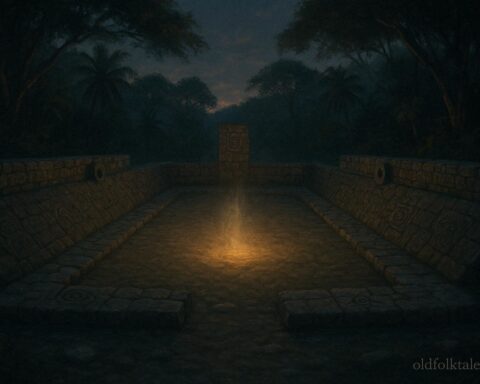
Long before villages spread across the valleys and long before gardens followed the curve of the rivers, the Taíno people lived by wandering and waiting. They gathered what the forests offered and fished the waters when the tides were kind. Some seasons were generous. Others were lean and unforgiving. Children learned early that hunger was not an enemy to fight but a force to endure.
Above their homeland stood a mountain covered in thick green growth. Clouds often rested on its peak as if the sky itself had chosen it as a seat. The elders said the mountain was alive. They warned the people never to shout at it, never to throw stones at its slopes, and never to cut its trees without reason. They called the spirit of the mountain Yúcahu.
Yúcahu was not seen often. When he was, he appeared not as a ruler or a warrior but as a presence. Sometimes he looked like a man formed of leaves and soil. Sometimes he was only a voice carried on warm wind. The elders taught that Yúcahu listened more than he spoke, and that he judged not by words but by patterns of behavior over time.
Immerse yourself in Latin America’s stories of passion, transformation, and spirit.
In those days, the people grew restless. Wandering made it hard to care for the old and the young. Mothers worried each season whether there would be enough to eat. Hunters returned with empty hands more often than before. The sea changed its moods, and the forest no longer gave as freely as it once had.
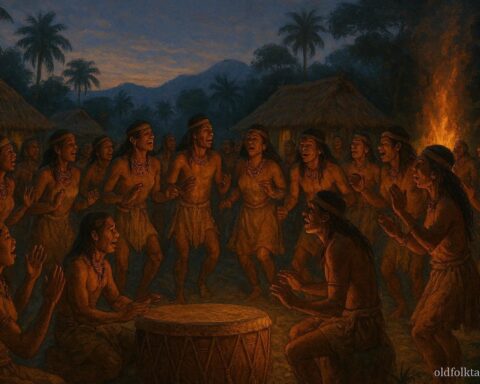
One evening, after a long day of searching, the people gathered near the base of the mountain. They did not shout. They did not demand. They simply sat in silence. Fires burned low. Children slept. The elders placed small offerings on the ground: shells, woven fibers, clean water. No one asked for wealth. They asked only for a way to survive together.
The ground beneath them grew warm.
From the mountain came Yúcahu. He did not arrive with thunder or fear. He walked slowly, as if testing whether the people would remain patient. When he spoke, his voice sounded like soil being turned by hand.
“You are hungry,” he said. “But hunger alone does not teach. What will you do if I give you food?”
The people did not answer at first. Finally, an elder stood and said, “We will remember where it comes from.”
Yúcahu nodded. He knelt and pressed his hand into the earth. From the soil, he lifted a thick root, pale and heavy. He showed them cassava. Then he lifted seeds and showed them maize. He explained that these foods would not chase them like animals or hide like fish. They would stay where they were planted, but only if treated with care.
“You must not take more than you need,” Yúcahu said. “You must not plant without gratitude. And you must never forget that the earth is not silent simply because it does not speak.”
He taught them how to clear small patches of land without scarring the forest. He showed them how to loosen the soil, how to wait for the right rains, how to recognize when a plant was ready and when it was not. He warned them that these crops would respond not only to skill but to intention.
Before leaving, Yúcahu gave one final instruction. “If you ever plant only for pride, the ground will remember.”
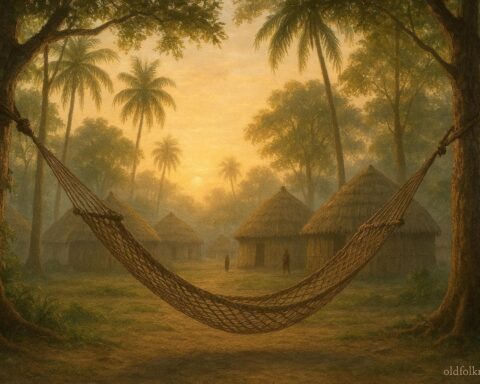
For many seasons, the people followed his teachings. Gardens grew. Children no longer cried from hunger. The old were fed first. Harvests were shared. Each planting began with quiet words of thanks. Each harvest ended with rest.
But as time passed, memory softened.
A younger generation arose who had not known the hunger of wandering. They measured their worth by how much they could store rather than how much they shared. Some planted larger fields than they needed. Others mocked the rituals, calling them old habits for fearful minds.
One season, the cassava grew bitter. The maize stalks stood tall but empty. The people argued among themselves, each blaming the other. They worked harder but listened less. They took more from the soil and gave less in return.
At last, the elders led them back to the mountain.
Yúcahu did not appear at once. Days passed. The people waited. They sat without tools. They did not ask for forgiveness. They spoke of what they had done wrong and what they had forgotten.
When Yúcahu finally came, his form was dimmer than before.
“You planted as if the earth owed you,” he said. “The crops responded.”
He taught them again, but this time he made them wait. Some seeds did not grow until seasons later. Some land needed to rest. The people learned that repair takes longer than damage.
From then on, the story of Yúcahu was told not as a gift but as a responsibility. Farming was never just work. It was a relationship. Each root carried memory. Each seed listened.
And long after Yúcahu stopped appearing, the people said that when farmers planted with humility, the mountain breathed easier.
Explore the ancestral legends of Canada, Mesoamerica, and South America’s Indigenous tribes.
Moral lesson
Sustenance is not a possession but a partnership. When people treat the earth with gratitude and restraint, it provides. When they act with entitlement and pride, it responds in kind.
Knowledge check
1 What did Yúcahu ask the people before giving them crops?
Answer: He asked what they would do if he gave them food and whether they would remember its source.
2 Why were cassava and maize important in the story?
Answer: They represented stable food sources that required care, patience, and respect.
3 What caused the crops to fail later on?
Answer: The people planted with pride, ignored rituals, and took more than they needed.
4 How did Yúcahu respond when the people returned to the mountain?
Answer: He made them wait and taught them that repairing harm takes time.
5 What role did gratitude play in farming?
Answer: Gratitude maintained balance between humans and the earth.
6 What does the story teach about responsibility?
Answer: That survival depends on respectful relationships, not exploitation.
Source
Adapted from Taíno religious narratives preserved by the Smithsonian National Museum of the American Indian
Cultural origin
Taíno peoples, Greater Antilles