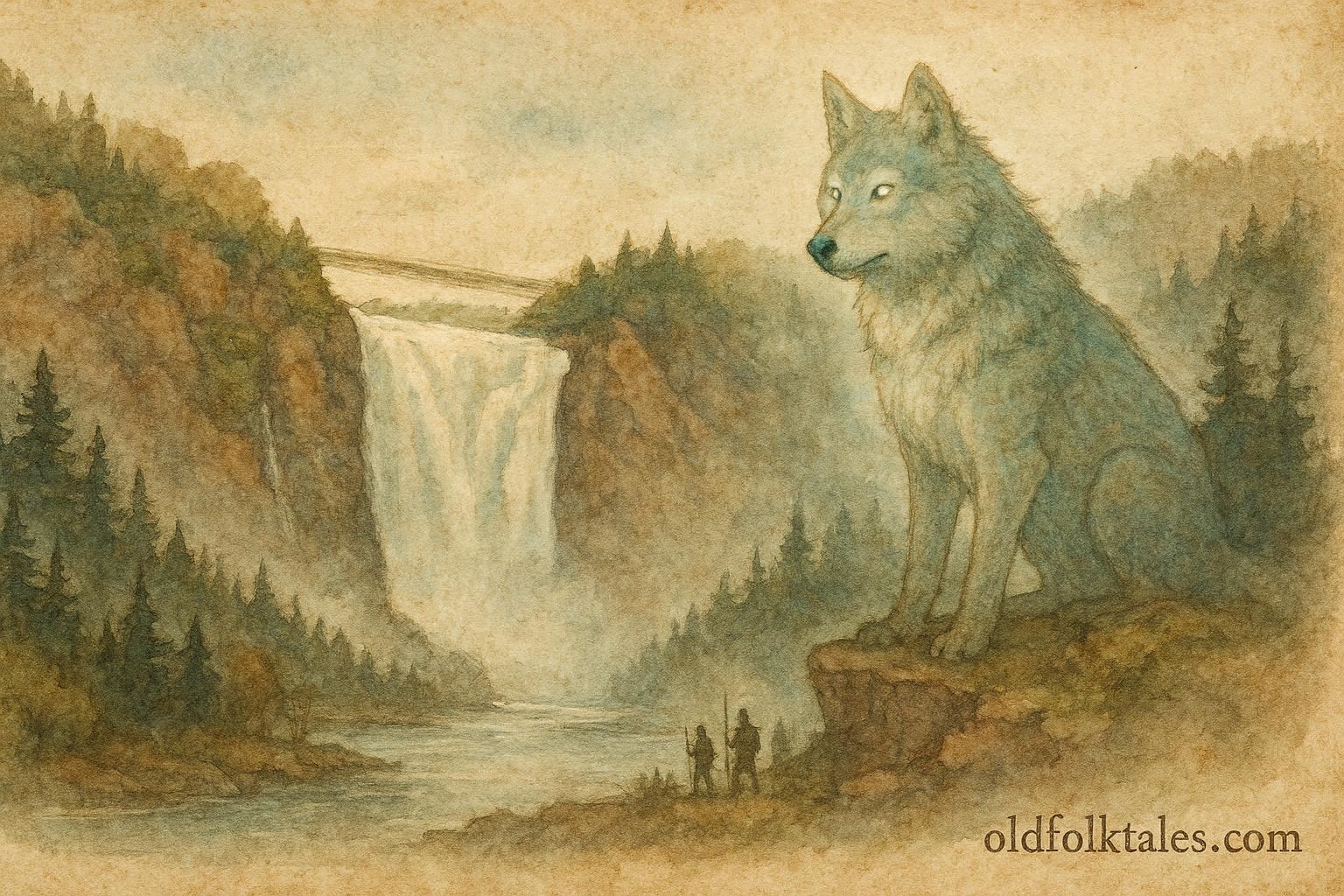
In the heart of Quebec, where the Montmorency River tumbles over cliffs and sprays mist into the air, people have long told stories of a wolf unlike any other. This was no ordinary wolf; it was the guardian of the falls, a spirit tasked with protecting the land, the animals, and the waters. Those who ventured too close without respect were said to face its wrath, while those who honored the forest could feel its silent, protective presence.
Long ago, hunters from nearby villages came to the falls in search of game. Some were seasoned and careful, following the rhythms of the forest and the river. Others, driven by greed or carelessness, took more than they needed, disturbed nests, or left litter behind. It was during these careless times that the wolf spirit appeared most fiercely.
The wolf was enormous, larger than any natural animal, with eyes that glowed faintly in the moonlight. Its fur shimmered like wet stone, reflecting the silver spray of the falls. Villagers reported hearing its howl echo through the cliffs at dusk, a sound that carried both warning and sorrow. The elders said it could walk silently through the woods or appear instantly where it was most needed. Its presence reminded humans that nature was alive, watching, and deserving of respect.
Discover ancient tales passed down by the Indigenous peoples of the Americas.
One autumn, a group of hunters arrived at Montmorency Falls, unaware of the warnings. They set up camp near the riverbank and prepared to hunt deer and small game in the surrounding forest. One young hunter, impatient and brash, ventured alone. He trampled through berry patches, startled nesting birds, and left his fire unattended. That evening, a low growl echoed from the cliffs. The other hunters paused, exchanging uneasy glances.
From the shadows, the wolf appeared. Its massive form seemed to materialize from mist and water spray. The young hunter froze, fear gripping him as the spirit’s glowing eyes held his gaze. Without moving, the wolf circled him, letting out a deep, mournful howl that resonated in the valley. The young hunter’s heart pounded. He realized, too late, that he had not respected the land.
Suddenly, the wolf vanished, leaving only paw prints glowing faintly in the wet moss. The young hunter stumbled back to camp, trembling. His companions, sensing the danger he had faced, told him to leave immediately. From that night forward, he became a changed man. He spoke of the wolf not with fear alone, but with reverence, warning others to treat the forest and the river with care.
Not all encounters were fearful. Some villagers spoke of meeting the wolf during times of danger, illness, or flood. One elderly woman had lost her way during a winter snowstorm. Exhausted, she sank into the snow near the riverbank. As she feared she would perish, a massive shadow appeared, guiding her safely to a nearby cabin. The wolf’s eyes glowed like lanterns, leading her through the blinding snow. When she reached safety, the wolf was gone, leaving only the sound of distant water.
Over generations, stories of the wolf spirit spread beyond Montmorency Falls. Children were taught to be mindful, to leave no trace, and to respect the river and forests. Hunters, trappers, and travelers learned to observe quietly and act responsibly, understanding that the wolf’s presence was both a test and a blessing. Those who heeded the warnings often returned home with successful hunts and safe passage, while those who ignored them faced misfortune, illness, or sudden disappearance in the forest.
Some say the wolf can still be seen today, especially on misty mornings when the sun rises over the falls. Its form moves silently along the cliffs, and the faint sound of its howl reminds visitors that the land has guardians who watch over it. Montmorency Falls is no longer just a place of beauty; it is a sacred space, alive with the echoes of centuries-old respect for nature and the lessons of the wolf spirit.
The wolf’s story is not merely a tale of fear. It is a story of balance, teaching humans to live in harmony with the natural world. It reminds us that the forest and river have voices of their own, and those who listen carefully can walk safely in their domain. The wolf spirit protects those who honor the land and punishes only those who forget their responsibilities.
Moral Lesson
Respect for nature ensures safety, harmony, and survival. Guardians of the land may punish carelessness, but they also guide and protect those who act with reverence.
Knowledge Check
- Who is the Wolf Spirit of Montmorency Falls?
A mystical wolf that protects the falls, forest, and river. - Why did hunters fear the wolf?
It punished those who disrespected the land and wildlife. - How could the wolf help humans?
By guiding lost travelers or protecting those in danger. - What does the wolf symbolize?
Guardianship, respect for nature, and consequence for carelessness. - How did villagers respond to the wolf?
They honored the forest, acted carefully, and taught respect to children. - What lesson does the story teach?
Live in harmony with nature, respect sacred places, and heed warnings.
Source: BanQ Folklore Collections; Université Laval Archives.
Cultural Origin: French Canadian folklore, Quebec.