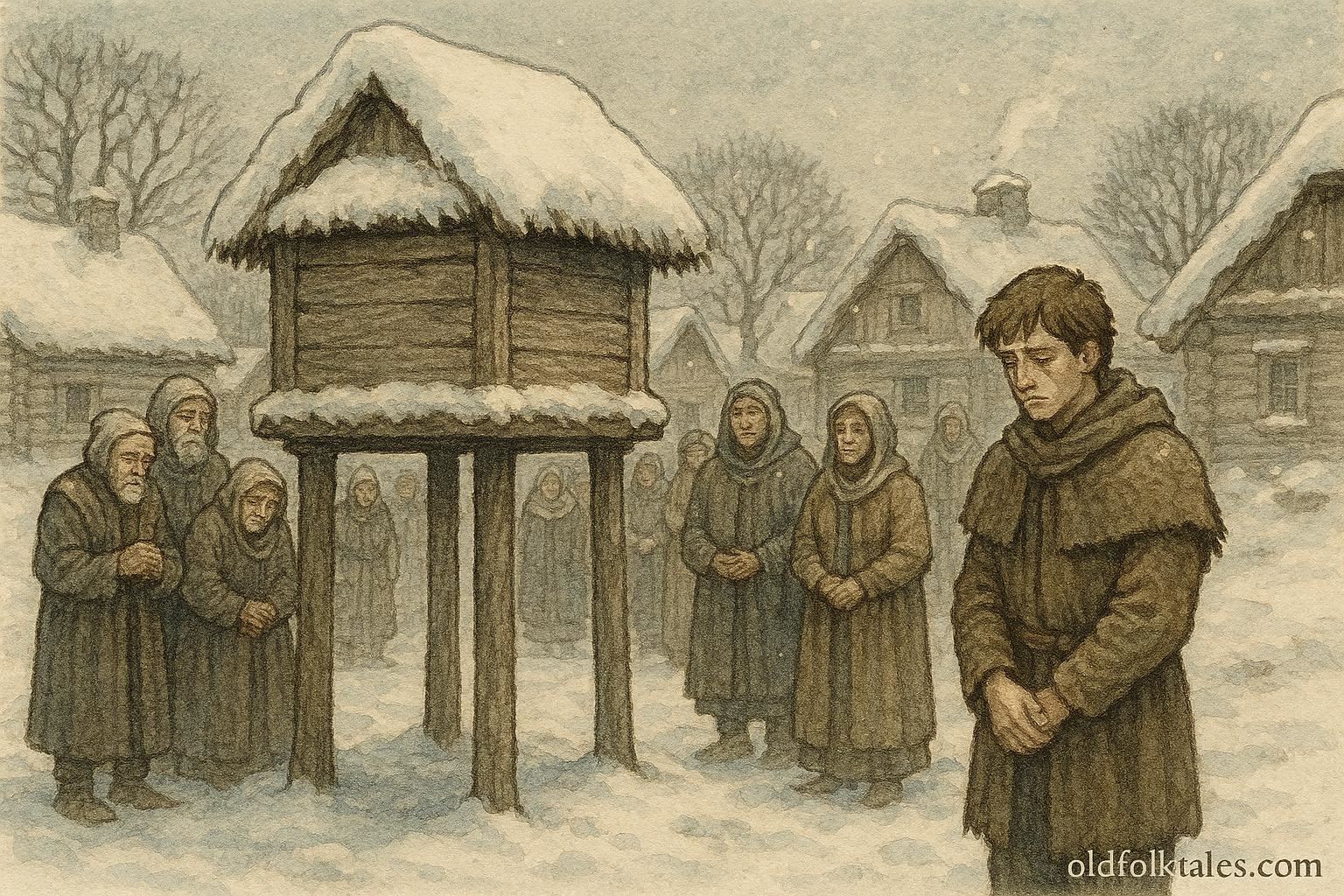
In the frozen lands of the north, where the sun hovers low above the horizon during winter months, the people of an Athabaskan village depended on the winter store. This store was not simply a cache of food. It was a sacred trust, maintained by the elders and caretakers who understood that gratitude and humility were as important as preparation. Every year, before the first snowfall, the villagers would gather meat, dried fish, berries, and stored grains. The elders reminded everyone that the food belonged not to a single family, but to the community, and that selfishness or boastfulness could bring misfortune.
The story begins with a young man named Ayah, who was strong, clever, and ambitious. He admired the winter store greatly, not just for the food but for the respect and honor that came with guarding it. Each year, he helped the elders prepare the cache, carefully stacking the supplies, sealing the containers, and whispering the customary prayers to the spirit of the winter store.
One winter, Ayah became proud of his abilities. He had learned the rituals quickly and took pride in how efficiently he could prepare the store. His pride, however, grew into arrogance. He began to boast in the village square about his skill, comparing himself to the other caretakers. “I alone could guard this winter store,” he said loudly, “and it would never fail while I am in charge.” His words carried through the cold air, and some villagers frowned, feeling discomfort at the disrespect for collective effort.
Discover Mexico’s timeless tales blending Indigenous roots and Spanish tradition
The elders warned him quietly. “Ayah,” they said, “the winter store is alive in its own way. It knows the hearts of those who touch it. Pride can hollow it, just as neglect can spoil it. Remember, it feeds all or none.” But Ayah’s ego would not listen. He laughed, thinking the elders were old-fashioned and overly cautious.
That night, the wind howled over the snow-covered village. The caretakers awoke to strange sounds near the winter store. When they approached, they found some of the containers empty. Meat that had been hanging in the cold cache was gone, and the berries that had been carefully dried and stored were scattered across the snow. Ayah ran to the cache, realizing too late that his pride had disturbed its balance.
The elders gathered the villagers and explained that the winter store reacts to the intentions of those who approach it. If arrogance or selfishness enters the heart, the store will refuse to give abundance. It will shrink, vanish, or redistribute itself until humility and gratitude are restored. The villagers understood that this was no ordinary loss. They had been tested.
Ayah, humbled by his mistake, knelt before the elders and the remaining cache. He offered a prayer of repentance and vowed never to let his pride control his actions again. For days, the villagers worked together, not to replenish the store by human hands alone, but to restore balance. They sang old songs of gratitude, recited prayers taught by the elders, and shared what little food remained with care and generosity. Slowly, the winter store returned to its full measure.
From that winter onward, the villagers never again boasted about their abilities or tried to claim individual glory. Every action around the store became a lesson in respect, patience, and humility. Children grew up hearing the story of Ayah and the winter store that emptied at pride, understanding that abundance comes not only from hard work but from a heart aligned with community values and reverence for the spirits of the land.
The story teaches that human effort, while important, must be guided by ethics and humility. Pride can undo the work of a whole community, and respect for shared resources ensures survival, harmony, and spiritual balance.
Click to read all South American Folktales — timeless stories from the Andes to the Amazon.
Moral Lesson
True abundance is not measured by what one possesses individually, but by what one contributes to the well-being of all. Pride and selfishness can undo what care and humility have built. Community, gratitude, and respect are the foundations of survival in both human and spiritual realms.
Knowledge Check
- What happens to the winter store when villagers act with pride?
Answer: The food shrinks or disappears because the spirit of the winter store punishes arrogance. - Who was the young man whose pride disturbed the winter store?
Answer: Ayah, a strong and ambitious young man of the village. - How did the elders explain the store’s behavior?
Answer: They said the winter store reacts to the hearts of those who touch it and will withhold abundance if approached with selfishness or arrogance. - What actions did the villagers take to restore the winter store?
Answer: They offered prayers, sang songs of gratitude, shared food generously, and approached the store with humility. - What is the main lesson children learn from Ayah’s story?
Answer: That pride can harm the community and that humility, respect, and gratitude are essential for survival. - Why is the winter store considered sacred?
Answer: Because it symbolizes collective responsibility, spiritual balance, and the importance of ethical behavior in human interactions with nature.
Source:
Adapted from Subarctic subsistence ethics, Native-Languages.org (2007)
Cultural Origin:
Athabaskan First Peoples, Northern Canada