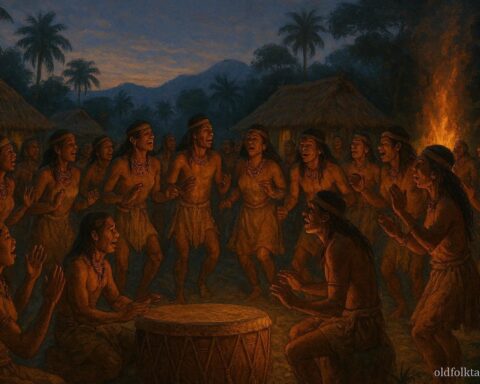
In the vast green heartland of South America, where Paraguay stretches beneath endless skies, the Guaraní people have listened to the wind for countless generations. But they do not merely hear the rustling of leaves or the whisper of air through grass. No, the Guaraní hear something far more profound, something that fills their hearts with both reverence and unease. They hear names, the names of those who have departed this world, carried on certain winds that blow at particular times, in particular ways.
The elders speak of this phenomenon with quiet certainty, their weathered faces serious as they gather the young ones close. “Listen,” they say, “but listen carefully. Not all winds carry voices. Not all breezes speak. But when the wind changes, when it comes from the direction of the setting sun, when it moves through the trees with a sound like distant conversation, that is when you must pay attention. That is when the dead remember us, and we must remember them.”
Click to read all South American Folktales — timeless stories from the Andes to the Amazon.
Among the Guaraní, it is understood that the boundary between this world and the next is not a wall but a veil, thin as morning mist. The ancestors do not truly leave. They remain close, watching over their descendants, offering guidance through signs and omens. And one of the most powerful ways they communicate is through the wind itself, that invisible force that touches everything, that travels between all worlds.
The story is told of how this knowledge came to the people. Long ago, when the world was younger and the spirits walked more freely among mortals, a great shaman sat beneath a ceibo tree, meditating on the mysteries of life and death. He had lost his beloved wife that season, and his grief was a heavy stone in his chest. As he sat in silence, the wind began to blow, gentle at first, then stronger, moving through the branches above him with a sound that was almost, but not quite, like human speech.
The shaman stilled his breathing and opened his heart. And then he heard it, clear as water over stones, his wife’s voice calling his name. Not with sadness, not with longing, but with love and reassurance. She spoke to him through the wind, telling him that death was not an ending but a transformation, that she watched over him still, that he must continue his journey without fear.
From that day forward, the shaman taught his people to listen to the wind with new ears. He explained that when the dead speak our names through the moving air, it is not a call to join them, not a harbinger of immediate doom. Rather, it is a message that great change approaches, that the path ahead will shift, that we must prepare ourselves for transformation.
The Guaraní learned to recognize the signs. The wind that carries names has a particular quality, a resonance that seems to come from very far away and very close at once. It often arrives at twilight, that liminal time when day becomes night, when the world itself stands balanced between states. Those who hear their name spoken by this wind report a strange sensation, as if time itself has paused, as if they stand for a moment outside the normal flow of existence.
But hearing your name is not something to fear. The elders emphasize this point with great care, especially to the young who might be frightened by such an experience. “The ancestors call to us because they love us,” the old ones explain. “They warn us of change so that we might face it with courage. They speak our names to remind us who we are, where we come from, what blood flows in our veins.”
When someone hears their name on the wind, they are counseled to sit quietly and listen for any other messages that might follow. Sometimes the wind brings specific guidance, a feeling or intuition about what kind of change is approaching. Other times, it simply carries the assurance that the person is not alone, that they are watched over and protected by those who came before.
The change that follows such an encounter can take many forms. It might be a physical journey to a new place, a shift in one’s role within the community, the beginning or ending of an important relationship, or a profound internal transformation of understanding and perspective. The wind does not dictate what must happen, it merely announces that something will.
There are stories throughout Guaraní history of great leaders and healers who heard their names on the wind before embarking on significant missions. Warriors heard the calling before important battles. Mothers heard it before giving birth to children who would become wise elders. Farmers heard it before seasons of remarkable abundance or hardship.
The wind continues to blow across the Paraguayan landscape, through the forests and over the rivers, across the fields where the Guaraní people tend their crops and raise their families. And still, in quiet moments, when conditions are right, the wind carries names. Those who hear must choose how to respond, whether to embrace the change that approaches or resist it, though the elders say resistance is futile. The wind speaks truth. Change will come whether we welcome it or not.
What matters is that we listen, that we remember we are never truly alone, that we honor the connection between the living and the dead, and that we face transformation with the courage of our ancestors flowing through our veins.
Discover the sacred tales of llamas, condors, and gods who guard the Andes
Moral Lesson
This Guaraní legend teaches us that change is an inevitable and sacred part of existence, announced to us by forces beyond our immediate understanding. The wind carrying names reminds us that we are connected to those who came before us and that transformation, though sometimes frightening, is not to be feared but embraced as a natural part of life’s journey. The story emphasizes the importance of listening, both to the natural world and to the wisdom of ancestors, and recognizing that great change often comes with spiritual guidance if we are open to receiving it. We learn that death is not a final separation but a transformation that maintains connection between worlds.
Knowledge Check
Q1: What is the significance of the wind in Guaraní spiritual beliefs? A: In Guaraní cosmology, certain winds serve as a bridge between the world of the living and the realm of the dead. These special winds carry the voices of ancestors who speak the names of living descendants to communicate important messages and warnings about forthcoming changes in their lives.
Q2: What does it mean when someone hears their name carried on the wind? A: Hearing your name spoken by the wind foretells that great change is approaching in your life. It is not a prediction of death or misfortune, but rather a spiritual warning from the ancestors that significant transformation is coming and that you should prepare yourself with courage and awareness.
Q3: How did the Guaraní people learn to hear names in the wind? A: According to tradition, a grieving shaman sitting beneath a ceibo tree first discovered this phenomenon when he heard his deceased wife’s voice calling his name through the wind. She reassured him about the nature of death and transformation, and he subsequently taught his people to listen to the wind with spiritual awareness.
Q4: When is the wind most likely to carry the voices of the dead? A: The wind that carries names most often arrives at twilight, the liminal time between day and night. It has a particular resonant quality that seems to come from both far away and very close simultaneously, and it moves through trees with a sound resembling distant conversation.
Q5: How should someone respond when they hear their name on the wind? A: According to Guaraní elders, one should sit quietly and listen for additional messages or guidance. Rather than fearing the experience, the person should recognize it as a sign of ancestral love and protection, and prepare themselves mentally and spiritually for the transformation that will follow.
Q6: What types of changes might follow after hearing your name on the wind? A: The changes can take many forms including physical journeys to new places, shifts in community roles, beginnings or endings of important relationships, or profound internal transformations of understanding. Throughout Guaraní history, leaders, warriors, mothers, healers, and farmers have heard their names before significant life events and missions.
Source: Adapted from Guaraní cosmological oral tradition as compiled in Pérez Maricevich folklore collections
Cultural Origin: Guaraní Indigenous People, Paraguay, South America