The pampas stretched endlessly under the enormous Uruguayan sky, a sea of golden grass that rolled and whispered with every breath of wind. In the small estancias scattered across this vast landscape, gauchos gathered around flickering fires at night, their weathered faces glowing orange in the darkness. They shared stories passed down through generations, tales that made even the bravest men glance nervously over their shoulders at the shadows beyond the firelight.
Among all these stories, one chilled the blood more than any other: the tale of the Wandering Gaucho Ghost, a solitary rider who appeared when the fog crept across the land like a living thing.
The ghost had once been a man, they said. His name was Ramiro, a gaucho known throughout the region for his skill with horses and his way with words. He was handsome and charming, with dark eyes that sparkled with mischief and a smile that could win over the most suspicious father. But beneath that charm lived a man who could not keep his promises.
Click to read all South American Folktales — timeless stories from the Andes to the Amazon.
Ramiro had courted Lucía, the daughter of Don Esteban, a wealthy estancia owner. He had whispered sweet words to her under the ombu trees, promised her a life of love and devotion, sworn on his honor as a gaucho that he would marry her and care for her always. Lucía, innocent and trusting, had believed every word. Her heart had opened to him completely.
But when Don Esteban announced the engagement and began preparing for the wedding, Ramiro felt the weight of his promises pressing down on him like stones. The freedom of the open pampas called to him. The thought of settling down, of being bound to one place and one person, filled him with a creeping panic. So one night, without a word of explanation or farewell, Ramiro saddled his horse and rode away into the darkness, abandoning Lucía and his sworn oath.
Lucía’s heartbreak was devastating. She withdrew into herself, her once bright spirit dimming like a candle flame in the wind. The shame of abandonment hung over her and her family like a dark cloud. Don Esteban’s rage was terrible to behold, and he swore that if Ramiro ever returned, he would answer for his dishonor.
But Ramiro never returned. Not alive, at least.
He rode aimlessly across the pampas, moving from estancia to estancia, never staying long enough to form bonds or make commitments. The other gauchos sensed something hollow in him now, something broken. He drank more than before, his laughter sounded forced, and sometimes at night, people heard him crying out in his sleep, calling Lucía’s name.
One winter evening, thick fog rolled across the grasslands, turning the world into a realm of gray ghosts and muffled sounds. Ramiro was riding alone, as he always was now, when his horse stumbled in the murk. The animal went down hard, and Ramiro was thrown violently to the ground. His neck broke instantly.
They found him three days later, his body already cold, his face frozen in an expression of profound regret. They buried him in an unmarked grave far from any settlement, as was the custom for those who died without honor. No prayers were said. No one mourned.
But death did not bring Ramiro peace.
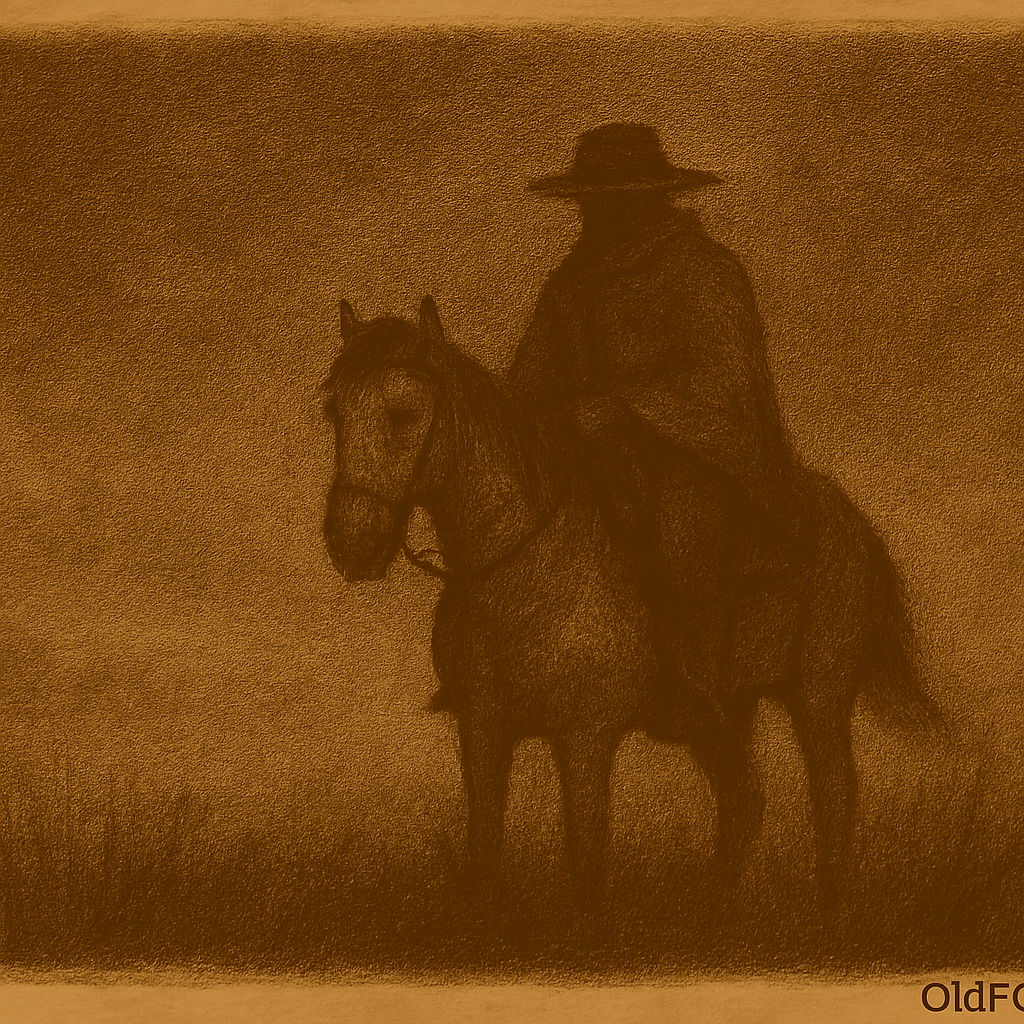
Soon after, travelers began reporting strange encounters on foggy nights. A lone rider would appear out of the mist, mounted on a gray horse that made no sound as it moved. The rider never spoke, never turned his head, but simply rode steadily through the fog. He wore the traditional gaucho clothing: bombacha pants, a poncho draped over his shoulders, and a wide-brimmed hat pulled low over his face.
Some travelers, curious or seeking company in the lonely darkness, would call out to the rider. When he did not respond, they would follow him, thinking perhaps he knew the way to shelter or safety. But those who followed the Wandering Gaucho Ghost were never seen again. Days or weeks later, their bodies would be found far from any road or path, lying in remote ravines or lost in the deepest parts of the pampas, as if they had wandered aimlessly until exhaustion or exposure claimed them.
Old gauchos warned their sons and grandsons: if you see a silent rider on a foggy night, do not follow. No matter how lost you are, no matter how much you crave companionship, turn away. For the ghost is condemned to wander forever, unable to find peace because he broke his sacred promises. And in his wandering, he draws others into his curse, leading them astray as he himself is lost.
Some said that on the quietest nights, when the fog lay particularly thick, you could hear the ghost calling out a name, over and over: “Lucía… Lucía…” His voice was filled with anguish and regret, but it was far too late for apologies. He had made his choice in life, and now in death, he paid the price eternally.
The gauchos still tell this story today, especially to young men about to make important promises. They remind them that a man’s word is his honor, and honor, once lost, can never be fully regained. The Wandering Gaucho Ghost rides on through the fog, a warning to all who would break their vows and abandon their responsibilities.
And on certain foggy nights in Uruguay, travelers still report seeing him: a silent rider in the mist, forever seeking what he can never find, forever lost because he chose to lose him.
Discover the sacred tales of llamas, condors, and gods who guard the Andes
The Moral of the Story
The Wandering Gaucho Ghost teaches us that our promises and commitments carry weight far beyond the moment we make them. When we break our word, especially in matters of the heart and honor, we lose something essential in ourselves. True freedom does not come from running away from responsibilities, but from living with integrity and keeping the promises we make. Those who abandon their obligations may find themselves eternally lost, unable to find peace or purpose.
Knowledge Check
Q1: Who was Ramiro before he became the Wandering Gaucho Ghost?
A: Ramiro was a skilled and charming gaucho known throughout the Uruguayan pampas for his way with horses and people. He courted Lucía, the daughter of a wealthy estancia owner, and promised to marry her, but he ultimately abandoned her and his promises because he feared losing his freedom.
Q2: Why is the Wandering Gaucho Ghost condemned to eternal wandering?
A: The ghost is condemned to wander forever because Ramiro broke his sacred promises and abandoned Lucía, losing his honor as a gaucho. In death, he cannot find peace or rest and is forced to roam the pampas eternally as punishment for his betrayal and broken vows.
Q3: What happens to travelers who follow the ghostly rider?
A: Travelers who follow the Wandering Gaucho Ghost are never seen alive again. Their bodies are later found in remote areas of the pampas, far from roads or paths, as if they wandered aimlessly until they died from exhaustion or exposure, drawn into the ghost’s curse of eternal wandering.
Q4: What does the fog symbolize in this Uruguayan legend?
A: The fog symbolizes confusion, lost direction, and the blurring of reality and the supernatural. It creates an environment where the boundary between the living and dead becomes thin, representing how broken promises and lost honor can cloud judgment and lead people astray from their true path.
Q5: What cultural values does this gaucho legend represent?
A: This legend represents the gaucho cultural values of honor, keeping one’s word, and the importance of commitments, especially regarding matters of love and family. It emphasizes that a man’s promise is sacred and that abandoning responsibilities brings not only shame but eternal consequences in Uruguayan gaucho tradition.
Q6: Why do the gauchos continue telling this story to younger generations?
A: Gauchos tell this story as a moral warning to young men about the importance of honoring commitments and keeping promises. It serves as a cautionary tale that teaches the consequences of prioritizing personal freedom over responsibility, showing how broken vows can destroy not only others but also oneself.
Source: Adapted from Uruguayan gaucho oral tradition collections and folklore compilations documenting supernatural tales of the pampa’s region.
Cultural Origin: Gaucho communities of the Uruguayan pampas, Uruguay, South America