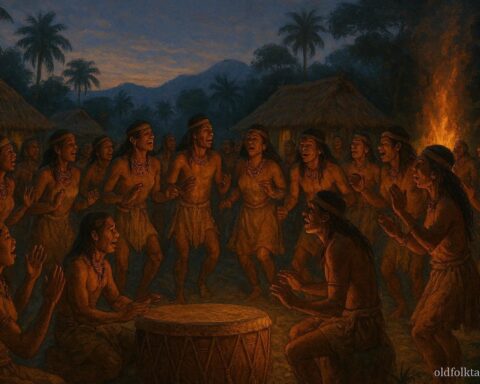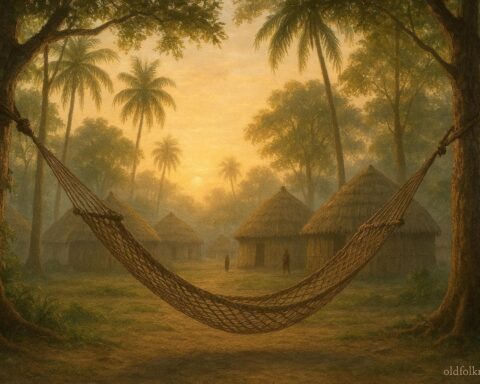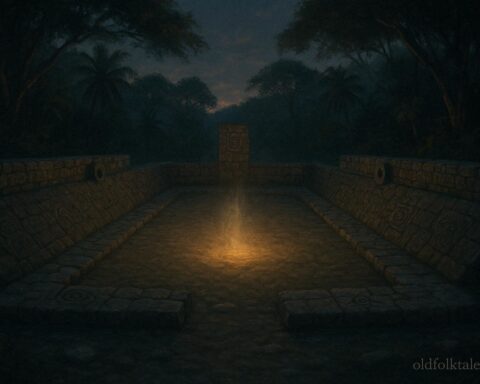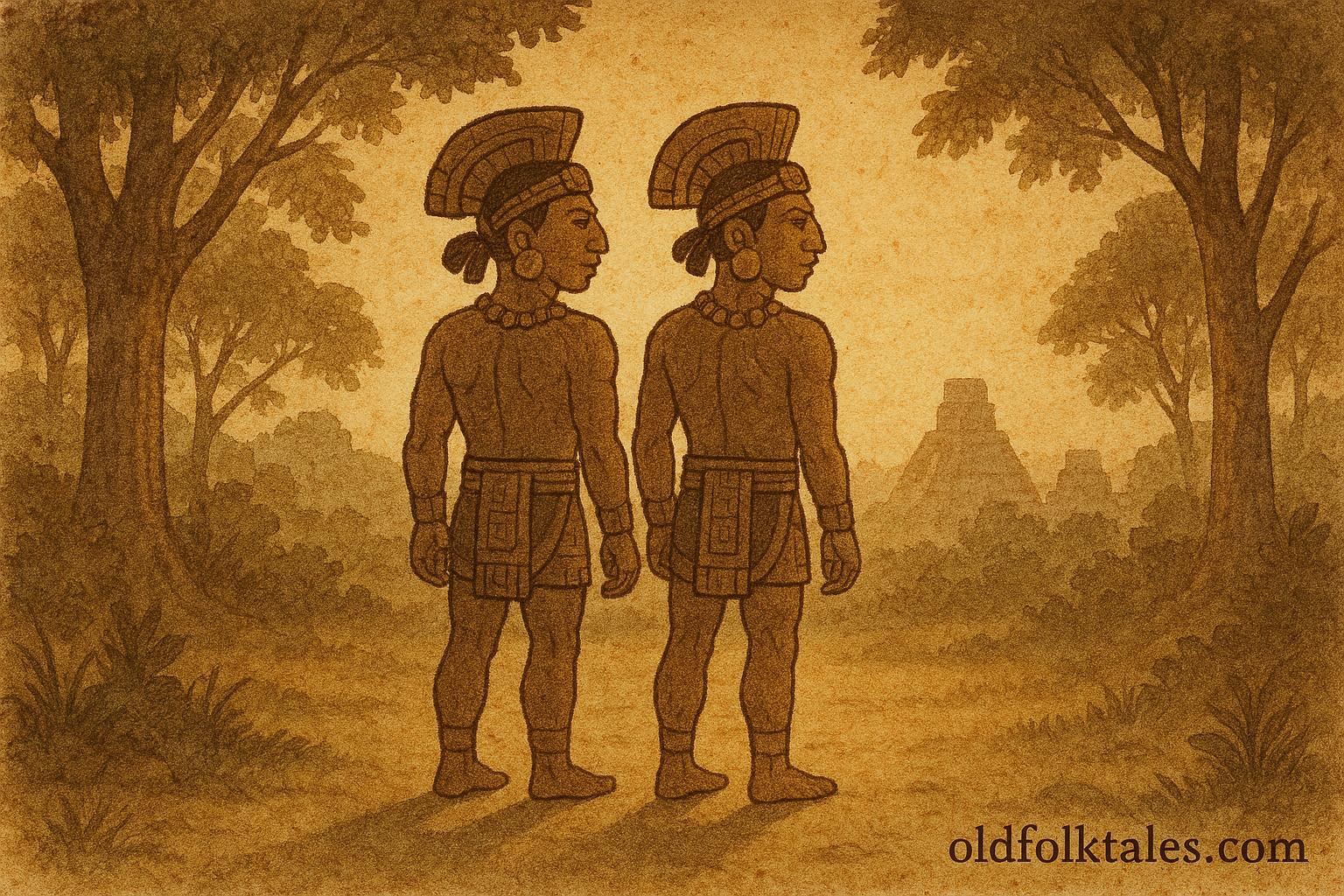
In the time before the world settled into its present shape, when mountains were still learning their names and the sky listened closely to human voices, a pair of twin brothers were born in a Maya village nestled between forest and stone. Their arrival was marked not by thunder or fire, but by an unusual silence. When the midwife lifted them into the morning light, the people noticed something that had never been seen before.
The twins cast only one shadow.
Where two bodies stood, a single shadow stretched across the earth, dark and steady, following their movements as though it belonged to both and neither at once. The elders were called, and they studied the shadow carefully. It did not split, even when the children were separated. It did not double at sunset or fade at dawn. It remained whole.
The elders said nothing at first. They knew that signs like this were not meant to be explained too quickly.
The twins were named Balam and Chak, and from childhood they were different in temperament. Balam was quiet and observant. He listened before he spoke and learned by watching. Chak was energetic and bold, eager to act and quick to speak. Where one paused, the other moved forward.
Yet wherever they went, the single shadow followed.
As the boys grew, the villagers watched closely. When Balam walked ahead and Chak followed, the shadow walked between them. When Chak ran ahead alone, the shadow lagged behind, tethered invisibly to Balam. If they stood back to back, the shadow rested at their feet, unchanged.
The boys began to notice it too.
At first, they treated the shadow as a curiosity. Then, as they grew older, it became a source of tension. Chak resented that his strength and speed did not grant him his own shadow. Balam worried that his quiet nature was somehow incomplete without his brother.
“Why must we share everything?” Chak asked one evening. “Even the sun does not treat us as separate.”
Balam had no answer.
When the twins reached the age when boys were tested for adulthood, the elders set them a challenge. They were to travel into the forest and return with proof of wisdom, not strength. The elders did not explain what this proof would be. They only said, “The forest will know.”
The brothers set out together at dawn. Before long, Chak grew impatient.
“If we split up, we will find the answer faster,” he said. “I will go toward the hills. You take the river path.”
Balam hesitated. “The elders did not say we must separate.”
“They did not say we must stay together either,” Chak replied.
They parted ways.
Chak climbed quickly, confident in his endurance. Yet as he moved farther from his brother, something felt wrong. The ground beneath him seemed uneven, and the forest grew strangely quiet. When he looked back, he saw that the shadow was no longer beneath his feet. It stretched behind him, thin and strained, pulling toward the river path where Balam had gone.
Chak felt uneasy but continued.
Meanwhile, Balam walked slowly along the river. He observed the water, the stones, the insects moving in patterns he had never noticed before. Yet the shadow beside him felt heavier than usual, darker, as though it carried weight meant for two.
By midday, both brothers encountered difficulty.
Chak reached the hills but found no sign, no lesson. His confidence faded as fatigue set in. He realized he had rushed without understanding.
Balam reached a crossing where the river split into many channels. He hesitated, unsure which path to follow. Without Chak’s boldness, he felt uncertain.
As the sun lowered, the forest changed. The shadow between them began to pull tighter, drawing them back toward one another, no matter how they resisted.
Finally, exhausted, the brothers followed the pull and reunited in a clearing.
The moment they stood together, the shadow settled naturally at their feet once more.
They sat in silence.
Only then did understanding begin.
“We are not incomplete,” Balam said slowly. “We are divided.”
Chak nodded. “When I rushed alone, I lost direction. When you stayed alone, you lacked movement.”
They realized that the shadow did not belong to either brother individually. It existed to remind them that balance required cooperation. One without the other was distortion.
At dawn, they returned to the village empty-handed. The elders smiled.
“You brought back wisdom,” one elder said. “You learned that strength without patience is reckless, and patience without action is stagnant.”
From that day forward, the twins worked together. Balam observed and planned. Chak acted and carried through. Their shared shadow remained, but it no longer troubled them. It became a symbol of harmony rather than limitation.
When the twins grew old, stories were told of how the sun once followed two brothers as one. And the elders taught the children that balance is not found in sameness, but in shared purpose.
Explore the ancestral legends of Canada, Mesoamerica, and South America’s Indigenous tribes.
Moral Lesson
True balance is achieved through cooperation and mutual respect. Strength and patience, action and reflection, must work together. When individuals recognize shared responsibility rather than rivalry, harmony becomes possible.
Knowledge Check
1. Why did the twins share one shadow?
They shared a shadow to symbolize balance, unity, and shared destiny rather than individual dominance.
2. What differences existed between the brothers?
One was thoughtful and observant, while the other was bold and action-oriented.
3. What happened when the brothers separated?
Each became incomplete, losing direction and confidence.
4. What lesson did the forest teach them?
That wisdom comes from cooperation, not competition.
5. What does the shadow represent in the story?
It represents balance, shared responsibility, and cosmic harmony.
6. Why did the elders consider the journey successful?
Because the twins returned with understanding rather than physical proof.
Source
Adapted from Maya twin hero symbolism referenced in secondary analyses of the Popol Vuh and Dumbarton Oaks Mesoamerican Studies collections.
Cultural Origin
Maya peoples, Guatemala.