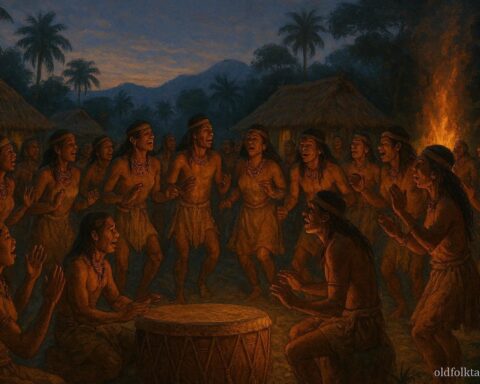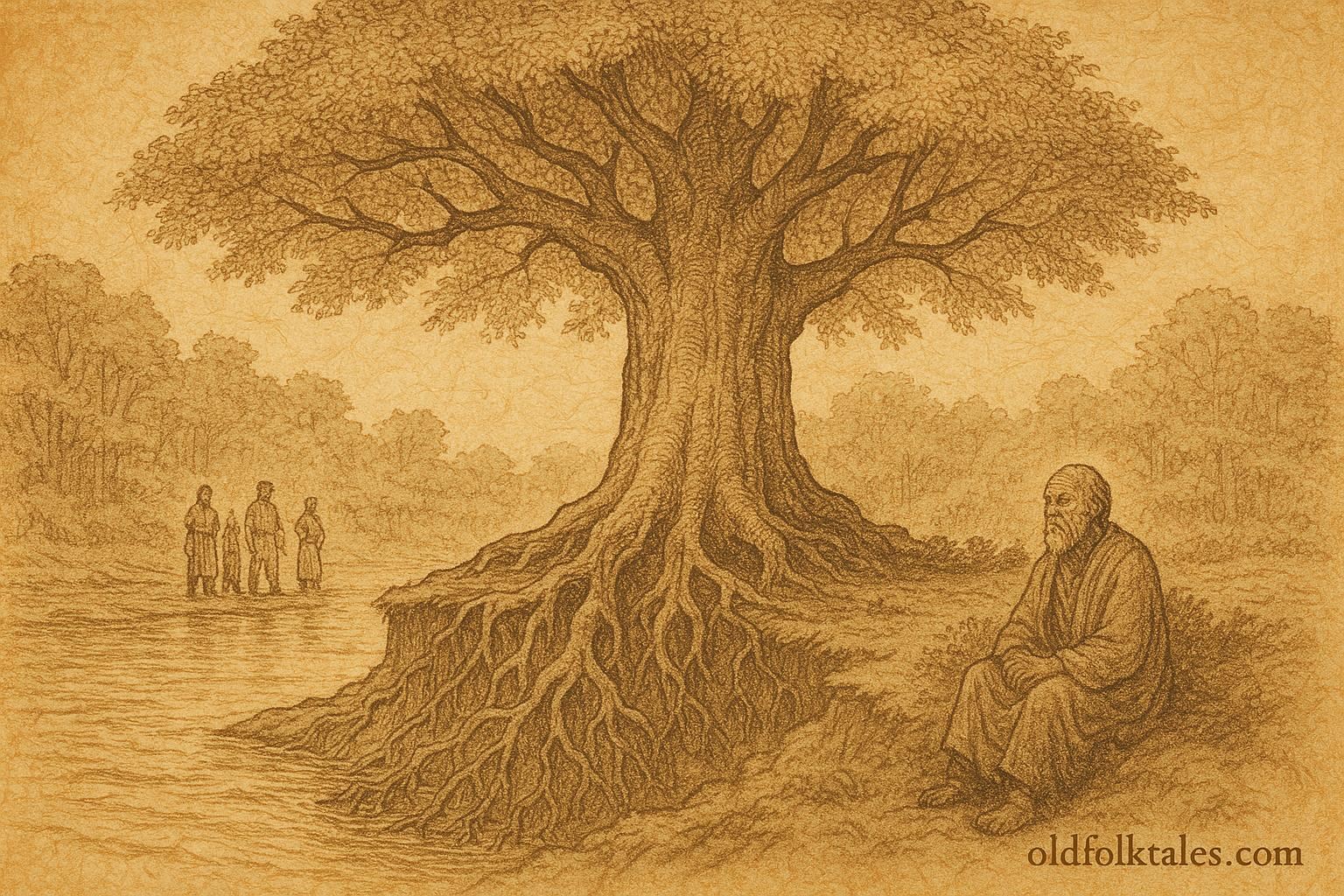
Long ago, in a village deep within the Central Amazon, there stood a sacred tree unlike any other. It grew near the river’s edge, its roots gripping the damp soil, its broad leaves casting shade where villagers often rested. The tree was respected, spoken of softly, and never cut, for it was believed to be bound to the balance of the land itself.
One morning, a fisherman returning at dawn noticed something strange. The tree was no longer exactly where it had been the day before. Its trunk leaned at a slightly different angle, and its roots appeared closer to the water. At first, the villagers dismissed the observation as a trick of tired eyes. But as days passed, more people began to notice the same unsettling change. The sacred tree, they whispered, was moving.
Fear and confusion spread through the village. Some believed the tree was alive in a way no tree should be, wandering at night when humans slept. Others warned that the spirits of the forest were sending a sign. A few villagers, impatient and uneasy, argued that the tree should be cut down before whatever power moved it brought harm to them all.
Ignoring the warnings of the elders, several men went into the forest with axes. They struck the trunk, but before the day ended, each fell ill. Some lost their way in the forest and wandered for days before being found. Others returned weak, shaken, and unable to explain what had happened. Fear deepened, and the sacred tree was left untouched.
Among the villagers lived an elder known not for loud wisdom, but for quiet attention. He did not rush to judgment or speak in anger. Instead, he sat near the river each day, watching. He observed the water’s slow pull against the bank, the way the soil crumbled little by little, and how roots once buried became exposed over time. He noticed how the tree leaned further as the river reshaped the land beneath it.
Seasons passed, and the elder continued to observe. Slowly, the truth revealed itself, not in a single moment, but through patience. The tree was not walking. It was growing along the riverbank, shifting as erosion carried soil away and new ground formed. What seemed like movement was the quiet work of nature, powerful not through speed, but through time.
When the elder finally spoke, the villagers listened. He explained that the river moves the land grain by grain, and the tree follows where the earth allows it to stand. The sickness and misfortune, he said, came not from the tree’s power, but from human impatience and disrespect.
From that day on, the sacred tree became a symbol. It reminded the village that nature does not rush, yet it always changes. Those who act without understanding bring harm upon themselves, while those who observe and wait gain wisdom. The tree was never cut, and the villagers learned to watch the land as carefully as they watched one another.
Click to read all South American Folktales — timeless stories from the Andes to the Amazon.
Moral Lesson
Wisdom grows from patience and careful observation. Those who rush to act without understanding nature invite harm, while those who observe quietly learn its truths.
Knowledge Check
1. What made the villagers believe the tree was walking?
They noticed the sacred tree appeared to change its position over time.
2. Why did some villagers attempt to cut down the tree?
They feared its movement and acted impulsively without understanding.
3. What happened to those who tried to cut the tree?
They became ill or lost, reinforcing fear and respect for the tree.
4. How did the elder discover the truth about the tree?
By patiently observing the riverbank and the land’s slow erosion.
5. What did the tree ultimately symbolize for the villagers?
Nature’s slow but powerful change and the importance of patience.
6. What cultural value does this folktale emphasize?
Respect for nature, careful observation, and restraint.
Source: Indigenous oral folklore; documented in Central Amazon studies
Cultural Origin: Amazon Basin (Indigenous traditions)