In the heart of colonial Mexico, during the age when Spanish banners fluttered proudly over New Spain, tales of hidden riches stirred restless dreams among miners and villagers alike. None was more whispered about than the Treasure of Calle de Oñate, said to lie buried beneath the dusty streets near Zacatecas, the famed silver city of the north.
Generations before, the conquistador Don Juan de Oñate, a man of immense ambition and power, had ruled over mines and lands as vast as the desert itself. He was known both for his wealth and for his harshness toward the native workers who toiled in his mines. Before returning to Spain to defend his honor before the Crown, he was rumored to have hidden a fortune of gold bars, jewels, and silver chalices somewhere near his estate, treasure wrested from the mountains of Mexico and stained by countless lives lost in its pursuit.
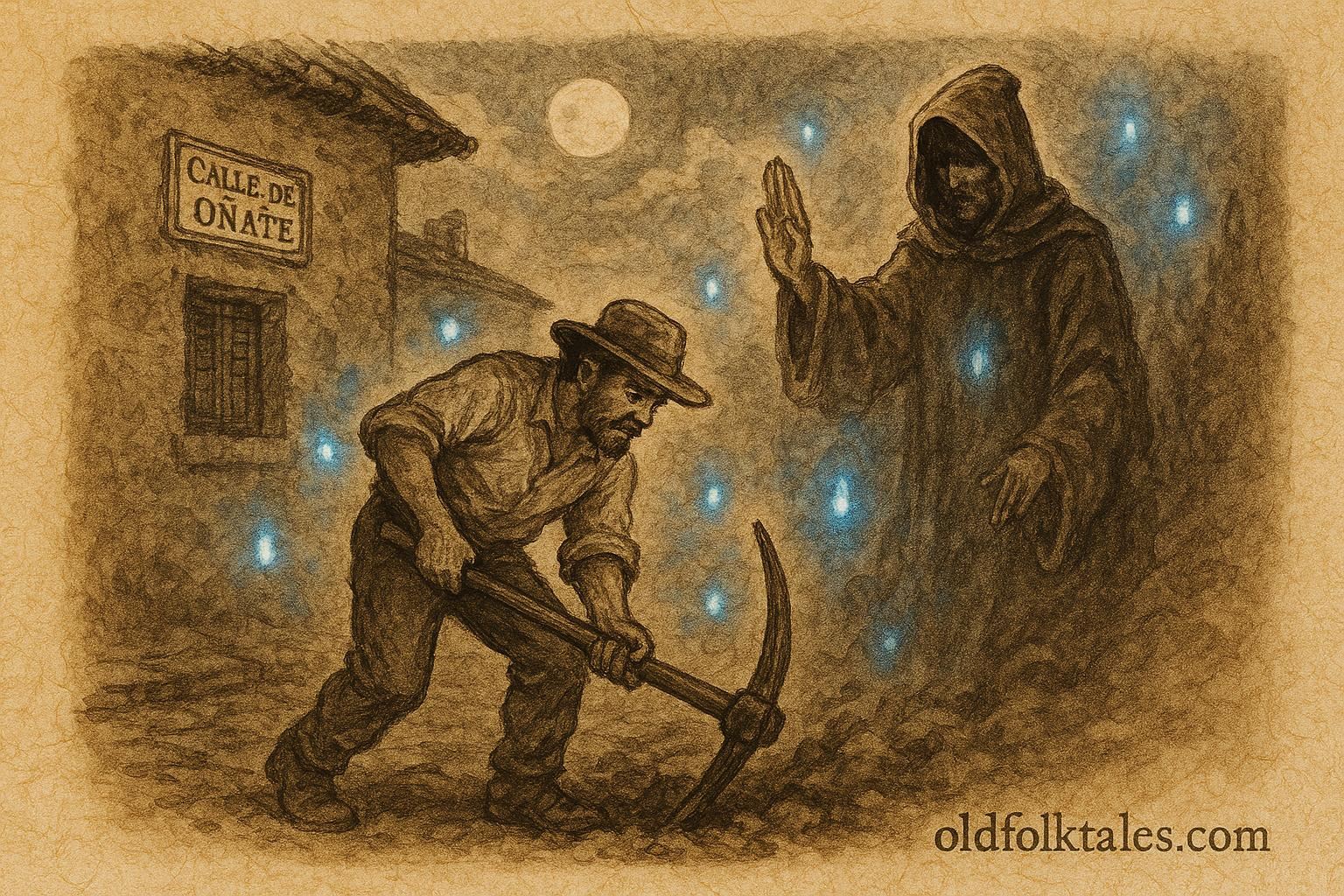
Time passed. Don Juan’s name faded into legend, but the whispers did not. Locals spoke of ghostly lights flickering along Calle de Oñate at midnight, pale blue flames that danced across the earth as if marking a secret grave. Many believed they were souls of the miners, seeking justice for their suffering. Others thought they guarded the treasure itself, punishing any who dared disturb it.
Among the villagers lived Ignacio, a humble miner known for his courage and relentless curiosity. He had spent his life digging in the mountains of Zacatecas, dreaming of one day striking a vein of gold that would free him from poverty. He had heard the tale since childhood, told by his grandmother, who would whisper, “The dead guard their gold better than the living.” But poverty sharpens the heart’s hunger, and legends begin to sound like promises.
One night, under the soft glow of a silver moon, Ignacio saw it for himself, the dancing lights. They floated low over the cobblestones, moving slowly toward the old street said to mark Don Juan’s passage. Ignacio’s pulse quickened. He took up his lantern and shovel and followed, whispering a prayer as he went.
The night was eerily still, the only sound the crunch of gravel beneath his boots. When he reached the end of Calle de Oñate, the ghostly lights stopped above a patch of earth where the air shimmered faintly, like heat on a summer road. His hands trembling, Ignacio began to dig.
Hours passed. The soil gave way to stone, then wood. His shovel struck something hollow. With a rush of excitement, Ignacio uncovered an old chest sealed with iron bands, its lock rusted and brittle. He knelt beside it, his heart racing with triumph and fear. Just as he reached for the latch, a cold wind rose from nowhere, extinguishing his lantern.
Then came a voice, deep, echoing, filled with sorrow.
“Stop, Ignacio. That gold is not yours.”
Ignacio froze. Before him stood a spectral friar, his face pale as candle wax beneath a dark hood. His eyes burned faintly, like embers dimming in the night. The ghost lifted a bony hand toward the chest.
“This treasure,” the friar said, “was gathered from the sweat and blood of those who perished unjustly. The souls of the miners still wander, bound to this earth by greed and cruelty. If you claim it, their suffering will become your own.”
Ignacio’s breath caught in his throat. The friar stepped closer, and the miner felt a chill that pierced to his bones. Behind the friar, shadowy figures appeared, the shapes of men with hollow eyes, their bodies covered in dust, their hands reaching out silently. Their presence filled the air with grief too heavy to bear.
Terrified, Ignacio stumbled backward, dropping his shovel. The earth beneath him trembled, and the lights flared like torches. A blinding flash swallowed the scene. When he opened his eyes, both the friar and the chest were gone. The ground was smooth again, as if nothing had ever been there.
Ignacio fled home before dawn, vowing never to dig for cursed gold again. In the days that followed, he fell ill, his hair turning white before its time. To his dying breath, he swore he had seen the ghosts of the miners guarding their buried fortune.
Even now, villagers in Zacatecas tell the tale. They say that on quiet nights, the blue lights still dance along Calle de Oñate. Some believe they guide lost souls to peace; others say they are warnings to the living, that wealth born of suffering can never bring peace to the heart.
Moral Lesson
This folktale teaches that greed and injustice leave spiritual scars deeper than the earth itself. True wealth lies not in gold or treasure, but in compassion and honesty. Those who profit from others’ pain will find their gains turned to ashes.
Knowledge Check
1. Who was Don Juan de Oñate in the legend?
A Spanish conquistador and nobleman rumored to have buried a vast treasure in colonial Mexico.
2. What did Ignacio hope to find on Calle de Oñate?
He sought Don Juan’s buried treasure, led by ghostly lights said to mark its location.
3. What did the spectral friar warn Ignacio about?
He revealed that the treasure was cursed, belonging to the souls of miners who died unjustly.
4. What do the ghostly lights symbolize in the story?
They represent the spirits of the oppressed, guarding justice and warning against greed.
5. What moral does the story of Calle de Oñate teach?
That wealth gained through cruelty and greed brings only suffering and spiritual ruin.
6. What cultural traditions influenced this legend?
It blends Indigenous beliefs in guardian spirits with Catholic themes of sin, penance, and redemption.
Source: Adapted from Folktales of Mexico, collected by Américo Paredes (Smithsonian Institution).
Cultural Origin: Mexico (Colonial-era folklore)