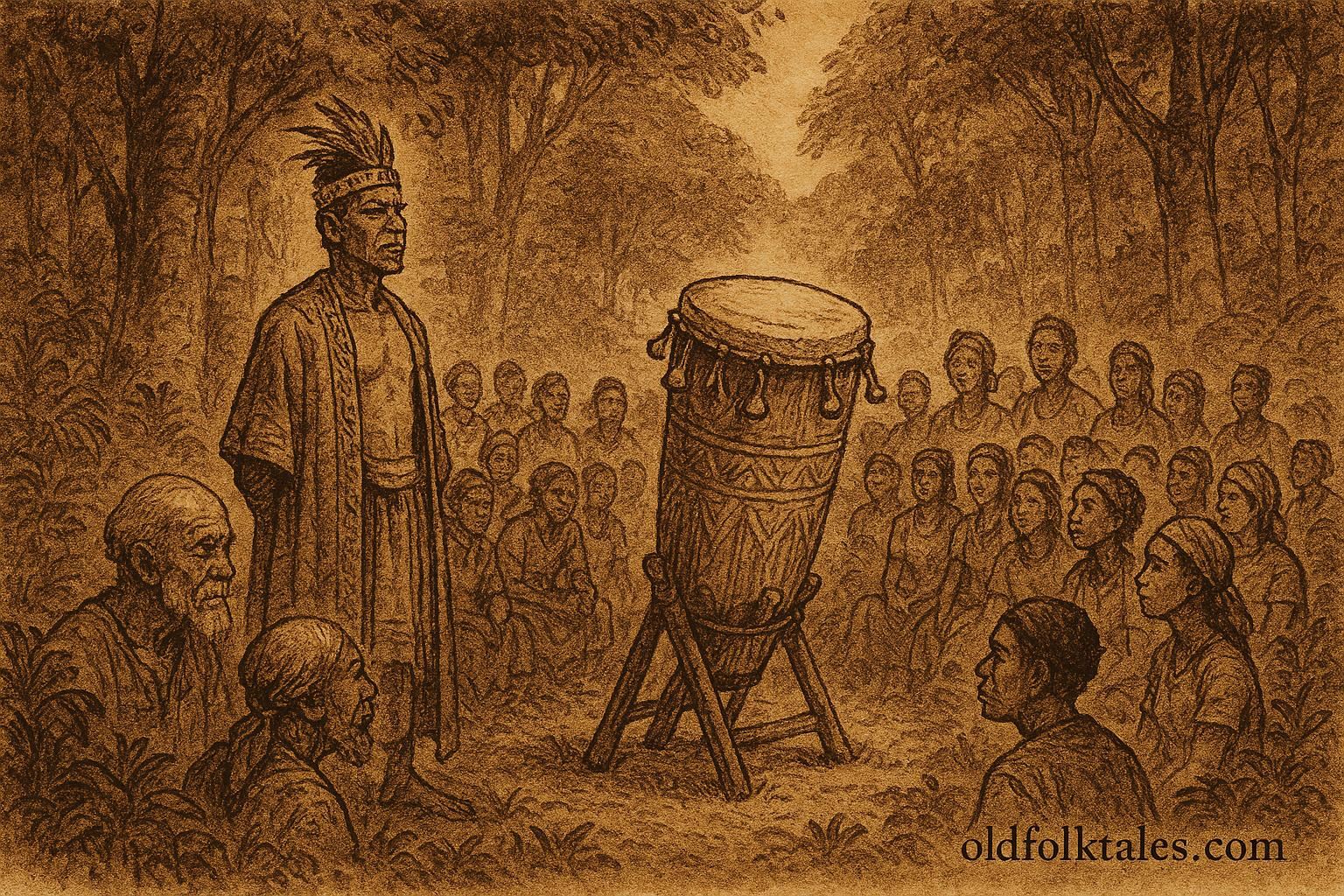
Deep within the Brazilian forest, where towering trees formed a living canopy and the air carried the scent of earth and rain, there stood a quilombo, a community founded by formerly enslaved Africans who had escaped oppression and built new lives through unity and tradition. In this place, memory lived not only in words, but in rhythm. Songs, dances, and ceremonies carried history forward, and at the heart of these gatherings was a sacred object known as the Talking Drum.
The drum was unlike any other. Carved from ancient wood and stretched with animal hide, it had been shaped according to traditions carried from Africa across the ocean. Elders said the drum held the voices of ancestors, and when struck during ceremonies, it spoke only the truth. It did not speak in ordinary words, but through rhythm and sound, patterns that could not lie.
Journey into the rhythm, wit, and wonder of Caribbean storytelling — from Haiti to Jamaica
For many seasons, the drum guided the community. During celebrations, it praised harmony. During disputes, it warned of imbalance. And during ceremonies of leadership, it confirmed honesty and wisdom. Because of this, the people trusted the drum more than any single person.
At that time, the quilombo was ruled by a chief who presented himself as a protector of the people. He spoke confidently, promised fairness, and claimed to act for the good of all. But behind his words, his actions told a different story. He kept the best land for himself, demanded excessive labor, and quietly took offerings meant for communal use.
Whispers of unease spread through the village. Some felt the imbalance but feared speaking openly. Others trusted the chief’s authority, believing his words over their doubts. Only the elders watched closely, knowing that truth always reveals itself.
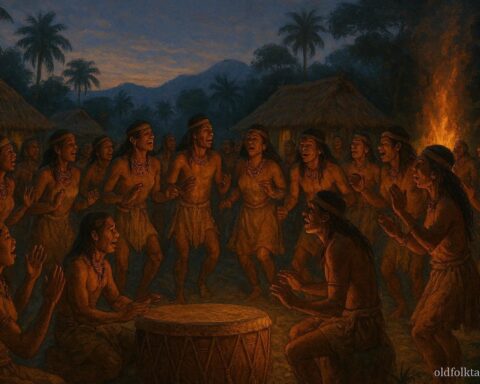
During a major ceremonial gathering, the people assembled in a clearing deep within the forest. Fires were lit, offerings prepared, and the Talking Drum was brought forward. This ceremony was meant to honor leadership and reaffirm trust between the chief and the community.
As tradition required, the chief stood before the people and spoke of his loyalty and fairness. He claimed that he had never taken more than his share and that all his decisions were made for the good of the quilombo.
Then the drummer raised his hands and struck the Talking Drum.
At first, the rhythm was slow and uncertain. Then it shifted—becoming sharp, uneven, and heavy. The sound carried across the clearing, unsettling and unmistakable. Elders exchanged glances. The people fell silent.
The drum spoke again, louder now, its rhythm echoing like a warning. In its voice, the lies were revealed. The patterns exposed greed, deception, and broken trust. Though the drum used no words, its message was clear to all who understood its language.
The chief stepped back, shaken. He tried to speak again, but the drum answered him with a fierce rhythm that drowned out his voice. The community no longer doubted. The truth had been spoken.
Confronted by the sound of the drum and the unity of the people, the chief could not deny his actions. Justice followed, not through violence, but through collective decision. He was stripped of authority and removed from leadership. Balance was restored, and the quilombo reaffirmed its values of honesty, accountability, and shared responsibility.
From that day on, the Talking Drum was remembered not just as an instrument, but as a guardian of truth. It reminded the people that leadership exists to serve, that power must answer to the community, and that truth, once sounded, cannot be silenced.
Immerse yourself in Latin America’s stories of passion, transformation, and spirit.
Moral Lesson
This folktale teaches that truth will always find a voice. Even when lies dominate positions of power, community justice and collective wisdom restore balance.
Knowledge Check
1. What is the Talking Drum in the story?
It is a sacred drum that reveals truth through rhythm during ceremonies.
2. Where does the story take place?
In a quilombo, a forest community formed by formerly enslaved Africans in Brazil.
3. What role does the drum play in the community?
It serves as a spiritual witness, exposing lies and guiding justice.
4. Why is the chief exposed?
Because he lies about his actions and abuses his power.
5. How does justice occur in the story?
Through collective community decision, not violence.
6. What cultural tradition does the drum represent?
African diasporic spirituality where drums carry memory, truth, and authority.
Source: Afro-Brazilian folktale
Tradition: Bantu–Yoruba fusion
Preserved in: Brazilian quilombos
Cultural Origin: Afro-Brazilian (African diasporic folklore)