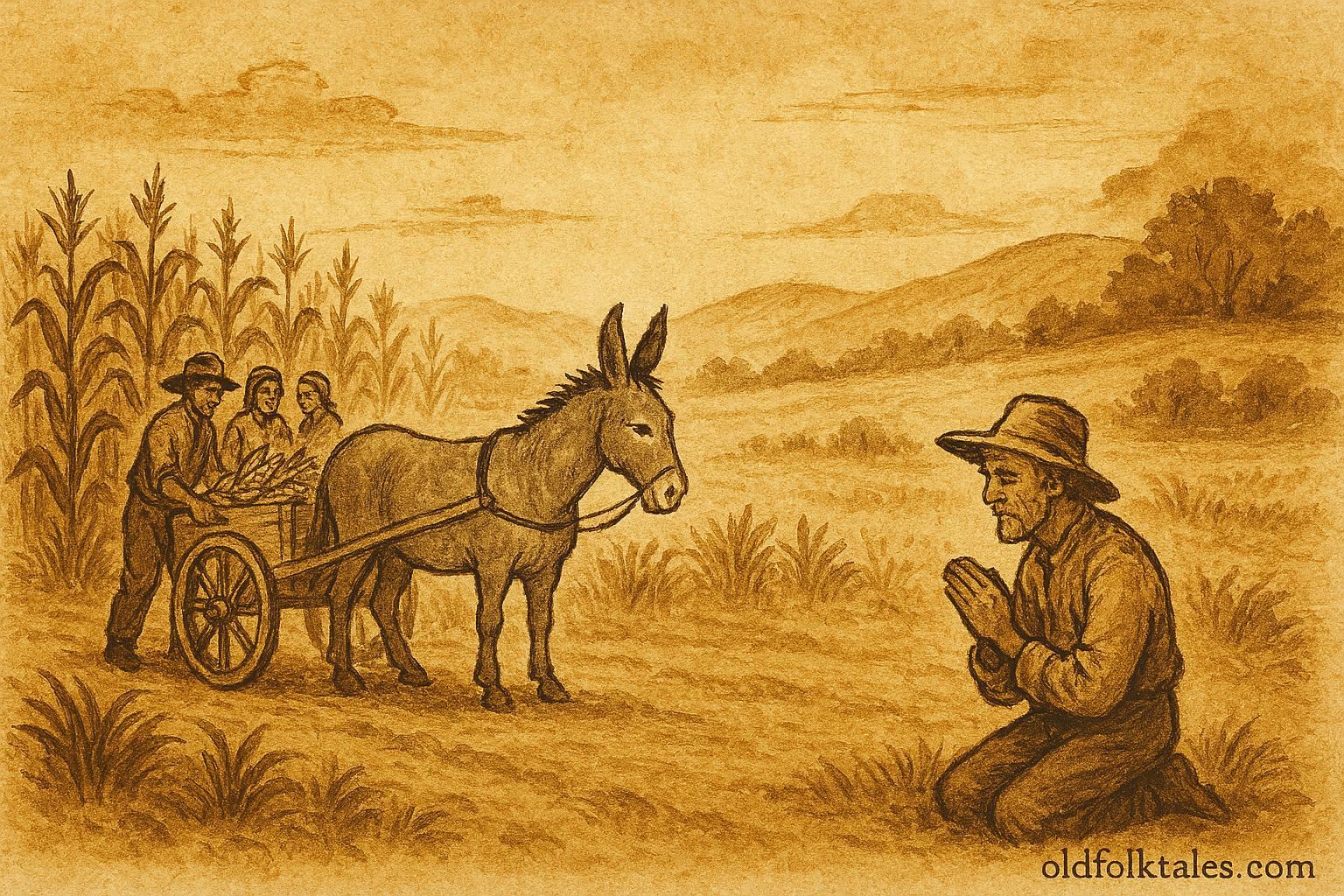
In a small rural village in Mexico, where dirt paths wound between adobe homes and fields of maize stretched toward the hills, there lived a farmer who owned a humble donkey. The animal was gray, long-eared, and patient, the kind of creature people passed without a second glance. To most villagers, the donkey seemed ordinary, useful only for carrying water, firewood, or sacks of grain. Yet beneath his calm eyes lived a sharp and observant mind.
The farmer depended heavily on the donkey. Day after day, he loaded the animal with heavy burdens and sent him across uneven land under the hot sun. At first, the donkey carried out his work without complaint. He understood labor and accepted it as part of village life. But over time, the farmer began to notice that the donkey completed tasks faster than expected and avoided difficult terrain with uncanny precision. Soon, the farmer realized the donkey was far more clever than he had assumed.
Rather than appreciating this intelligence, the farmer sought to use it for his own gain. He increased the donkey’s workload and devised unfair tasks meant to save himself effort. He expected the animal to do the work of two beasts, pushing him harder while offering no kindness in return. The donkey listened quietly, his ears twitching as he learned the farmer’s intentions.
Instead of resisting openly, the donkey relied on ingenuity. When assigned unreasonable tasks, he would cleverly misinterpret commands, taking longer routes that benefited the village rather than his owner. If sent to carry goods for profit, he would stop to help neighbors along the way, delivering water to elders, carrying crops for families in need, or guiding lost children back home. To the farmer, it appeared the donkey was slow or stubborn. To the villagers, he became a silent helper.
Whispers spread through the village. People spoke of the donkey who arrived just when help was needed, who seemed to understand hardship without being told. The farmer, growing frustrated, tried stricter commands and harsher treatment. Yet the donkey always found a way to avoid unfair labor while continuing to serve the community quietly and wisely.
Eventually, the farmer noticed a change. Though he worked the donkey relentlessly, his own fortunes did not improve. Meanwhile, the villagers prospered through cooperation and shared effort. They praised the donkey’s intelligence openly, and their respect for the animal grew stronger than their respect for his owner.
Ashamed and confused, the farmer finally observed the donkey more carefully. For the first time, he saw not stubbornness, but discernment; not weakness, but wisdom. He realized that intelligence did not belong solely to those with power or status. Humbled, he reduced the donkey’s burdens and treated him with fairness.
From that day forward, the donkey continued to help, but now with honest labor and mutual respect. Harmony returned to the village, and the farmer learned that true strength lies not in dominance, but in humility and understanding.
Moral Lesson
This folktale teaches that ingenuity and humility are as valuable as strength and status. Intelligence can exist in unexpected places, and respecting the abilities of others strengthens the entire community.
Knowledge Check
-
Who is the main character in the story?
The clever donkey, whose intelligence guides the story’s lesson. -
What mistake does the farmer make?
He tries to exploit the donkey’s intelligence for personal gain. -
How does the donkey respond to unfair treatment?
By using cleverness to avoid injustice while helping the community. -
What do villagers learn from the donkey?
That wisdom and value are not tied to status or appearance. -
What does the donkey symbolize in Mexican rural folklore?
Hidden intelligence, humility, and quiet resourcefulness. -
What is the central lesson of the tale?
That humility and ingenuity foster harmony and respect.
Source: Oral rural folklore; documented in ethnographic studies
Cultural Origin: Mexico (Rural folklore)