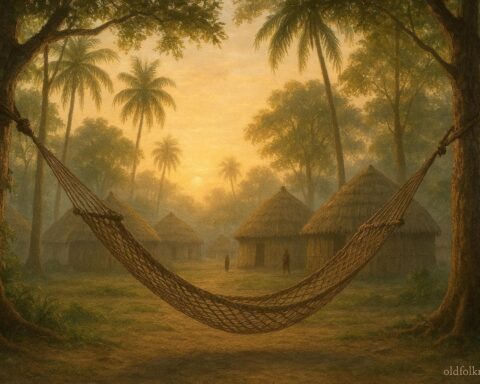
Long before Lake Titicaca became known beyond the highlands of the Andes, the Aymara people believed the lake was alive. It was not simply water gathered between mountains. It listened, remembered, and responded. The elders taught that the lake had existed before humans and would remain long after them, and that its spirits guarded the balance between people, land, and promise.
In a lakeside settlement lived a young woman named Chaska. She was known for her calm nature and steady presence. She did not speak quickly, nor did she act without thought. From childhood, she had learned that patience and restraint were signs of strength. The land fed those who respected it, and the lake gave generously only to those who honored its spirit.
When Chaska reached adulthood, she married Illapa, a fisherman whose skill on the water was widely respected. Their marriage followed the oldest customs of the community. At dawn, they stood together at the edge of Lake Titicaca while elders looked on in silence. They spoke their vows aloud, promising fidelity to one another and respect for the lake spirits who witnessed all spoken words. As they finished, the surface of the lake stirred gently, a sign the vow had been heard and accepted.
Explore the ancestral legends of Canada, Mesoamerica, and South America’s Indigenous tribes.
For several seasons, their life was balanced. Illapa fished carefully, never taking more than the household needed. Chaska wove nets and garments and maintained the home. Offerings of gratitude were made regularly at the shoreline. The lake remained calm, and the village prospered modestly.
Over time, Illapa began to change. He spoke of distant settlements where tradition carried less weight and wealth was gained without restraint. He stayed away longer on fishing journeys and returned restless. The patience he once showed the water began to fade.
Eventually, Illapa stopped returning altogether. News reached the village that he had taken another wife inland, believing that distance could weaken a vow spoken to water. Chaska waited, hoping the stories were false, but the silence became undeniable.
One evening, as the sun lowered behind the mountains, Chaska walked alone to the place where her marriage vow had been spoken. She did not shout or curse. Instead, she spoke calmly to the lake, reminding the spirits of the promise that had been witnessed and broken. She did not ask for punishment. She asked only for release from a vow that no longer held truth.
The water did not move.
As Chaska turned to leave, her feet grew heavy. Cold rose slowly through her body. Her breath slowed, and her voice faded. By the time night fell, she stood motionless, facing the lake. Her body had turned to stone.
At dawn, villagers discovered her standing at the shoreline. There was no fear, only understanding. This was not cruelty but consequence. Chaska had become a marker placed by the lake itself, a reminder of the seriousness of sacred vows.
From that day forward, the stone bride remained. Couples approaching the lake lowered their voices. Elders warned the young that promises spoken in sacred places carried weight beyond human intention. Travelers who mocked the stone bride reported sudden storms or broken tools. Those who approached with respect left offerings and departed safely.
Generations passed. Wind and water wore the stone, yet her form endured. Even now, elders say that on still mornings, the reflection of the stone bride appears clearly on the lake’s surface, reminding all who see it that vows spoken to living land are never forgotten.
Click to read all South American Folktales — timeless stories from the Andes to the Amazon.
Moral lesson
Promises made in sacred spaces are not symbolic gestures. They are living commitments that bind individuals to community, land, and spirit. When such vows are broken, the consequences endure, shaping memory and teaching future generations the cost of neglecting responsibility.
Knowledge check
- Where was the sacred marriage vow spoken?
Answer: At the edge of Lake Titicaca. - What promise was broken in the story?
Answer: A vow of fidelity and respect spoken before the lake spirits. - Why did the woman return alone to the lake?
Answer: Her husband abandoned the marriage and ignored the sacred vow. - What caused the woman’s transformation into stone?
Answer: The broken vow spoken in a sacred place required consequence. - What does the stone bride represent to the community?
Answer: A lasting warning about honoring promises made to land and spirit. - How does the lake function in the story?
Answer: As a living witness that remembers and enforces sacred commitments.
Source:
Adapted from Legends of Lake Titicaca, Museo Nacional de Etnografía y Folklore, Bolivia (2006)
Cultural origin:
Aymara peoples, Bolivia