Long before written laws shaped the islands and before chiefs ruled by decree alone, the Taíno people believed justice did not belong solely to the living. Beneath the earth, within stone and soil, the ancestors remained alert. They listened to the words of the living, watched their actions, and intervened when balance faltered. Nowhere was this belief more deeply held than at the ball court.
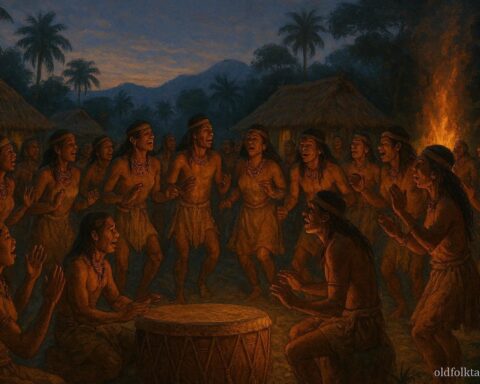
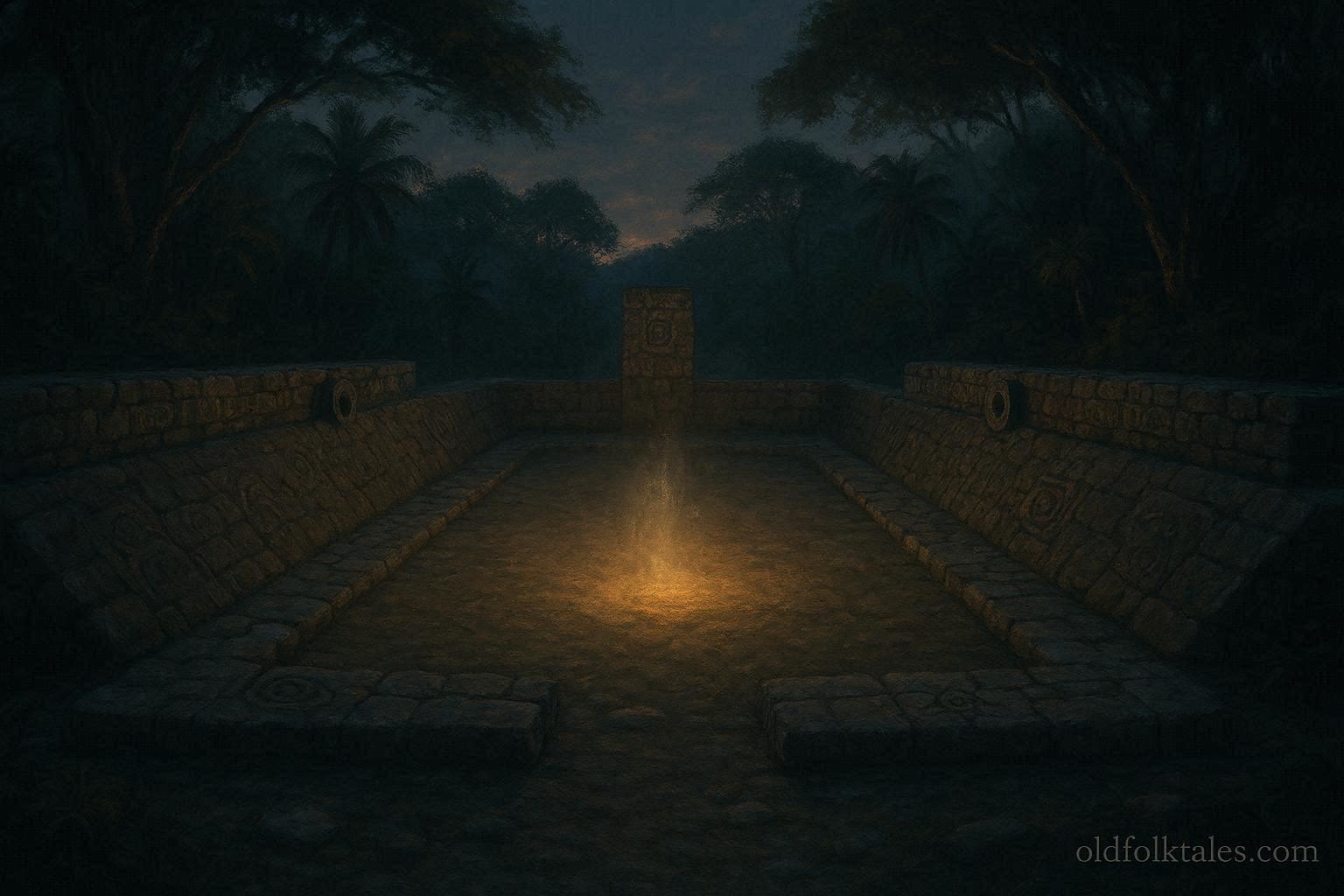
The ball court was not merely a place of sport. It was carved carefully into the land, aligned with the sun and bordered by stone walls worn smooth by generations of hands. Children were taught never to run across it carelessly. Hunters removed their weapons before entering. Even chiefs stepped onto the court with measured breath and lowered voices.
The elders taught that beneath the court slept the spirits of ancestors who once governed the people. These spirits did not speak with voices. They spoke through movement, outcome, and chance. When disputes grew too heavy for words, the people turned to the game.
The game itself was demanding. A heavy rubber ball was struck using hips, shoulders, and thighs. Hands were forbidden. The rules were strict, and the rhythm of play echoed like a heartbeat across the village. But the purpose of the game was not victory alone. It was judgment.
One season, a conflict arose between two extended families over fertile land near a river bend. Both claimed their ancestors had first cleared the soil. Words became sharp. Accusations spread. The chief listened, but each side spoke with equal passion and equal certainty. No agreement could be reached.
After many nights of council without resolution, the elders called for the ball court. They declared that the spirits would decide.
At dawn, the village gathered. No one laughed. No one argued. Offerings of cassava bread and tobacco were placed at the court’s edges. The players were chosen not for strength alone, but for reputation. Those known to lie or boast were excluded. Only those trusted by their families were allowed to play.
As the sun climbed, the match began.
At first, the ball moved evenly between sides. The players mirrored one another’s skill. Sweat darkened the earth beneath their feet. The crowd watched in silence, knowing that cheers might interfere with judgment.
Then something shifted.
One team began to falter. Their strikes lost precision. The ball rebounded unexpectedly, veering away at crucial moments. A player stumbled where the ground had always been level. Another misjudged a bounce that should have been easy.
Whispers spread among the elders. They did not interfere.
The game continued until one side could no longer keep the ball in motion. The final strike rolled weakly across the court and stopped before reaching the boundary stone. The match was over.
The losing family protested at first. They claimed exhaustion, poor footing, bad luck. But the elders raised their hands, and silence returned. They reminded the people that the court did not deceive. The spirits beneath had spoken.
That night, the losing family gathered in their home. The eldest among them spoke quietly. He confessed that long ago, their ancestor had not cleared the land first but had quietly expanded into it during a season of drought. The truth had been buried, but not forgotten by those beneath the earth.
The next morning, the family yielded their claim. The land was returned without bloodshed.
From that time on, the ball court gained even greater respect.
Years later, another dispute arose, this time between two villages over trade routes. Again, the court was called upon. Again, the game unfolded. This time, the match was fierce and long. Neither side faltered. The ball flew true. Players held their ground. Sweat fell, but balance remained.
When the sun reached its highest point, the elders ended the game without declaring a winner. They said the spirits had revealed something different. Neither side was fully wrong. Neither was fully right. The judgment was not division but cooperation.
The villages were instructed to share the route and trade together. Prosperity followed.
Not every game ended cleanly. Sometimes storms rose suddenly, halting play. Sometimes the ball split or bounced beyond the court. These interruptions were not dismissed. They were studied. Elders debated their meaning, understanding that judgment was not always simple.
Children grew up hearing these stories. They learned that the game was not entertainment but responsibility. They were taught that stepping onto the court with deceit in the heart was dangerous. Some believed the spirits could feel dishonesty through the soles of the feet.
Over time, even chiefs submitted to the court. When leadership disputes arose, rivals played not to prove strength but to reveal truth. Those who sought power for themselves often stumbled. Those who played for the people found steadiness.
When outsiders later arrived and dismissed the court as superstition, the elders said nothing. They only watched as those who mocked the place found themselves unlucky, divided, or strangely restless. The spirits did not punish openly. They did not need to.
Even after the old courts fell silent and grass crept between stones, the belief endured. Justice, the elders said, is strongest when it is shared between the living and the remembered. When humans judge alone, pride interferes. When ancestors are invited, balance returns.
And so the spirits beneath the ball court continued their quiet work, unseen but never absent, waiting for the moment when people remembered that fairness is not decided by words alone, but by truth revealed through action.
Explore the ancestral legends of Canada, Mesoamerica, and South America’s Indigenous tribes.
Moral lesson
Justice requires humility and honesty. When humans place pride above truth, balance is lost. By trusting shared ritual and ancestral wisdom, communities can resolve conflict without violence. True judgment listens beyond voices and looks beyond appearances.
Knowledge check
1 Why was the ball court considered sacred?
Because it was believed ancestral spirits dwelled beneath it and judged disputes.
2 Why were certain players excluded from the game?
Those known for dishonesty or arrogance could disrupt spiritual judgment.
3 What caused one team to lose the first match?
The spirits revealed hidden wrongdoing through imbalance during play.
4 Why did the elders end the second game without a winner?
The spirits indicated cooperation rather than division was the just outcome.
5 What role did silence play during the games?
Silence allowed spiritual judgment to unfold without human interference.
6 What lesson did the community learn from the ball court traditions?
That justice is strongest when guided by truth, humility, and collective responsibility.
Source
Adapted from Taíno ceremonial law traditions recorded by the University of Puerto Rico.
Cultural origin
Taíno peoples, Puerto Rico.