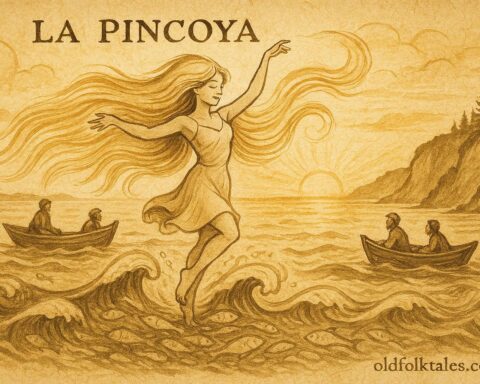
The Arroyo Solís flows through the Uruguayan countryside like a silver thread winding through green fabric, its waters cool and clear, fed by springs that rise from deep within the earth. The stream is not large or particularly remarkable to those who do not know its secrets. But to the fishermen and farmers who have lived along its banks for generations, the Arroyo Solís is more than just water flowing over stone. It is a living thing, possessed of memory and spirit, and it is fiercely protected by a presence that appears when the sun begins its descent toward the horizon.
They call her the Spirit of the Arroyo Solís, though she has been known by other names throughout the years. Some refer to her simply as “La Dama del Arroyo,” the Lady of the Stream. Others use older terms, words passed down from indigenous peoples who knew these waters long before European settlers arrived. But whatever name she carries, her nature remains constant: she is beautiful, she is dangerous, and she is the guardian of the stream’s delicate balance.
Click to read all South American Folktales — timeless stories from the Andes to the Amazon.
The Spirit appears most often at dusk, that liminal time when day surrenders to night and the world exists in a state of transformation. The light takes on a golden quality, making the water shimmer like molten metal. Shadows lengthen and deepen. The air grows cooler, carrying the scent of wet earth and growing things. It is during these transitional moments, when one state of being shifts into another, that she emerges.
Those who have seen her describe a woman of extraordinary beauty, though her appearance carries an otherworldly quality that marks her as something beyond human. Her skin seems to glow with its own light, pale and luminous in the gathering darkness. Her hair flows long and dark, sometimes appearing wet as if she has just risen from the water, sometimes dry and moving as though stirred by a breeze that touches nothing else. She wears clothing that shifts in description depending on the observer: sometimes a simple white dress, sometimes garments that seem woven from water itself, sometimes nothing but shadow and mist shaped into feminine form.
Her eyes are what truly betray her supernatural nature. They hold depths that speak of ages, reflecting the water she guards with an intensity that can mesmerize the unwary. Some say her eyes are the color of the stream itself, changing from clear to green to dark depending on her mood and intentions. When she looks upon someone, it is said, she sees not just their surface but everything beneath: their intentions, their character, their respect or lack thereof for the natural world.
The Spirit does not appear to everyone. Those who approach the Arroyo Solís with reverence, who take only what they need from its waters and give thanks for the stream’s generosity, may spend their entire lives fishing and farming along its banks without ever glimpsing her. She has no quarrel with those who understand the relationship between human need and natural balance, who recognize that the stream is not an infinite resource to be exploited but a gift to be honored.
But for those who come with greed in their hearts, who seek to take more than their share or who show contempt for the water and the life it supports, the Spirit becomes visible. And her appearance is rarely a blessing.
Fishermen tell stories of those who sought to empty the stream, bringing large nets to catch every fish they could, intending to sell their haul for profit without thought for the future. As evening approached and they worked their nets in the water, they would see her standing downstream, watching with those ancient, knowing eyes. At first, she would simply observe, giving them the opportunity to reconsider their actions, to take a reasonable catch and leave the rest.
If they heeded the unspoken warning, if they felt the weight of her gaze and chose to moderate their greed, she would vanish as quietly as she had appeared. But if they ignored her presence, if they continued their excessive harvesting, she would begin to move closer. Her beauty would become hypnotic, drawing their attention away from their work. They would find themselves wading deeper into the water, following her retreating form, mesmerized by the promise of something they could not quite name.
The Arroyo Solís, gentle and shallow along most of its length, holds hidden dangers. There are places where the current runs swifter than it appears, where the bottom drops away suddenly into pools carved deep by centuries of flowing water, where submerged roots and rocks can trap the unwary. The Spirit leads the greedy and the careless into these dangerous places.
Some realize the peril in time, breaking free of her spell when the cold water rises to their chests, when they feel the current pulling at their legs. They scramble back to shore, gasping and terrified, their nets and catches left behind, their desire for profit drowned in fear. These ones learn their lesson and speak of the Spirit with respect thereafter, warning others to take only what they need from the stream.
Others are not so fortunate. Every few years, someone drowns in the Arroyo Solís, their body found caught in rocks or roots in one of the deep pools. The official explanations speak of accidents, of poor judgment, of underestimating the current. But the local people know better. They recognize the pattern. The victims are always those who showed disrespect for the stream, who sought to exploit rather than coexist, who believed the water and its resources existed solely for their benefit.
The Spirit’s protection extends beyond just fishing. She appears to those who would dam the stream unnecessarily, who would pollute its waters with waste, who would destroy the vegetation along its banks that prevents erosion and provides habitat for wildlife. Farmers who try to divert more than their fair share of water for irrigation report seeing her standing in their fields at dusk, her presence a clear warning that their actions have been noted and judged.
There are also tales of her appearing to lost children or to travelers in genuine need. In these encounters, her demeanor is entirely different. Rather than luring them toward danger, she guides them to safety, leading them along the bank to where they can find help or showing them where the water is shallowest and safest to cross. This dual nature reinforces the understanding that she is not malevolent by nature, but rather a force of balance, responding to the intentions and actions of those who enter her domain.
The elders teach that the Spirit of the Arroyo Solís embodies the stream’s own consciousness, its will to survive and maintain the delicate web of life it supports. The water gives freely to those who respect it: fish for food, water for crops and livestock, coolness on hot days, beauty to soothe troubled hearts. But like any living thing, it will defend itself against those who would destroy it through thoughtless greed or deliberate harm.
As evening falls over the Uruguayan countryside and the Arroyo Solís catches the last rays of the setting sun, the fishermen pack their gear and prepare to head home. They have taken a modest catch, enough for their families but not so much as to empty the stream. They offer quiet words of thanks to the water and to the Spirit who guards it. And as they walk away along the well worn paths, some of them glance back toward the stream, half hoping and half fearing to catch a glimpse of the beautiful, terrible figure standing in the gathering shadows, watching over the waters she has protected for longer than memory can trace.
Discover the sacred tales of llamas, condors, and gods who guard the Andes
The Moral Lesson
This legend teaches the essential principle of living in balance with nature and respecting the limits of natural resources. The Spirit of the Arroyo Solís represents the consequences of greed and exploitation versus the rewards of reverence and restraint. She demonstrates that nature is not an infinite resource to be taken without thought, but a living system that must be respected and protected. Those who approach the natural world with humility and take only what they need find themselves safe and provided for, while those driven by greed face dangerous consequences. The story reminds us that sustainable relationships with our environment require recognizing that we are not masters of nature but participants in its delicate balance, and that guardian forces, whether literal or metaphorical, will ultimately hold us accountable for our treatment of the earth’s gifts.
Knowledge Check
Q1: Who is the Spirit of the Arroyo Solís in Uruguayan folklore?
A: She is a beautiful female water spirit who guards the Arroyo Solís stream in Uruguay. Also known as “La Dama del Arroyo” (the Lady of the Stream), she appears at dusk to protect the water from exploitation and maintain balance between human use and natural preservation.
Q2: When and how does the Spirit typically appear?
A: The Spirit appears most often at dusk, during the transition from day to night. She is described as extraordinarily beautiful with luminous pale skin, long dark hair, and eyes that reflect the water’s colors. Her clothing appears to shift, sometimes looking like a white dress, sometimes like water itself, or shadow and mist in feminine form.
Q3: What happens to people who approach the stream with respect and moderation?
A: Those who take only what they need from the stream, show reverence for the water, and maintain balance with nature may never see the Spirit at all. If they do encounter her, she does not interfere with them. She may even guide lost children or travelers in genuine need to safety.
Q4: How does the Spirit deal with those who are greedy or disrespectful to the stream?
A: She appears as a warning, watching them with her ancient eyes. If they continue their excessive harvesting or exploitation, she lures them deeper into the water using her hypnotic beauty, leading them to dangerous deep pools, swift currents, and submerged hazards where they may drown.
Q5: What types of exploitation does the Spirit protect the Arroyo Solís against?
A: She protects against overfishing, unnecessary damming, water pollution, excessive water diversion for irrigation, and destruction of bank vegetation. She appears to anyone who seeks to take more than their fair share or shows contempt for the water and the life it supports.
Q6: What does the Spirit of the Arroyo Solís symbolize in Uruguayan culture?
A: She embodies the stream’s consciousness and will to survive, representing the principle that nature has agency and will defend itself against exploitation. She symbolizes the need for balance between human needs and environmental protection, teaching that sustainable relationships with nature require respect, restraint, and recognition of natural limits.
Source: Adapted from local oral traditions and Uruguayan regional legend collections documenting folklore from rural communities along waterways.
Cultural Origin: Rural Uruguay, Uruguayan Folklore