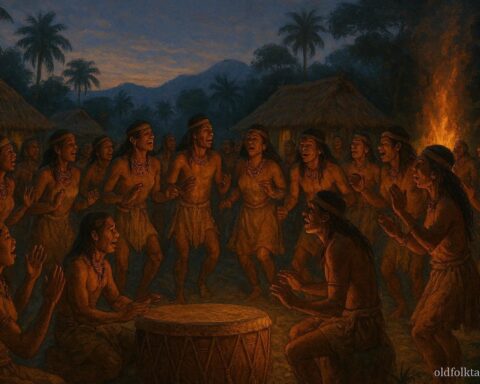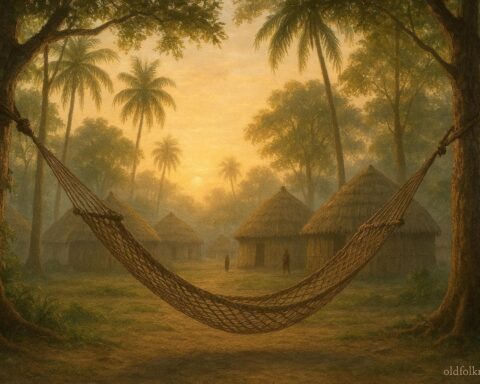
In the early days, when the Taíno people first learned how to shape their villages around the rhythms of the land, cassava was more than food. It was survival, ceremony, and continuity. The thick roots fed families through dry seasons, storms, and lean years. Elders taught that cassava did not simply grow; it listened.
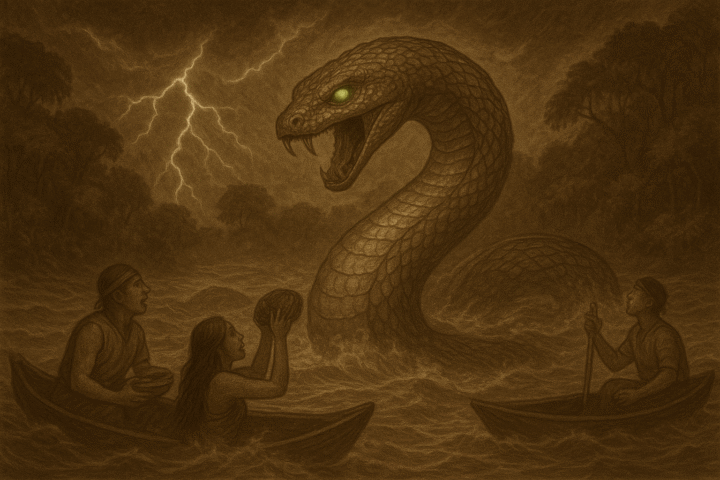
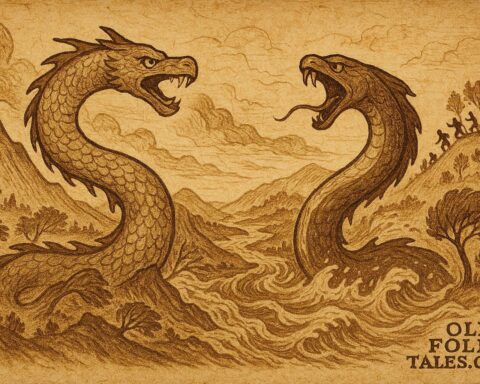
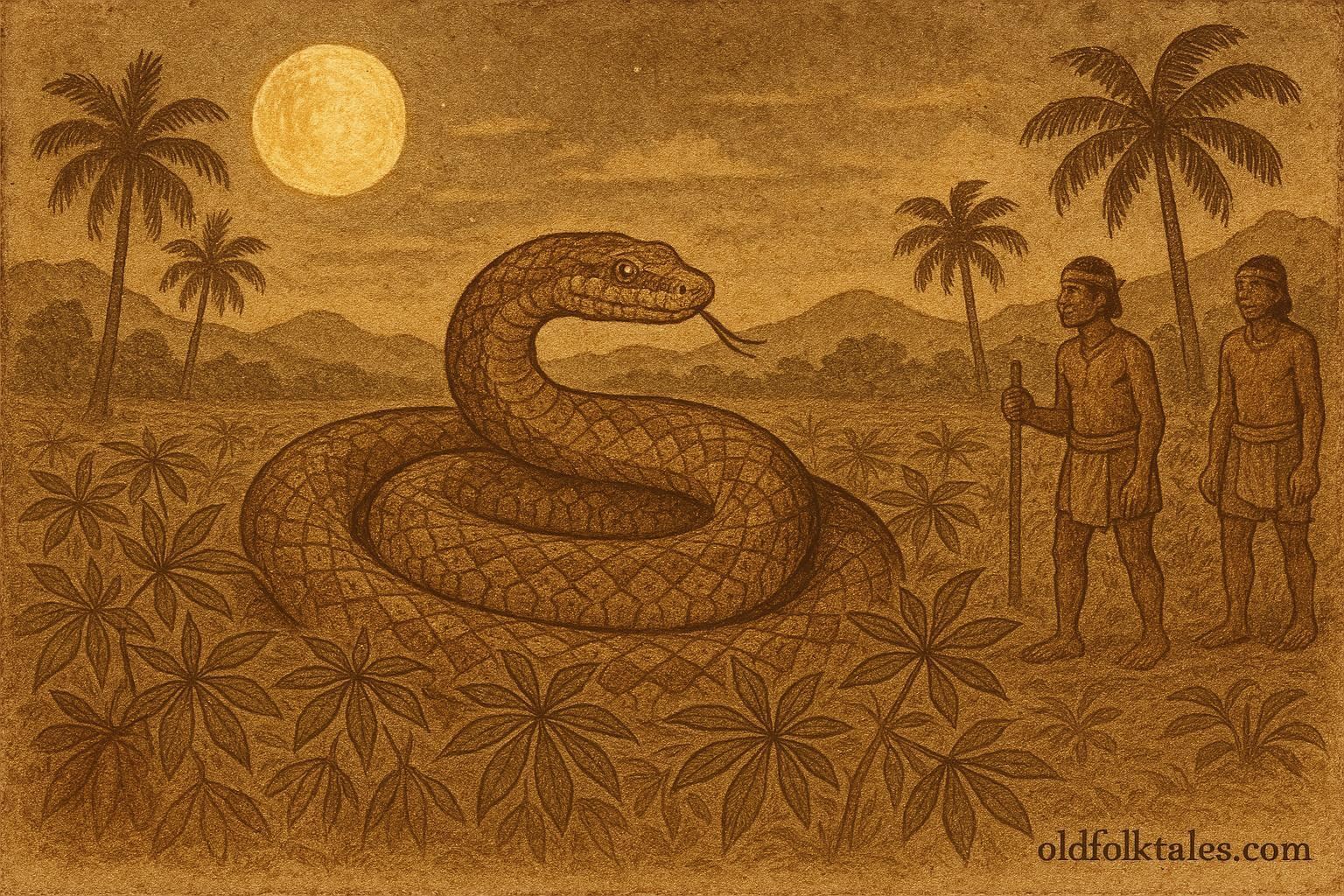
Beyond the cultivated fields, where soil darkened and softened beneath careful hands, there lived a great snake whose scales shimmered like wet earth after rain. The people did not see the snake often, but they felt its presence. Crops grew strong when the fields were treated with care. Harvests failed when greed crept into human hearts.
The elders said the snake was placed there by the spirits of the land itself, a guardian bound not to people, but to balance.
Each planting season began with quiet work. Families cleared the land gently, leaving trees that held the soil and spirits undisturbed. Women pressed cassava cuttings into the ground while men shaped mounds that allowed the roots to breathe. Children carried water and listened as elders reminded them never to take more than needed.
“The snake watches,” they would say. “Not with anger, but with memory.”
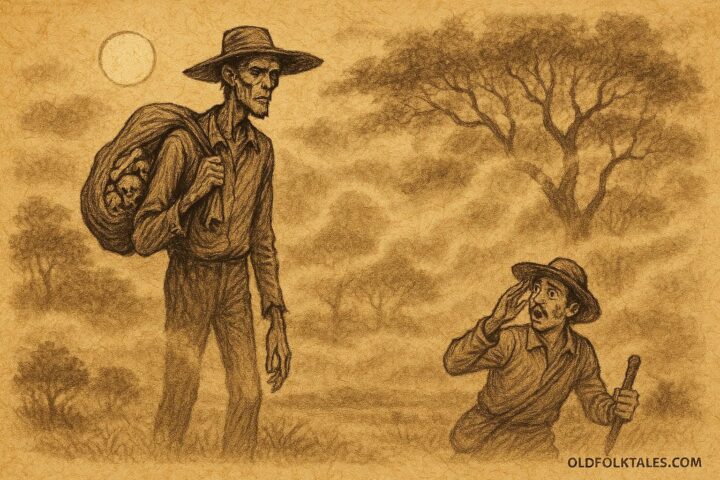
One year, a man named Guarocuya returned to the village after many seasons away. He had traveled to distant shores, seen other lands, and learned new ways of gathering wealth. When he saw the cassava fields, heavy with promise, he laughed.
“You work too slowly,” he said. “The land gives freely. Why not take all it offers?”
The elders warned him. Cassava, they said, must be harvested with restraint. Some roots must remain to feed the soil and spirits alike. Guarocuya listened politely, but pride had already settled in his chest.
That night, under moonlight, he crept into the fields alone.
He dug quickly, ripping roots from the soil without care. He piled them high, far more than his family could consume. As he worked, the ground grew cool beneath his feet, and the night insects fell silent.
Then he heard it.
A slow, deliberate movement beneath the earth.
The soil parted gently, not violently, and the great snake emerged. Its eyes reflected the moonlight, calm and unblinking. It did not strike. It did not hiss. It simply watched.
Guarocuya froze.
The snake spoke, not with sound, but with weight. The air pressed against Guarocuya’s chest, filling him with the understanding of what he had done. He dropped his digging tool and ran, leaving the cassava scattered and broken.
By morning, the villagers found the field disturbed. Some roots had turned bitter overnight. Others had softened and spoiled. Guarocuya fell ill, weak and restless, unable to eat the cassava he had stolen.
The elders did not punish him. They brought him water and sat beside him.
“The land has spoken,” they said. “Now you must listen.”
As seasons passed, Guarocuya recovered slowly. He returned to the fields, this time under supervision, learning again how to plant, tend, and harvest with respect. When he followed the old ways, the cassava grew healthy once more. When impatience crept in, the soil hardened beneath his hands.
Others learned from his mistake.
One dry year, when hunger pressed heavily on the village, temptation returned. Yet the people remembered the snake. They shared what they had, leaving offerings at the edge of the fields. That season, despite the drought, the cassava endured.
Children sometimes glimpsed the snake at dawn, coiled peacefully near the roots. It never harmed those who worked with care. It never rewarded those who sought excess.
Over time, the story spread beyond the village. Travelers came seeking fertile land and were warned that the cassava fields were not unguarded. Some laughed and left. Others stayed and learned.
The snake remained.
It did not belong to fear, but to memory. As long as the people remembered that food was a gift bound to responsibility, the guardian slept beneath the soil, content.
And cassava continued to grow.
Discover ancient tales passed down by the Indigenous peoples of the Americas.
Moral Lesson
The land responds to intention. Care and restraint sustain life, while greed invites loss. True abundance comes not from taking everything, but from knowing when to stop.
Knowledge Check
1. Why was the snake placed among the cassava fields?
To guard balance between humans and the land and protect the crops from greed.
2. What mistake did Guarocuya make?
He harvested cassava excessively and without respect.
3. How did the snake punish greed?
By allowing crops to spoil and causing imbalance rather than physical harm.
4. Why were some cassava roots left in the ground?
To sustain the soil, spirits, and future harvests.
5. What did the villagers learn from Guarocuya’s experience?
That restraint and care ensure long-term survival.
6. Why does the snake remain calm instead of violent?
Because it represents justice through balance, not anger.
Source
Adapted from Caribbean Folk Plant Lore Project and Smithsonian Caribbean Archives.
Cultural Origin
Taíno peoples, Hispaniola.