Long before roads cut through stone and before villages marked borders on maps, there lay a fertile valley high in the Andes where the Aymara people lived in quiet balance. Snow-fed streams crossed the land like silver threads, and the mountains that surrounded the valley stood watch like elders who never slept.
In this valley lived two sisters, Chaska and Killa. They were close in age and closer in spirit. From childhood, they worked side by side, herding alpacas, planting quinoa, and carrying water from the springs. Where one went, the other followed. Where one spoke, the other listened.
Their parents had taught them that the land was not owned, but borrowed. The valley fed the people because the people respected it. The mountains were not obstacles, but protectors. Every season, offerings were made to the earth and to the peaks that watched over them.
Chaska was the elder sister. She was calm, thoughtful, and steady like the stone terraces built by their ancestors. Killa, younger by a year, was quick-minded and watchful, with eyes that missed nothing. Together, they balanced each other.
One year, signs of trouble appeared. Traders passing through spoke of distant groups moving across the highlands, taking land and water by force. At first, the elders dismissed the stories as rumors carried by fear. But soon, scouts confirmed the truth. A band of invaders was moving toward the valley.
The council gathered. The valley had no walls. Its protection had always been trust in the mountains and the belief that no one would dare disturb such a sacred place. But belief alone could not stop sharpened weapons.
Some suggested fleeing. Others argued for negotiation. Chaska and Killa listened quietly.
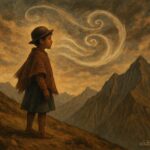
That night, the sisters climbed a hill overlooking the valley. The moon hung low, lighting the fields and streams. They could already sense unease in the land. The wind shifted. The mountains felt heavy.
“If they take the valley,” Killa said, “our people will scatter. The springs will be misused. The land will suffer.”
Chaska nodded. “The mountains have protected us for generations. Now we must protect the valley.”
They made a decision without speaking it aloud.
At dawn, the sisters went to the highest ridge where the mountains narrowed into a pass. This was the only way the invaders could enter with ease. They carried no weapons, only offerings of coca leaves and woven cloth.
They knelt and pressed their hands to the ground.
“Ancient ones,” Chaska whispered, “we ask not for victory, but for protection.”
“Let the valley remain whole,” Killa added. “Let our people remain.”
The ground beneath them trembled slightly, as if listening.
When the invaders arrived days later, they found the pass strangely altered. The air felt heavy. Sound echoed unnaturally. The sisters stood at the entrance, blocking the way.
Turn back, Killa said, her voice calm but firm. This land does not welcome you.
The invaders laughed. Two young women, unarmed, standing against them.
They advanced.
As they did, the earth shifted violently. Rocks fell. The ground rose beneath Chaska and Killa’s feet. The sisters did not move. They stood together, hands clasped.
The invaders froze as the land itself responded. Stone rose higher and higher around the sisters. Their feet rooted into the earth. Their bodies hardened, not in pain, but in purpose.
Chaska spoke one final time. “We remain.”
Killa echoed her. “We protect.”
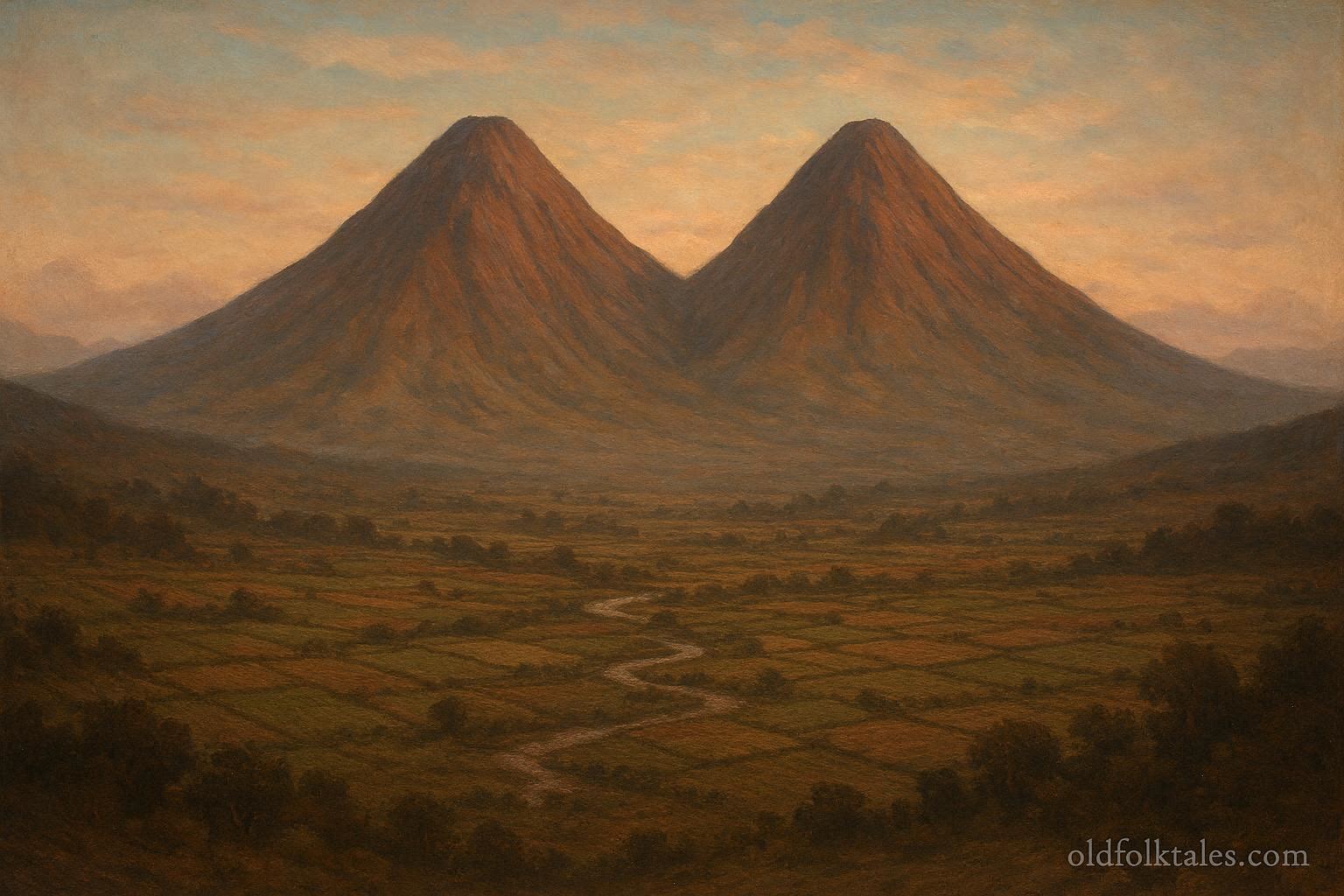
Before the invaders’ eyes, the sisters became stone. Two massive forms rose from the ridge, sealing the pass completely. The valley was no longer open. Two new mountains stood where the sisters had been.
The invaders fled, terrified, convinced the land itself had rejected them.
In the valley below, the people felt the change. The earth grew still. The wind softened. When they climbed the ridge and saw the twin mountains, they understood what had happened.
There was grief, but also reverence.
From that day on, the twin mountains were known as the Sisters Who Stand. Snow gathered on their peaks evenly. No path ever formed between them. Storms broke against them and turned away.
Each year, the people brought offerings to their base. They spoke to the mountains as they once spoke to Chaska and Killa. Travelers passing through felt watched, but not threatened.
Generations passed. Empires rose and fell. Still, the twin mountains stood unchanged. When danger approached, the wind shifted first around them. When balance returned, the valley flourished again.
Elders told children, “Those mountains are not stone alone. They are loyalty made permanent.”
And even now, when the sun rises between the twin peaks, the valley remembers the sisters who chose to become more than human so others could remain.
Click to read all South American Folktales — timeless stories from the Andes to the Amazon.
Moral lesson
True protection is born from loyalty and selflessness. Those who place the well-being of their people above themselves leave a legacy stronger than any weapon or wall.
Knowledge check
- Who were Chaska and Killa?
They were two sisters from an Aymara valley in the Andes. - What threat approached their valley?
A group of invaders seeking to take land and resources. - Why did the sisters go to the mountain pass?
To protect the valley by standing at its only easy entrance. - How did the land respond to their sacrifice?
The earth transformed them into two mountains that sealed the pass. - What happened to the invaders?
They fled after witnessing the land itself rise against them. - What do the twin mountains symbolize for the people?
Loyalty, protection, and sacrifice for the collective good.
Source:
Adapted from Living Mountains of the Andes, Universidad Mayor de San Andrés (2006)
Cultural origin:
Aymara peoples, Bolivia