Along Venezuela’s northern coast, where the sea presses endlessly against mangrove roots and fishing villages rise and fall with the tides, stories are carried as carefully as heirlooms. In Afro-Venezuelan communities, the boundary between the living and the dead is not distant. Ancestors are remembered, spoken to, and honored, and objects tied to them are treated with caution and respect.
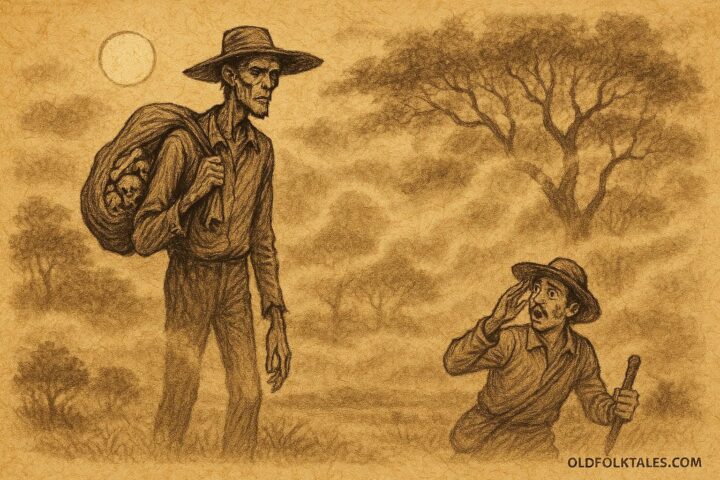
In one such coastal village lived a poor man whose days were shaped by hunger and hardship. He worked when work could be found, yet fortune never seemed to stay with him. One morning, while walking beyond the village paths near a stretch of scrub and sand, he noticed something pale half-buried in the earth.
Explore the ancestral legends of Canada, Mesoamerica, and South America’s Indigenous tribes.
It was a human skull.
Startled but curious, the man picked it up. As his fingers brushed the bone, he struck it lightly against a stone, and to his astonishment, the skull began to sing. Its voice was clear and haunting, rising and falling like a chant carried by the wind. The man froze, fear and wonder battling in his chest. This was no ordinary object.
Instead of returning the skull to the earth or seeking guidance from elders, the man carried it home. Hunger spoke louder than caution. He soon realized that the skull sang whenever it was struck, and the sound drew crowds. Villagers gathered, whispering prayers and awe-struck murmurs. Word spread quickly beyond the village.
Seeing an opportunity, the man began to exploit the skull. He charged people to hear it sing, displaying it without reverence or ceremony. Coins filled his hands, and for the first time in his life, wealth followed him. His hut grew fuller, his meals richer, and his humility thinner.
Yet the skull’s song began to change.
What was once beautiful grew sharp and unsettling. Its voice echoed through the night even when untouched. The man ignored the signs, striking the skull again and again, demanding its song as if it were a servant rather than a relic of the dead.
Then the curse revealed itself.
Misfortune crept into his life. His wealth slipped away as quickly as it had come. Friends turned their backs. Illness followed sleepless nights filled with the skull’s relentless singing. At last, the man realized too late that he had violated something sacred. The skull was not a source of blessing, it was a reminder.
In his ruin, the singing ceased, leaving only silence and regret. The skull’s power had punished greed, restoring balance through loss.
The villagers remembered the tale long after, passing it down as a warning: the dead must never be used for gain.
Immerse yourself in Latin America’s stories of passion, transformation, and spirit.
Moral Lesson
This folktale teaches that greed corrupts and that sacred objects, especially those tied to the dead, must be treated with respect. Exploitation invites ruin.
Knowledge Check
1. Where does The Singing Skull originate?
Afro-Venezuelan coastal communities of Venezuela.
2. What makes the skull unusual?
It sings when struck.
3. How does the man first react to the skull?
With curiosity and awe, followed by exploitation.
4. Why does the skull curse the man?
Because he uses it for personal gain without respect.
5. What does the skull symbolize in the story?
The sacred presence of the dead and ancestral power.
6. What lesson does the folktale teach?
That greed leads to ruin and the dead must be honored.
Source: Afro-Venezuelan folktale, Venezuela
Tradition: Afro-Venezuelan coastal oral storytelling
Cultural Origin: Afro-Venezuelan folklore