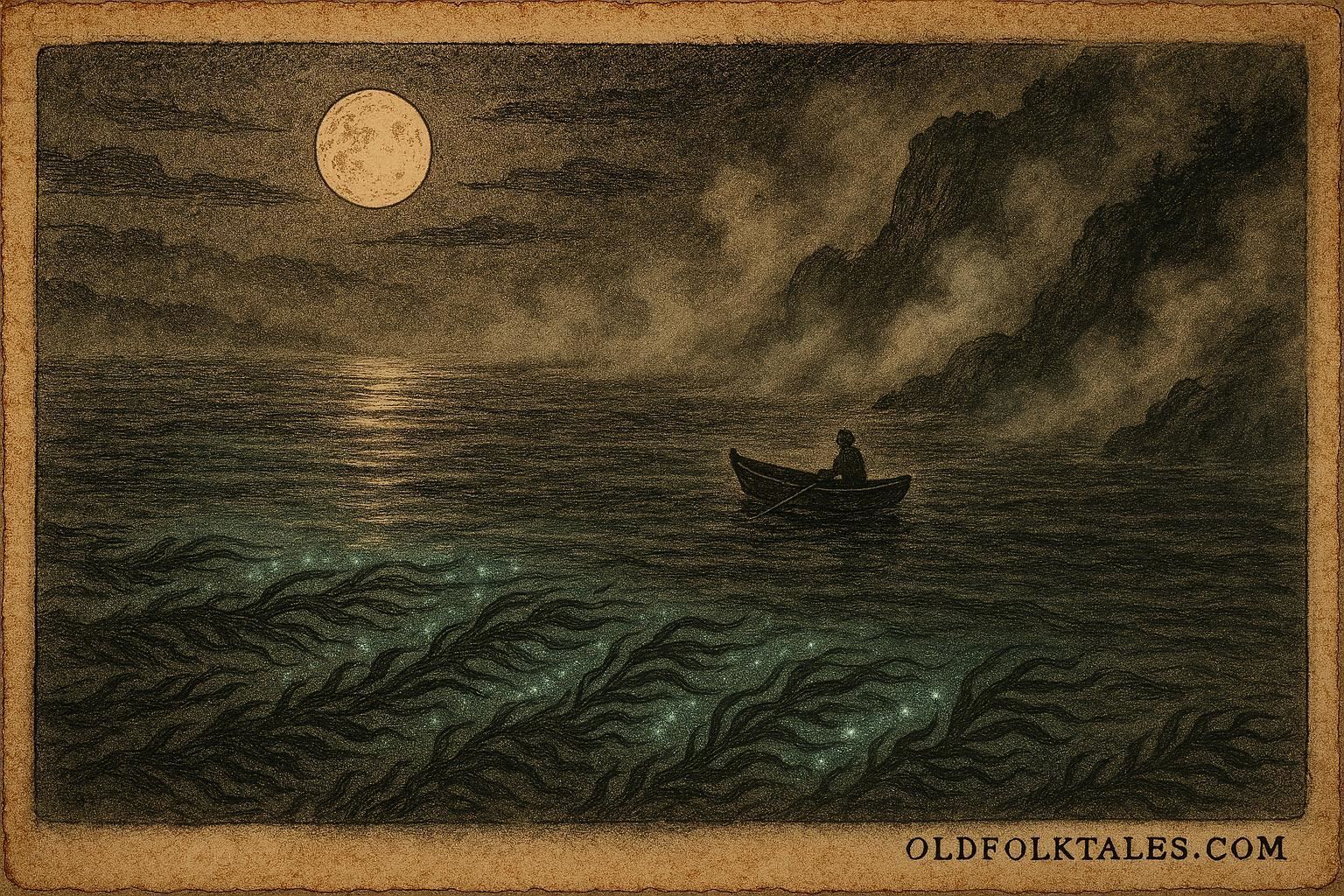
Along the rugged Atlantic coast of Nova Scotia, where jagged rocks meet endless waves, fishermen have long whispered of the singing kelp. By day, it sways quietly beneath the water, blending with the currents. By night, some say, it hums and murmurs in deep tones, guiding boats away from hidden reefs and dangerous shoals.
The story begins with an experienced fisherman named Lucien, who sailed from his village near Lunenburg. Lucien knew the waters well, having spent decades reading the tides, winds, and currents. Yet even he never underestimated the mysteries of the sea.
One summer evening, he prepared for a night voyage to collect lobster traps. The sky was clear, and the moon cast a silver path across the calm waters. As Lucien sailed past the Outer Shoals, he thought he heard a faint melody rising from the depths, a soft low vibration that seemed almost like singing.
Explore the ancestral legends of Canada, Mesoamerica, and South America’s Indigenous tribes.
He paused, letting the oars drift. The sound grew clearer: a series of hums and whistles, rising and falling in a rhythm that matched the waves. Lucien’s heart pounded. He had heard the stories from elders: the kelp sang to protect the waters, guiding those who respected the sea and warning those who did not.
As he listened, a swell shifted beneath him, carrying the boat dangerously close to a reef. He tugged the oars instinctively, steering toward the sound. Each note of the kelp seemed to vibrate against the hull, drawing him away from jagged rocks and into safer waters.
Lucien returned to the village at dawn, shaken but safe. He told the story to fellow fishermen, some of whom nodded knowingly, having experienced similar phenomena. Others laughed, claiming that currents and waves were responsible.
Over time, more fishermen reported the same experiences. Boats drifting too close to the shoals at night were mysteriously nudged by unseen forces. Kelp beds, dark and dense beneath the moonlit waves, seemed to hum a warning, a natural chorus that spoke only to those who paid attention.
One night, a young and arrogant fisherman, Henri, decided to ignore the warnings. He mocked the elders’ stories and ventured near the shoals with his friends. The night was still, the moon hidden behind clouds. No singing greeted them. Confident, they sailed straight over the rocks.
Suddenly, the waves shifted violently. The boat scraped along a hidden reef, splintering wood and throwing the crew into the cold Atlantic waters. Miraculously, they survived, clinging to floating debris until dawn, but their pride was shattered. Henri, drenched and trembling, understood that the sea’s guidance had been there all along; they had simply ignored it.
From then on, the village treated the kelp with reverence. Fishermen who passed the Outer Shoals at night would lower their sails and listen, giving thanks to the singing vegetation beneath the water. Parents told children that the kelp’s voice was alive, a protective spirit woven into the very fabric of the coast.
The legend emphasizes that nature itself holds wisdom and guidance. Not all who hear the kelp will understand its song, and only those who approach with respect and humility are led safely. It became common practice to make offerings of small nets or pieces of rope at the edge of the shoals before departing, gestures of acknowledgment and gratitude to the invisible guardians below.
Even today, locals report hearing low hums beneath the waves when conditions are just right. Scientists may describe it as the movement of water through dense kelp, or the vibrations of marine life. Yet the fishermen know the truth: the singing kelp is alive with intention, a voice of the sea reminding all who navigate it that guidance and danger coexist, and that wisdom lies in listening.
Moral Lesson
Respect for nature requires attention, humility, and gratitude. The natural world provides guidance to those willing to observe and heed its warnings. Ignoring such signs, even when they seem ordinary, can lead to disaster. The story of the singing kelp teaches that wisdom often comes from listening rather than rushing, and that guardianship is found in unexpected forms.
Knowledge Check
- What is unique about the kelp at the Outer Shoals?
It emits low singing sounds at night that guide boats away from reefs. - How did Lucien respond to the kelp’s song?
He listened carefully and steered his boat safely away from danger. - What happened to Henri and his friends?
They ignored the kelp’s warnings, hit a hidden reef, and were nearly lost. - What broader lesson does the story convey?
Respect, attention, and humility toward nature can prevent disaster. - How do villagers honor the singing kelp?
By making offerings and approaching the waters with gratitude. - How does the story combine natural phenomena with folklore?
It interprets the movement of kelp and tides as protective, sentient guidance.
Source:
Adapted from Dalhousie University marine folklore research and Atlantic oral histories.
Cultural Origin:
Maritime folklore, Atlantic coast of Nova Scotia.