In the far reaches of Arctic Canada, where winter stretched endlessly and the sun barely lifted above the horizon, life was a careful balance of endurance, skill, and cooperation. Among the Inuit, it was said that the survival of the group relied not only on hunting and shelter but on the harmony between its members. Every voice, every action, even every silence mattered.
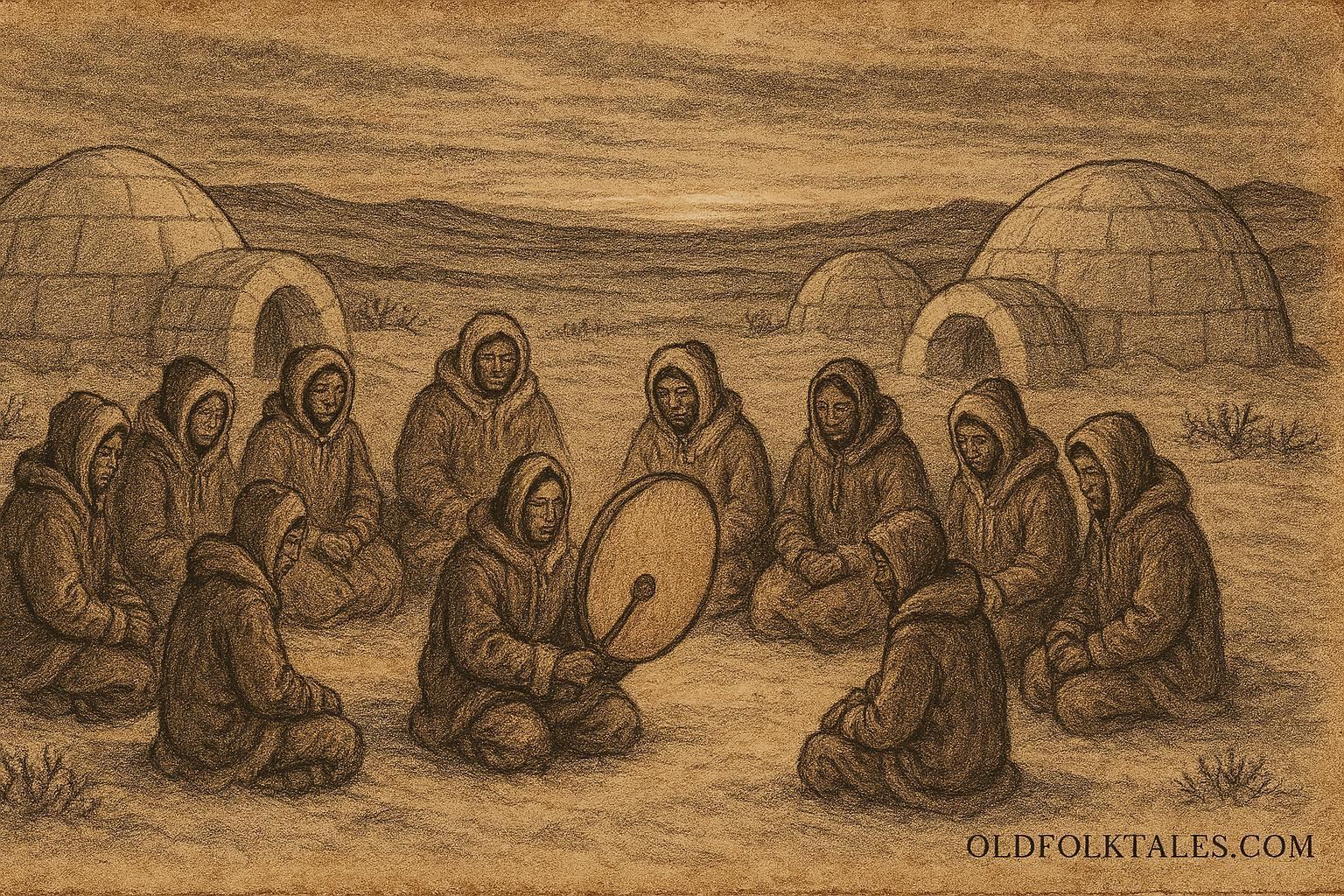
At the center of one winter camp stood a sacred drum. It was not an ordinary drum. Generations ago, the elders had crafted it from the stretched hide of a caribou and the carefully carved wood of a driftwood tree that had floated across the sea. The drum was said to carry the heartbeat of the community itself. When played during ceremonies, it called people together, reminded them of their duties, and strengthened bonds. Its rhythms encouraged generosity, patience, and understanding.
One particularly harsh winter, the camp was bustling with activity. Hunters had returned from long treks across the frozen tundra, bringing caribou and seals to feed the families. Children ran across snow-packed paths, their laughter echoing against the ice. The elders watched carefully, ensuring the young ones learned the ways of survival and respect for the land.
Explore the ancestral legends of Canada, Mesoamerica, and South America’s Indigenous tribes.
At first, everything was in harmony. The drum sounded during feasts, marking celebrations and shared stories. Its rhythm guided dances, and its deep pulse reminded everyone of their connection to one another. People respected the rules of the camp, sharing their catch, helping one another with chores, and listening to the guidance of the elders.
But as days passed, pride and impatience began to creep into the hearts of some hunters and young men. They laughed at small mistakes, refused to assist one another, and spoke harshly to the children. They mocked the elders’ advice, claiming they knew better than the generations before them. One by one, the balance of the camp began to shift, and a quiet tension settled over the community.
One evening, during a gathering to mark the turning of the polar day, the drum, which had always sounded with clarity and power, failed to respond. The elders noticed immediately. No matter how they struck the hide, no matter how they called upon its spirit, the drum remained silent. Its silence was deep and unsettling, echoing across the snowy plains in a way that made everyone pause.
Fear and confusion spread among the people. The children stopped playing, the hunters grew quiet, and even the elders, who had long prepared for the hardships of winter, felt a weight of unease. The silent drum was more than a musical instrument; it was a living signal of the community’s spirit. Its silence meant the bond of respect and harmony had been broken.
An elder named Nuna gathered the people around the drum. His hair was white as snow, and his eyes had seen many winters. “This drum listens to us,” he explained solemnly. “It speaks for the heart of our community. When we forget respect for one another, it will fall silent. Tonight, it tells us we have strayed.”
The young men, initially defiant, shifted uncomfortably. They glanced at each other, realizing for the first time the harm their words and actions had caused. The children whispered apologies for their small quarrels, and even some of the hunters acknowledged that pride had led them to act selfishly.
Nuna continued, “The drum does not punish. It reflects. It shows us what must be mended. If we listen, if we act with care, it will speak again.”
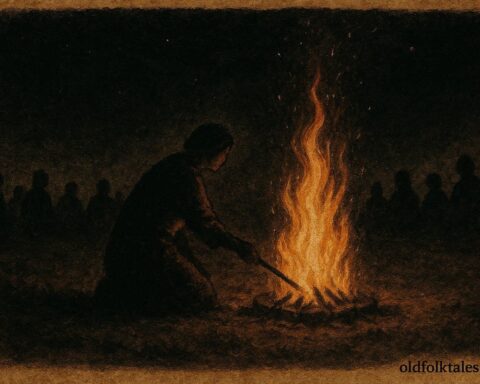
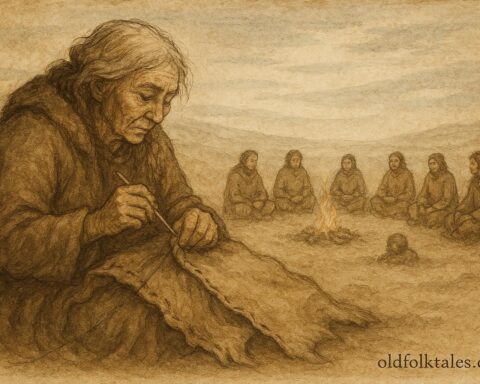
That night, the community worked together in a way they had not for many weeks. They repaired broken tools, cleared paths for easier movement, and shared their food without expectation of return. The hunters went further to bring back extra meat, not for themselves but for those too old or weak to travel. They taught the children to listen, to care for one another, and to respect the wisdom of the elders.
Slowly, as the night deepened, the drum trembled and then spoke once more. Its first beats were soft, like the careful pulse of a cautious heart. Then the rhythm strengthened, steady and clear. The sound spread warmth through the camp, and people felt a renewed sense of unity and purpose. The drum had returned because the community had restored respect and accountability.
From that day forward, the people of the winter camp treated the drum with reverence. Its rhythms were not merely music—they were a guide, a mirror, and a teacher. Each beat reminded them that pride and neglect could weaken the bonds that kept them alive, while patience, humility, and care fortified the community.
Seasons passed, and winters came and went, but the story of the silent drum lived on. Children learned early to honor one another. Hunters shared their knowledge and food freely. Elders taught with patience, and families worked together, always mindful of the drum’s watchful presence. The drum became a symbol not only of survival but of the strength that comes from harmony and respect.
Even in the harshest blizzards, when life seemed precarious, the drum reminded them that survival was not a solitary act. The Arctic required collaboration, patience, and consideration. Those who ignored these lessons found themselves isolated, struggling, while those who remembered them thrived.
The tale spread beyond the camp. Other Inuit communities spoke of the winter drum that fell silent when respect was forgotten and sang again when harmony was restored. It became a symbol of accountability, a lesson carried from generation to generation: the well-being of a community is a shared responsibility, and sacred objects like the drum reflect the state of the heart.
And so, the drum’s silent voice became a teacher. Its silence, though frightening at first, brought reflection and change. It reminded every member of the community that in the Arctic, where life is fragile and cold, unity, care, and respect were as essential as fire and shelter.
Moral Lesson
Harmony in a community is maintained through respect, accountability, and awareness of one another. Pride, selfishness, and neglect weaken the bonds that protect everyone. Sacred objects, like the winter drum, serve as mirrors to the heart, teaching that survival depends not only on skill but also on patience, humility, and shared responsibility. True strength comes from working together.
Knowledge Check
- Why did the drum fall silent?
Because the community forgot respect for one another. - What actions restored the drum’s sound?
Members repaired tools, shared food, and treated each other with care and humility. - What does the drum symbolize?
The health, unity, and moral state of the community. - How does this story reflect Inuit cultural values?
It emphasizes cooperation, respect, and accountability within the group. - Why is it important for children to learn this story?
It teaches that their behavior affects the safety and well-being of the entire community. - What lesson does the silence of the drum teach?
Neglect and pride weaken communal bonds, while care and respect restore harmony.
Source:
Adapted from Inuit cultural education archives and Arctic folklore collections.
Cultural Origin:
Inuit folklore, Arctic Canada.