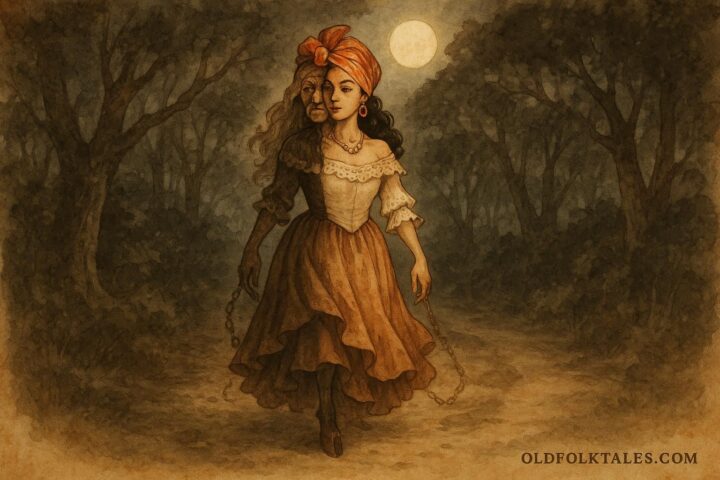
In a small Caribbean village, where the nights were warm and fragrant with salt and flowering trees, a man named Kofi noticed something strange one evening. As the sun dipped beneath the horizon, painting the sky in shades of crimson and gold, he saw his shadow stretching longer than usual across the sandy path. At first, he laughed, thinking it was the playful trick of light. But as he walked home, the shadow did not follow him naturally, it moved independently, slipping ahead and circling behind, always keeping pace even when he paused.
The next morning, Kofi tried to shake it off, thinking it would vanish with sunlight. But the shadow lingered, and as days passed, it began to behave oddly. It whispered in low, sibilant tones, suggesting small lies, tempting him to cheat in the market, and to hoard more than his share of food. At first, Kofi found this amusing, even useful, for the shadow’s suggestions brought him fleeting success. But soon, the whispers grew darker, urging him to deceive friends and neighbors, to betray trust, and to hide from truth.
Discover Mexico’s timeless tales blending Indigenous roots and Spanish tradition
Kofi’s nights became restless. Even by moonlight, the shadow loomed, twisting and stretching unnaturally, its edges flickering with a strange, silvery glow. He could feel it probing his mind, amplifying his fears, reminding him of the lies he had told. Exhausted, he sought the counsel of Mama Amina, the village healer and keeper of ancestral wisdom.
“Your shadow is no ordinary shade,” Mama Amina said, her eyes reflecting the candlelight. “It is a spirit attached to you because of your dishonesty. When a person lies or harms others, the soul becomes heavy, and shadows sometimes gain life to remind us of the truths we avoid.”
Kofi listened, ashamed, for he remembered each small deceit he had told in trade, to neighbors, and even to himself. Mama Amina instructed him to face his shadow directly, confess his wrongs, and make restitution wherever possible. She gave him a bowl of river water, sprinkled with salt and blessed herbs, to wash his hands and face, symbolically purifying his intentions.
For three nights, Kofi visited each neighbor he had wronged. He returned what he had taken unfairly, apologized sincerely, and spoke truths he had long withheld. Each act felt heavier on his heart, yet with each confession, the shadow’s whispers grew quieter. On the third night, he returned home, exhausted but resolute. As he stood in the moonlight, the shadow approached him one final time. It shimmered like silver mist and then, slowly, it merged back with his feet, returning to its natural place.
From that night forward, Kofi walked in balance. He carried no restless shadow, only the knowledge that honesty maintained harmony between spirit and body, and that deceit could manifest in ways beyond human understanding. The villagers noticed a change in him: his laughter was lighter, his steps surer, and his presence comforting. The tale of Kofi and his wandering shadow was told for generations, a reminder that the unseen consequences of dishonesty can follow even the brightest paths.
Moral Lesson
Dishonesty creates spiritual burdens that manifest in life’s shadows. Confession, restitution, and truth restore balance and peace.
Knowledge Check
1. Why did Kofi’s shadow gain independence?
Because dishonesty and deceit attached a restless spirit to him.
2. How did the shadow behave as Kofi continued lying?
It whispered temptations, encouraged deceit, and disturbed his nights.
3. Who helped Kofi resolve the shadow problem?
Mama Amina, the village healer and keeper of ancestral wisdom.
4. What actions freed Kofi from the shadow?
Confession of wrongs, restitution to those harmed, and personal honesty.
5. What does the shadow symbolize in Afro-Caribbean culture?
The duality of spirit and body, showing consequences of moral transgressions.
6. What is the key lesson from this folktale?
Truth and integrity restore harmony; dishonesty brings spiritual and social imbalance.
Source: Afro-Caribbean folktale
Tradition: Rooted in African beliefs in spiritual duality, preserved in Caribbean oral culture