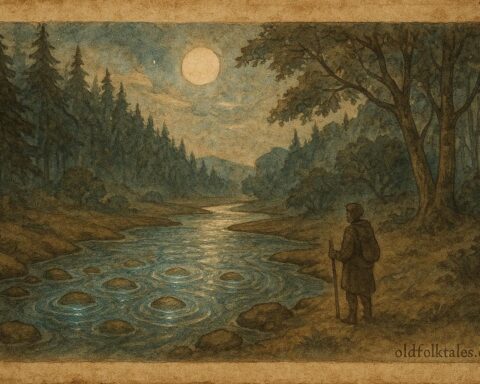
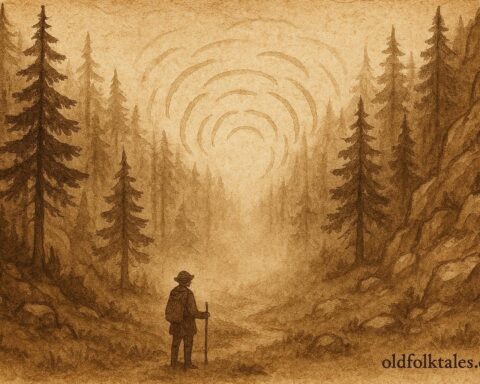
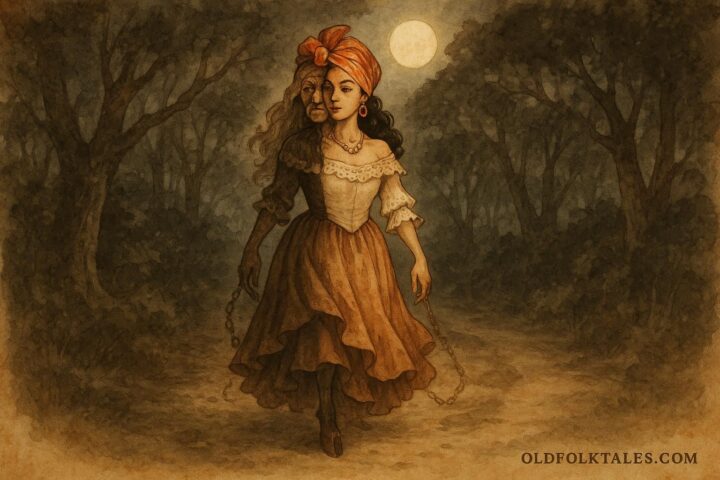
In the quiet villages of old Quebec, where narrow paths wound between wooden homes and dense forests pressed close to the edges of daily life, people spoke of a shadow that did not belong to anyone. It was said to follow behind travelers at dusk, stretching long across the ground, keeping pace no matter how fast or slow one walked. At first, villagers dismissed the sightings as tricks of the fading light. But as stories accumulated, doubt gave way to unease.
The shadow was not always visible. It appeared most often in moments of distraction or pride, when people walked without awareness of their surroundings or their actions. Those who noticed it felt a sudden chill, as if they were no longer alone, even on the most familiar roads. Elders warned that the shadow was not a threat to be chased or confronted. It was a reminder, a presence meant to awaken humility and attentiveness.
One autumn, a young man named Étienne returned to his village after years away. He had traveled widely, gained skills, and earned praise wherever he went. When he arrived home, he spoke often of his accomplishments and paid little attention to the customs he had once followed. He walked quickly, head held high, rarely greeting neighbors or stopping to listen.
Immerse yourself in Latin America’s stories of passion, transformation, and spirit.
One evening, as Étienne took a shortcut through a wooded path, he noticed something strange. His shadow seemed longer than it should have been, stretching beyond the reach of the lantern he carried. When he stopped, it stopped. When he turned, it shifted, but it did not match his movements exactly. A feeling of unease settled over him, but he dismissed it as fatigue.
Over the following days, the shadow appeared again and again. It followed him through fields, along riverbanks, and even near the edge of the village. Étienne told no one. Admitting fear would have wounded his pride. Yet each time the shadow appeared, he felt compelled to slow down, to watch his steps more carefully, to listen to the sounds around him.
Meanwhile, others in the village spoke of similar experiences. A merchant who cheated customers claimed to see the shadow waiting for him outside his shop. A woman who gossiped cruelly felt it linger behind her as she walked home at night. In every case, the shadow appeared not to harm, but to remind.
The elders gathered and spoke of old teachings. They said the shadow was a reflection of conscience made visible, a spirit bound to the land to observe human behavior. It followed not bodies, but intentions. Those who walked carelessly through life drew its attention.
Étienne’s encounters grew more intense. One night, the shadow seemed to step closer, no longer bound to the ground but rising slightly, as if watching him. He stopped walking and turned fully toward it. For the first time, he felt not fear, but shame. Memories of ignored greetings, broken promises, and careless words flooded his mind.
The next morning, Étienne changed. He slowed his pace, greeted villagers, and listened more than he spoke. He repaired fences he had once passed without noticing and offered help where it was needed. Slowly, the shadow appeared less often. When it did, it remained faint and distant.
Others noticed similar changes. The merchant became fair. The gossip fell silent and kind. Those who adjusted their behavior found peace returning to their steps. The shadow did not disappear from the village entirely, but it became less frequent, appearing only when someone forgot themselves.
It was said that the shadow never walked ahead. It always remained behind, unseen unless one chose to look. It reminded people that every action leaves a trace, and every step is observed, whether by others or by one’s own conscience.
Years later, travelers passing through the village remarked on its calm and order. When asked, the villagers would smile and say that they had learned to walk carefully, both on the road and in life. As for the shadow, some claimed to glimpse it still, stretching long at sunset, patient and watchful, waiting only for those who forget to be humble.
Moral Lesson
True awareness begins when pride fades. Those who walk humbly and attentively leave no shadow of regret behind them.
Knowledge Check
- What is the shadow in the story believed to represent?
A visible reminder of conscience and moral awareness. - When does the shadow appear most often?
When people act carelessly, proudly, or without humility. - How does the shadow affect Étienne?
It leads him to reflect, change his behavior, and act with humility. - Does the shadow harm anyone?
No, it serves as a warning and guide rather than a punishment. - Why does the shadow always walk behind?
It symbolizes the consequences of past actions. - What lesson does the village learn?
Living attentively and humbly brings harmony and peace.
Source: Université Laval Folklore Archives; Canadian Folklore Database.
Cultural Origin: French Canadian folklore, Quebec.