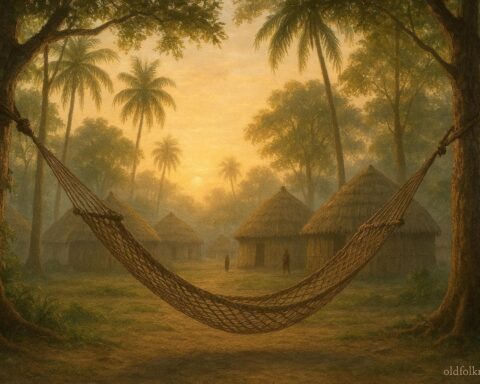
Long ago, before ships crossed the sea and before the smoke of strange fires touched the horizon, the island was whole. Its mountains rose like green giants covered in mist, and its rivers ran like silver veins, carrying life from the heart of the land to the open sea.
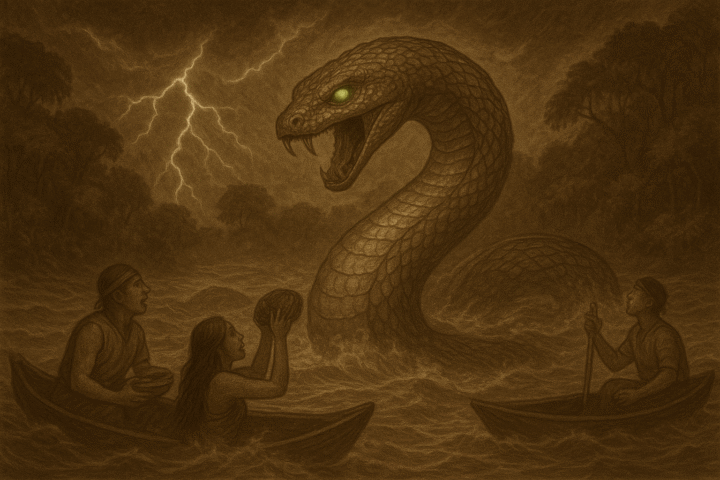
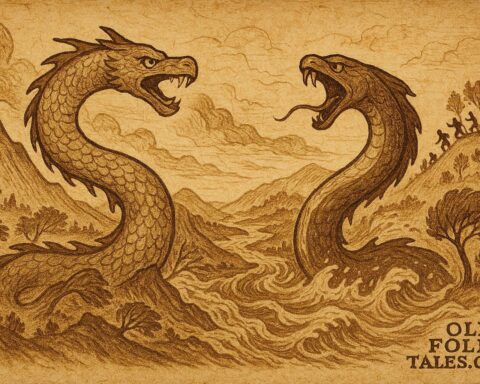
Beneath one of these rivers, in a cave carved of coral and stone, lived Guakare, the great water serpent. Her scales shimmered with every color of the current, turquoise, green, and gold, and her long body coiled through the river tunnels like living light. The Taino people knew her as the Keeper of Flow, the guardian who kept the water pure and moving between the mountains and the sea.
As long as Guakare’s song whispered beneath the surface, the fish were many, the crops grew tall, and the people rejoiced. They bathed in the clear pools, drank from the springs, and offered cassava bread and sweet smoke from burning tobacco leaves to thank her for her kindness.
Explore the land of La Llorona, trickster coyotes, and magical realism in Mexican folklore
But as time passed, the people forgot.
They threw ashes and waste into the stream. They let the river grow heavy and clouded. The elders warned, “Do not anger the river spirit. She carries both life and death.” Yet the younger ones laughed and said that Guakare was only an old story.
Then one morning the river fell silent. Its rippling voice, once loud and joyful, was gone. The water stopped moving, and what was once clear turned brown and still. Fish floated lifeless near the banks. The air grew dry. Without the river’s flow, the crops shriveled in the fields, and thirst spread through the villages.
The people gathered to pray beside the riverbed. They offered fruits and songs, but the water did not return. For many days they waited in fear until a young girl named Atabeyra stepped forward. She was small and quiet, known for her gentle heart and for the way she listened to the sounds of the forest.
“I will go to speak to Guakare,” she said. The villagers gasped, for no one had dared approach the serpent’s hidden cave in many years. But Atabeyra’s eyes were calm. She took a gourd of clear spring water and a shell flute that had belonged to her grandmother, and she followed the dry path of the river deep into the hills.
For two days she walked, guided by the faint glimmer of the serpent’s scales that sometimes flashed beneath the stones. When she reached the cave, the air was thick and cool, and a deep rumble echoed from within.
“Great Guakare,” she called softly, “why have you turned away from us?”
The earth trembled, and from the shadows rose the serpent. Her eyes glowed like two moons reflected on still water. Her voice was both thunder and whisper.
“Your people have forgotten the promise,” she said. “You poured your waste into my home and silenced my song. When the river sickens, so does the land.”
Atabeyra fell to her knees. “Great Mother of Waters,” she said, “we have been foolish. I have brought you pure water from the last spring that still lives. Please forgive us.”
She placed the gourd before the serpent and lifted her shell flute. The melody that came forth was soft and trembling at first, then strong and bright. It echoed through the cave and across the hills, carrying a message of sorrow and love.
Guakare listened. Slowly the anger faded from her golden eyes. The air grew warmer, and the cave began to fill with sound, a deep and living hum. The serpent lowered her head toward the girl.
“You have remembered the old ways,” she said. “Because of your courage and your song, I will forgive your people.”
Guakare uncoiled her vast body and slid back into the riverbed. As she moved, the water began to rise, bubbling from the earth. The river returned, clear and strong, rushing down the valley toward the sea. The trees drank deeply. The fish danced once more beneath the sunlight.
When Atabeyra returned to her village, the people rejoiced and gave thanks to both her and the spirit of the river. From that day forward, they cared for the water as they cared for their own lives. They remembered that every stream and spring held the breath of the serpent who kept their world alive.
Discover ancient tales passed down by the Indigenous peoples of the Americas.
Moral lesson
Nature is a living spirit that responds to how humans treat it. Respect for the rivers, trees, and earth keeps harmony alive, while neglect and greed bring silence and suffering. Gratitude and care restore balance to all living things.
Knowledge Check
1. Who was Guakare in the story?
Guakare was the great water serpent who guarded the river and kept its flow balanced between the mountains and the sea.
2. What caused the river to stop flowing?
The people polluted the river and forgot their promises of respect, which angered the spirit of the water.
3. Who restored the river’s flow?
A young girl named Atabeyra restored the river by offering pure water and singing a song of apology.
4. What does the serpent symbolize in Taino culture?
The serpent represents the sacred power of nature and the balance between humans and the natural world.
5. What lesson do the villagers learn?
They learn that disrespect toward nature leads to destruction, while humility and care bring renewal.
6. What cultural belief does this story reflect?
It reflects the Taino belief that every element of nature is alive and guided by a spirit that must be honored.
Source:
Adapted from Taíno oral traditions recorded in Myths and Legends of the Taíno People by Sebastián Robiou Lamarche (2003), San Juan, Editorial Punto y Coma.
Cultural Origin: Taíno, Greater Antilles including Puerto Rico, Hispaniola, and Cuba.