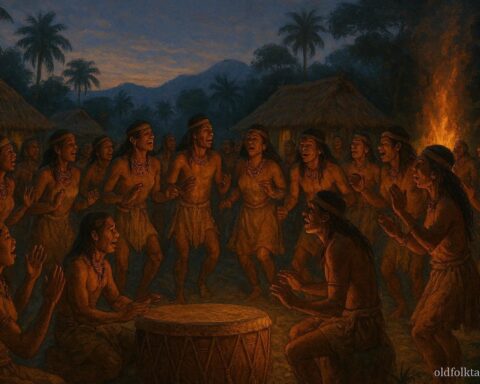
In the ancient forests of Paraguay, long before colonial settlers arrived and yerba mate became known throughout the world, there grew a special plant that the Guaraní people called ka’a, meaning “herb” or “plant.” This was no ordinary greenery but a sacred gift from the gods, a plant whose leaves, when dried and steeped in water, produced a beverage that brought energy, clarity of mind, and a sense of connection to the natural and spiritual worlds.
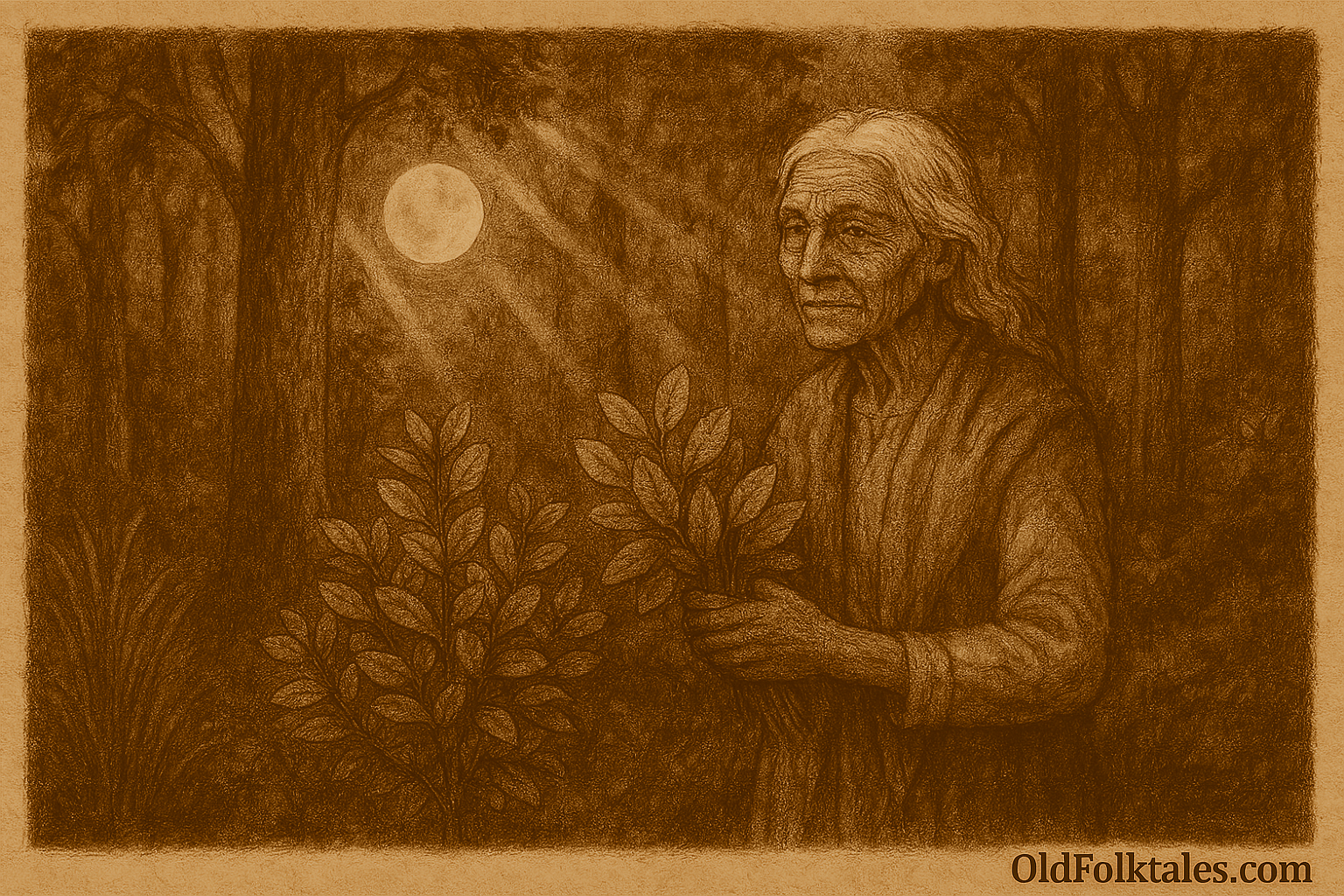
In those early days, there lived an old woman in a remote part of the forest, far from any village or settlement. Her name was Ka’a Jaryi, which means “the old woman of the herb” or “the grandmother of the plant.” She had lived alone for so long that some said she had always been there, as much a part of the forest as the ancient trees themselves. Her face was deeply lined with age, her hair white as cloud, her hands gnarled like tree roots, but her eyes were bright and sharp, missing nothing that happened in her domain.
Click to read all South American Folktales — timeless stories from the Andes to the Amazon.
Ka’a Jaryi had been chosen by the forest spirits to be the guardian of the yerba mate plant. It was her sacred duty to protect the ka’a, to ensure it was treated with proper respect, and to decide who was worthy of receiving its gifts. The plant grew abundantly in the area around her simple dwelling, flourishing under her watchful care. She knew every individual shrub, understood the rhythms of its growth, and could sense when someone approached with intentions good or ill.
The Guaraní people who lived in nearby villages knew about Ka’a Jaryi and the sacred plant she guarded. They had learned over generations the proper way to approach her and request the herb. They would come with offerings, tobacco, corn, woven goods, and other gifts. They would greet her with respect, acknowledge her role as guardian, and explain their need for the ka’a. They would promise to use it wisely, to share it with others in the spirit of community and hospitality that the plant represented.
When people approached with such respect and humility, Ka’a Jaryi would welcome them warmly. She would lead them to the plants and show them how to harvest the leaves properly, taking only what was needed and leaving enough for the plant to regenerate. She would explain the rituals associated with preparing and drinking mate, the importance of sharing the gourd and bombilla with others, the spiritual significance of the beverage as something that brought people together in fellowship and conversation.
Those who honored the plant and followed Ka’a Jaryi’s teachings found themselves blessed. The yerba mate they harvested would be particularly potent and flavorful. It would bring them sustained energy without agitation, mental clarity without anxiety, and a sense of peaceful alertness that made work easier and conversation more pleasant. Their families would thrive, their communities would prosper, and the spirit of generosity and sharing that mate represented would spread through their villages.
But not everyone who sought the ka’a came with pure intentions or proper respect.
As word of the miraculous plant spread to more distant regions, strangers began to arrive in Ka’a Jaryi’s forest. Some were traders who saw the plant purely as a commodity to be exploited for profit. Others were adventurers seeking valuable resources to claim for themselves. Still others were simply greedy, wanting to take as much as possible without regard for the plant’s wellbeing or the sacred protocols surrounding it.
These people did not bring offerings. They did not greet Ka’a Jaryi with respect. Many did not even acknowledge her existence, seeing only an old woman living alone in the forest, someone they could easily ignore or intimidate. They came with large sacks and sharp tools, intending to harvest as much yerba mate as they could carry, ripping up entire plants by the roots, stripping branches bare without concern for whether the plant would survive.
When Ka’a Jaryi confronted these disrespectful intruders, warning them that they were violating sacred protocols and would face consequences, they laughed at her. “You’re just an old woman,” they would say. “You have no power to stop us. This plant grows wild in the forest. It belongs to no one, or it belongs to whoever is strong enough to take it.”
But Ka’a Jaryi was no ordinary old woman. As the spirit chosen guardian of the yerba mate, she possessed powers granted by the ancient forces of the forest. When people approached the sacred plant with greed and disrespect, refusing to honor the proper protocols despite her warnings, she would invoke a curse.
The curse manifested in different ways depending on the nature of the transgression. Some who stole the yerba mate without respect found that when they tried to prepare it, the drink was unbearably bitter, so astringent it burned the mouth and caused violent stomach ailments. Others discovered that the mate they had stolen brought not energy but exhaustion, not clarity but confusion, not fellowship but discord. People who drank it would become irritable and argumentative, relationships would sour, and communities would fracture rather than unite.
Some thieves found that they simply could not leave the forest. They would walk for hours, certain they were heading back toward civilization, only to find themselves circling back to the same clearings, the same streams, always somehow ending up near Ka’a Jaryi’s dwelling where she would be waiting, her bright eyes watching them with a mixture of pity and stern judgment.
The worst curse was reserved for those who were not just disrespectful but actively destructive, those who uprooted entire plants or stripped the forest of its resources with no thought for regeneration. These people would find themselves transformed, their bodies slowly taking on the characteristics of the plants they had destroyed. Their skin would turn the deep green of yerba mate leaves, their limbs would stiffen and become woody, their feet would root themselves in the soil. They would become part of the forest they had tried to exploit, standing as silent warnings to others who might consider such sacrilege.
Word of Ka’a Jaryi’s power spread along with knowledge of the yerba mate plant. People learned that there was a right way and a wrong way to harvest this sacred herb, that respect and ritual mattered, that the plant’s gifts were not free for the taking but required proper acknowledgment of its spiritual significance and its guardian’s authority.
The Guaraní people incorporated these teachings into their culture. The drinking of yerba mate became more than simple consumption of a beverage. It became a ritual of sharing and community. The gourd would be filled with the prepared herb, hot water would be added, and the drink would be passed from person to person, each taking their turn with the bombilla, the metal straw. No one would drink alone while others went without. The mate would circle the group, creating bonds of fellowship and equality.
This ritual of sharing, they explained to outsiders, was essential to honoring Ka’a Jaryi and receiving the plant’s blessings. Mate was never meant to be consumed selfishly or hoarded for individual use. It was a communal experience, something that brought people together, that created moments of connection and conversation.
Even today, centuries after the legend of Ka’a Jaryi first emerged, the traditions surrounding yerba mate in Paraguay remain strong. People still gather in circles to share mate, still pass the gourd from hand to hand, still take seriously the social rituals and protocols associated with the drink. They understand that they are participating in something sacred, something that connects them to their Guaraní ancestors and to the old woman who still guards the plant in the spirit world.
And in the remote forests where yerba mate grows wild, people say that Ka’a Jaryi is still there, still watching, still ensuring that those who approach her sacred plant do so with proper respect. Those who come with humility and honor the traditions will find their mate particularly sweet and energizing. But those who come with greed or disrespect may find themselves lost in the forest, circling endlessly, until they learn the lesson that Ka’a Jaryi has been teaching for generations: that the earth’s gifts are not ours to take freely, but sacred trusts that require reverence, gratitude, and the willingness to share.
Discover the sacred tales of llamas, condors, and gods who guard the Andes
The Moral Lesson
This Guaraní legend teaches that natural resources with spiritual significance require respect, proper ritual, and communal sharing rather than greedy exploitation. Ka’a Jaryi’s guardianship shows that approaching nature’s gifts with humility brings blessings while greed brings curses. The story explains why mate drinking in Paraguay is fundamentally communal and why sharing rituals honor both the plant and its guardian, reminding us that we are stewards, not owners, of sacred gifts.
Knowledge Check
Q1: Who was Ka’a Jaryi in Guaraní mythology and culture? Ka’a Jaryi, meaning “the old woman of the herb” or “grandmother of the plant,” was an ancient woman who lived alone in the remote Paraguayan forest and served as the spirit chosen guardian of the yerba mate plant. She was responsible for protecting the sacred ka’a, ensuring it was treated with proper respect, and deciding who was worthy of receiving its gifts. Some believed she had always existed, as much a part of the forest as the ancient trees themselves.
Q2: How did respectful people approach Ka’a Jaryi to harvest yerba mate? Respectful people would come to Ka’a Jaryi with offerings such as tobacco, corn, and woven goods. They would greet her with respect, acknowledge her role as guardian, explain their need for the ka’a, and promise to use it wisely and share it with others. In return, she would welcome them, teach them proper harvesting methods that allowed plants to regenerate, and explain the rituals and spiritual significance of preparing and drinking mate.
Q3: What blessings did people receive when they honored the yerba mate plant properly? People who honored the plant and followed Ka’a Jaryi’s teachings found that their harvested yerba mate was particularly potent and flavorful. It brought sustained energy without agitation, mental clarity without anxiety, and peaceful alertness. Their families thrived, their communities prospered, and the spirit of generosity and sharing that mate represented spread through their villages, bringing people together in fellowship and harmony.
Q4: What happened to those who tried to steal yerba mate without respect? Those who approached with greed and disrespect faced various curses from Ka’a Jaryi. Some found their stolen mate unbearably bitter and caused illness. Others discovered it brought exhaustion instead of energy, confusion instead of clarity, and discord instead of fellowship. Some thieves became lost in the forest, unable to leave. The worst curse transformed destructive harvesters into plants themselves, their bodies taking on the characteristics of the yerba mate they had destroyed.
Q5: Why is sharing fundamental to mate drinking culture in Paraguay? According to the legend, Ka’a Jaryi taught that mate was never meant to be consumed selfishly or hoarded individually but was a communal experience that brought people together. The ritual of passing the gourd from person to person, each taking their turn with the bombilla, honors the plant’s sacred nature and ensures its blessings. This sharing creates bonds of fellowship and equality, reflecting the proper relationship of reciprocity and gratitude that Ka’a Jaryi demanded.
Q6: What does this legend teach about the spiritual importance of yerba mate? The legend establishes yerba mate as a sacred gift from the gods rather than a mere commodity, something with spiritual significance that requires proper ritual, respect for guardians and traditions, and communal rather than individual consumption. It teaches that approaching sacred plants with greed brings curses while approaching with humility brings blessings, and that the traditions surrounding mate are not arbitrary customs but essential protocols for maintaining right relationship with the natural and spiritual worlds.
Source: Adapted from Mitos y Leyendas del Paraguay by Carlos Villagra Marsal and traditional Guaraní oral narratives
Cultural Origin: Guaraní Indigenous Peoples, Paraguay