In the deep green heart of the Amazon, where the forest breathes and the earth listens, there once flowed a river unlike any other. To the people who lived along its banks, this river was not merely water moving toward the sea. It was alive. It had memory, temper, and will. Elders said the river could hear words spoken beside it and feel the weight of human actions carried upon its surface.
In the earliest days, the river flowed calmly through the land, nourishing the soil and guiding travelers. Fish were plentiful, crops flourished, and villages grew in harmony with its rhythm. The people spoke to the river as they would to an elder, offering thanks before drawing water, returning what they took, and never blocking its path.
Journey through Central America’s heartlands and hear its stories of creation, courage, and nature.
But as generations passed, some forgot these teachings.
Certain villages grew careless. Trees were felled and left to rot in the water. Waste was thrown into the current. Stones were piled carelessly, narrowing the river’s flow to suit human convenience. The people spoke loudly of control, believing the river existed only to serve them.
The river listened.
One season, after repeated insults, the river grew restless. Its waters rose without warning, swirling with unusual force. Elders whispered that the river spirit was awake. Still, the warnings were ignored. The villagers continued to block and pollute the river, laughing at the old stories.
Then the river moved.
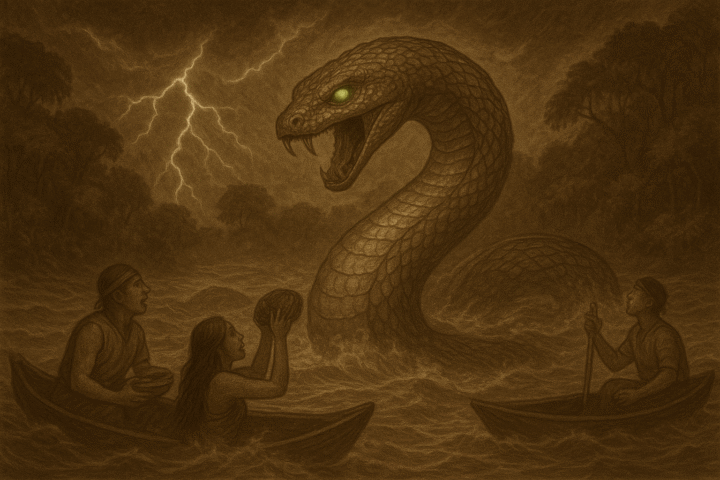
One night, under a moon hidden by clouds, the ground trembled. The river changed its course, carving a new path through the land. Water surged where homes once stood. Fields vanished beneath rushing currents. By dawn, the village that had disrespected the river was gone, swept away as if it had never existed.
Farther downstream, other communities watched in fear.
These villages remembered the old ways. They cleared debris from the water, spoke prayers of apology, and restored the river’s path where it had been narrowed. They listened instead of commanded. When the restless waters reached them, the river slowed. It curved gently around their homes, sparing them from destruction.
The people understood then: the river was not cruel, but just.
From that day on, the story of The River That Walked was told to children beside cooking fires and along riverbanks at dusk. It reminded them that nature is not silent, powerless, or passive. It responds to how it is treated. The river gives life, but it also demands respect.
And so the people learned to live with the river, not above it.
Discover South America’s folktales filled with magic, transformation, and ancestral wisdom
Moral Lesson
This folktale teaches that natural forces respond to human behavior, and that respect, humility, and coexistence are essential for survival.
Knowledge Check
1. What made the river unique in this story?
It was a living spirit capable of changing its course.
2. Why did the river become angry?
Because people polluted it and blocked its natural flow.
3. What happened to the disrespectful village?
It was destroyed when the river changed direction.
4. How did respectful villages survive?
They honored the river and restored its natural path.
5. What does the river symbolize?
Nature’s power, memory, and response to human actions.
6. What lesson does the story teach communities?
Survival depends on respecting natural forces.
Source: Indigenous oral tradition; recorded in anthropological studies
Cultural Origin: Amazon Basin (Colombian-Peruvian Indigenous cultures)