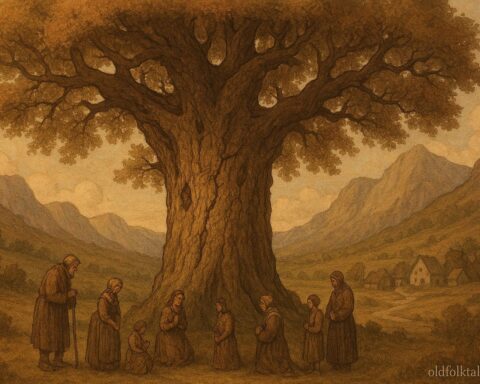
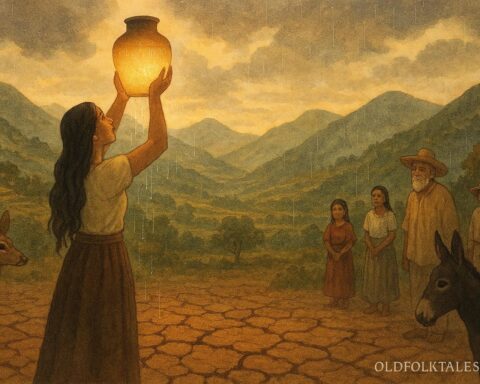
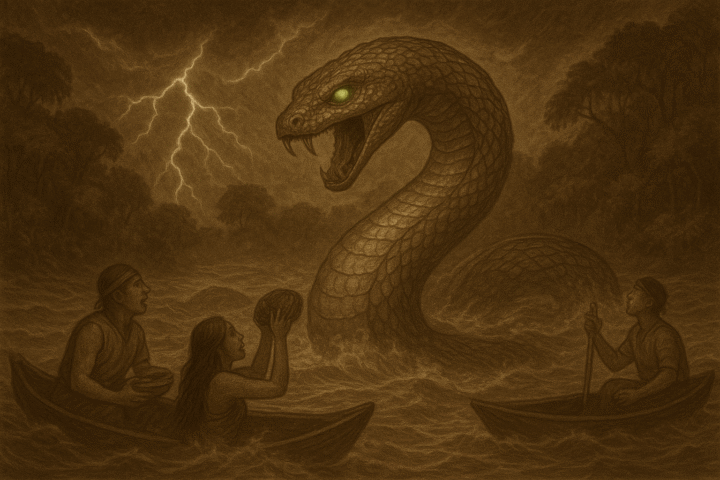
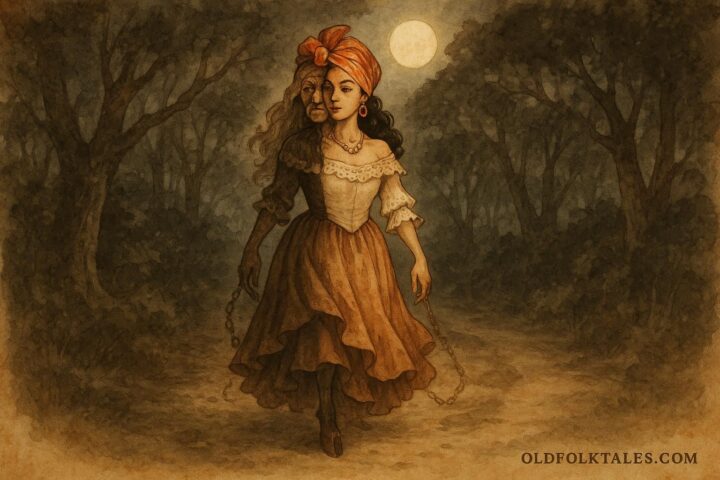
Long before written records, in the valleys and mountains of what is now Oaxaca, the Mixtec people lived by rivers that shaped their days and guarded their histories. These rivers were not seen as lifeless water but as witnesses. They remembered footsteps, voices, and promises spoken along their banks. Elders taught that water carried memory, and that what was done beside a river could never truly be forgotten.
Among these rivers was one known for its calm surface and generous flow. It watered fields of maize and beans and allowed villages to flourish. People came to it for drinking water, for bathing, and for ceremony. Children learned to swim in its shallows, and elders gathered beside it to tell stories. It was believed that the river listened quietly and judged nothing unless forced to do so.
Two neighboring communities lived on opposite banks. For many generations they had shared the river peacefully. Fishing spots were respected. Water was taken with care. When disputes arose, elders from both sides met beside the river and settled matters with words instead of weapons. A peace agreement had been spoken aloud in the presence of the river, binding not only the people but the land itself.
Over time, new leaders rose who had not lived through the hardships that made peace necessary. These leaders valued expansion and pride more than balance. They believed the agreement was an old story that no longer applied. Quietly, boundaries were crossed. Nets were set in forbidden waters. Fields crept closer to the riverbanks. Each small violation was dismissed as harmless.
One season, during a drought, tensions grew. One community accused the other of taking more than its share of water. Angry voices replaced careful dialogue. Younger men, eager to prove strength, gathered at night near the river. Words turned to threats. Threats turned to violence. Blood was spilled on the river stones where peace had once been sworn.
The next morning, the river flowed as it always had. But those who knew it well noticed subtle changes. The water no longer reflected the sky clearly. Fish avoided certain bends. A faint discoloration appeared near the stones where the fighting had occurred. Elders warned that the river had been wounded by broken promises, but their words were ignored.
In the days that followed, strange events unfolded. Crops near the river failed without explanation. Nets returned empty. Children fell ill after swimming. At night, the sound of water grew louder, as if the river were speaking to itself. Those who approached the banks felt unease, as though unseen eyes were watching.
An elder woman named Yahui, known for her deep understanding of ancestral law, called for a gathering. She reminded the people that the river had witnessed the peace agreement. It had accepted the promise and protected both communities in return. By spilling blood and breaking trust, they had forced the river to remember what should never have been repeated.
Yahui explained that the river was not punishing blindly. It was reflecting the imbalance created by human actions. Until the truth was faced and responsibility taken, the river would continue to respond. She urged both communities to meet where the agreement had first been spoken.
Reluctantly, leaders and villagers gathered at the riverbank. Silence fell as Yahui spoke again. She asked each side to recount what had happened without excuses or blame. Slowly, the truth emerged. Pride had replaced patience. Greed had overridden respect. The peace agreement had been treated as a burden rather than a gift.
As the confessions continued, the river’s surface began to change. The discoloration spread briefly, then slowly faded. The water level rose slightly, then settled. Those present felt a shift in the air, as if the land itself were listening closely.
Yahui instructed both communities to restore what had been damaged. Fields encroaching on the river were pulled back. Fishing boundaries were reaffirmed. A new ceremony was held, not to replace the old agreement but to acknowledge its violation. Apologies were spoken aloud, not only to each other but to the river itself.
In the following weeks, balance gradually returned. Crops recovered. Fish returned to familiar waters. Children could swim again without falling ill. The river became clear once more, but it never entirely lost the subtle marks left by bloodshed. Elders said this was intentional. The river remembered so that the people would not forget.
From that time on, the story of the River That Remembered Blood was told to every generation. It was not a tale meant to frighten but to instruct. Children learned that peace agreements were not merely words but living commitments. Leaders were reminded that authority carried responsibility beyond the present moment.
The Mixtec people came to understand that the land does not erase human actions. It holds them. Rivers remember not because they seek vengeance, but because memory is how balance is maintained. When justice is ignored, the earth responds. When accountability is restored, harmony can return.
Even today, elders say that rivers listen. They advise speaking carefully near water and honoring promises made in its presence. The River That Remembered Blood continues to flow, carrying both life and memory, reminding all who depend on it that peace once broken leaves a mark on the world itself.
Explore the ancestral legends of Canada, Mesoamerica, and South America’s Indigenous tribes.
Moral Lesson
Promises made to maintain peace must be honored, because broken agreements harm not only people but the land itself. Justice and accountability are necessary to restore balance when trust is violated.
Knowledge Check
1. Why was the river important to the Mixtec communities?
The river provided water, food, and served as a witness to peace agreements and communal life.
2. What caused the river to react?
The breaking of a long standing peace agreement and the spilling of blood along its banks.
3. How did the river show its memory of violence?
Through changes in water clarity, failing crops, empty fishing nets, and unease near its banks.
4. Who guided the communities toward resolution?
An elder woman named Yahui who understood ancestral law and balance.
5. What actions helped restore harmony?
Confession of wrongdoing, restoration of boundaries, and renewing respect for the river.
6. What lesson did future generations learn from the river?
That land and water remember human actions and that justice is necessary for lasting peace.
Source
Adapted from Mixtec conflict narratives and regional oral histories.
Cultural Origin
Mixtec peoples, Oaxaca, Mexico.