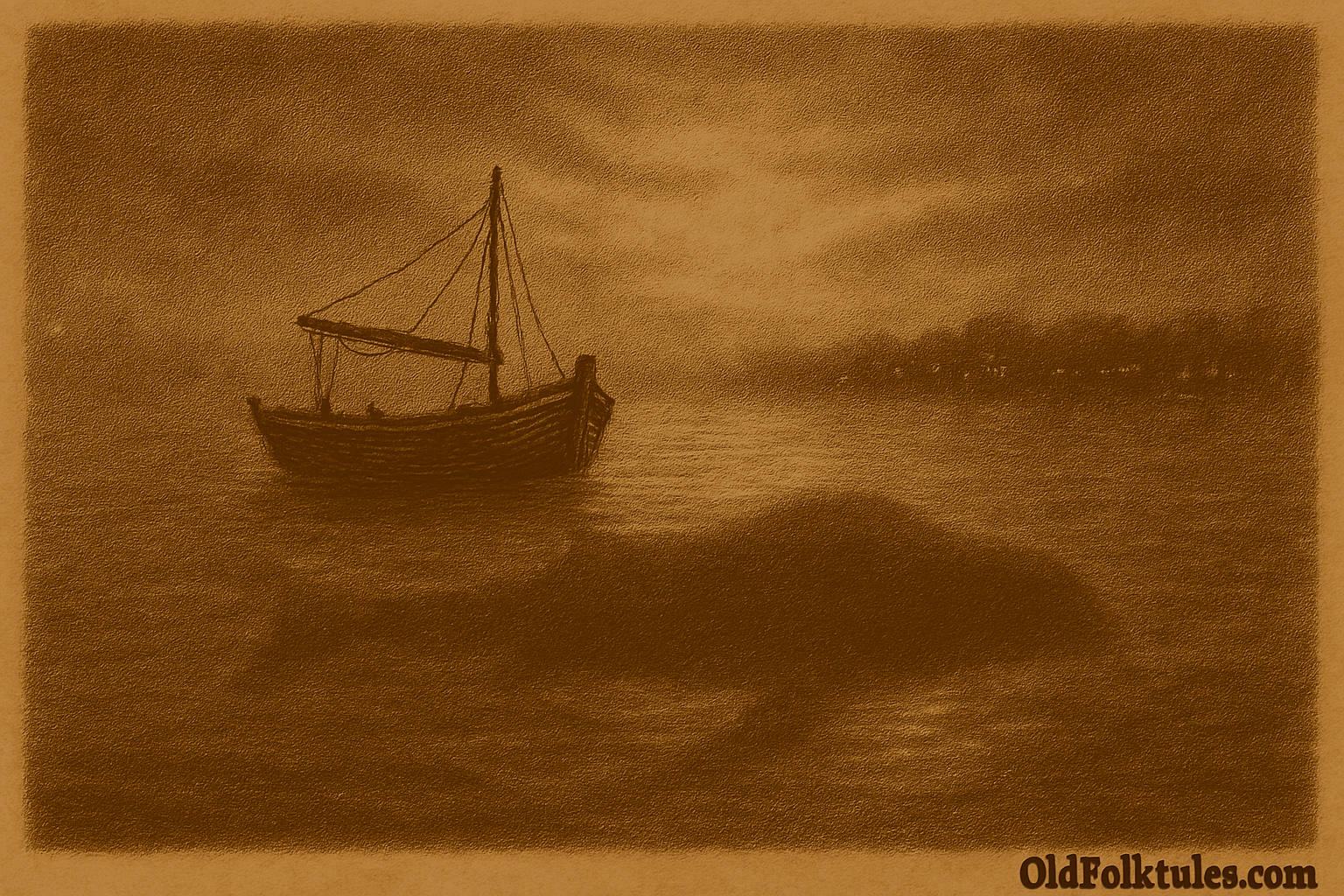
For generations, the fishermen and sailors who worked the murky waters of the Río de la Plata whispered stories around their fires at night. They spoke of something immense moving beneath the waves not a whale, not a great fish, but something older, something that understood the language of storms and the prayers of desperate men. They called it the River Plate Guardian, a spirit as ancient as the river itself.
The Río de la Plata stretched wide and brown under the South American sun, its waters carrying the memories of countless journeys. Along its banks, small fishing villages dotted the shoreline, their modest homes built from wood weathered by salt and wind. The people who lived here knew the river’s moods when it would rage with sudden squalls, when it would lie calm as glass, and when the fishing would be plentiful or scarce.
Click to read all South American Folktales — timeless stories from the Andes to the Amazon.
Among these villages lived an old fisherman named Mateo. His hands were gnarled like driftwood, his face creased by years of sun and spray. He owned a small boat, barely large enough for himself and his nets, but it was all he needed. Each morning before dawn, Mateo would push his vessel into the water, speaking softly to the river as he did so.
“Good morning, Guardian,” he would say, touching the water with his fingertips. “Thank you for yesterday’s catch. Please watch over me today.”
The other fishermen laughed at Mateo’s ritual. “Talking to the water like a fool,” they muttered. But Mateo paid them no mind. His father had taught him respect for the river, and his father’s father before that. The Guardian was real, he knew, even if others had forgotten.
One autumn morning, thick fog rolled across the Río de la Plata, turning the world gray and formless. Mateo was already on the water when the fog descended, and soon he could see nothing not the shore, not the sun, not even the bow of his own boat. The current pulled him this way and that, disorienting him completely.
“Guardian,” Mateo whispered, fighting the panic rising in his chest, “I am lost. Please guide me home.”
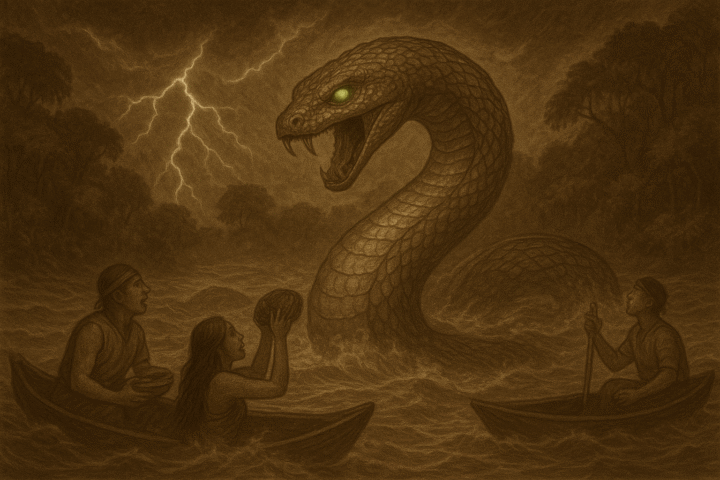
He felt it then a presence beneath his boat, massive and ancient. The water around him began to glow with a faint, silvery light. A shape moved below, darker than the dark water, larger than any creature he had ever seen. But Mateo felt no fear. The glowing water formed a path before him, and he followed it, rowing steadily. When the fog finally lifted, he found himself exactly at his village’s landing, safe and sound.
Word of Mateo’s rescue spread, but most dismissed it as luck or an old man’s imagination. Among those who heard the tale was Diego, a merchant from Buenos Aires with a gleaming yacht and expensive fishing equipment. Diego had heard rumors of enormous catches in these waters and came seeking profit, not sustenance.
“If there’s a spirit protecting this river,” Diego announced loudly at the village tavern, “then it should give me the biggest catch of all. I have the best nets, the finest boat. I deserve the river’s bounty.”
The villagers exchanged worried glances, but Diego ignored their unease. The next morning, he took his yacht far out into the Río de la Plata, casting his massive commercial nets greedily, taking far more fish than any one person needed. He laughed as he hauled in catch after catch, filling his hold to bursting.
Then the sky darkened. Storm clouds gathered with unnatural speed, and the water began to churn. Diego felt something enormous strike his yacht from below, splintering the hull. The nets, heavy with fish, dragged the vessel sideways. Water poured in through the cracks.
Diego screamed for help, but he was too far from shore. His yacht began to sink, tilting dangerously. In his terror, he glimpsed it a massive shadow beneath the waves, ancient and terrible. Eyes like deep wells of starlight regarded him without mercy.
“Please!” Diego cried. “I’m sorry! Forgive me!”
The shadow circled once more, then surged upward. Diego felt himself lifted by the current, pushed toward the shore with tremendous force. He washed up on the beach, gasping and trembling, having lost everything his yacht, his nets, his catch but with his life spared.
From that day forward, Diego never returned to the Río de la Plata. But Mateo continued his daily ritual, greeting the river with respect and gratitude, and the Guardian continued to watch over those who honored its waters. On misty mornings, fishermen still reported seeing that massive shadow beneath the waves, and lights glowing in the deep water, guiding lost boats safely home.
Discover the sacred tales of llamas, condors, and gods who guard the Andes
The Moral of the Story
The River Plate Guardian teaches us that nature deserves our respect and humility. Those who approach the natural world with gratitude and take only what they need will find protection and guidance, while those driven by greed and entitlement will face consequences. True wealth lies not in what we can extract from nature, but in the harmonious relationship we build with it.
Knowledge Check
Q1: Who is the River Plate Guardian in Argentine folklore?
A: The River Plate Guardian is an ancient spirit that lives beneath the waters of the Río de la Plata. This massive, protective entity watches over the river, calming storms, guiding lost boats, and ensuring safe passage for those who show respect to the waterway.
Q2: What does the character Mateo represent in this legend?
A: Mateo represents humility, respect for nature, and traditional wisdom. His daily ritual of greeting the Guardian demonstrates the proper relationship between humans and the natural world one built on gratitude rather than exploitation.
Q3: Why did the Guardian punish Diego but save Mateo?
A: The Guardian punished Diego because he approached the river with arrogance and greed, taking far more than he needed and showing no respect for the water or its spirit. Mateo was protected because he consistently showed reverence, took only what he needed, and maintained a grateful relationship with the river.
Q4: What is the symbolic meaning of the glowing water in the story?
A: The glowing water symbolizes divine guidance and the tangible presence of the Guardian’s protection. It represents how respect for nature can lead to enlightenment and safe passage through life’s difficulties, serving as a visible sign of the spirit’s benevolent intervention.
Q5: What cultural significance does the Río de la Plata have in this legend?
A: The Río de la Plata serves as a life-giving force for the fishing communities along its banks, representing both sustenance and danger. In Argentine and broader South American folklore, rivers are often seen as living entities with spirits that must be respected, reflecting the region’s deep connection between people and waterways.
Q6: What lesson does the River Plate Guardian legend teach about environmental stewardship?
A: The legend teaches that sustainable living requires humility and respect for natural resources. It warns against over-exploitation and greed while celebrating those who take only what they need and express gratitude for nature’s gifts a timeless message about environmental balance and conservation.
Source: Adapted from oral river folklore of the Río de la Plata region, documented in Argentine legend collections and riverside community storytelling traditions.
Cultural Origin: Río de la Plata basin communities, Argentina and Uruguay, South America