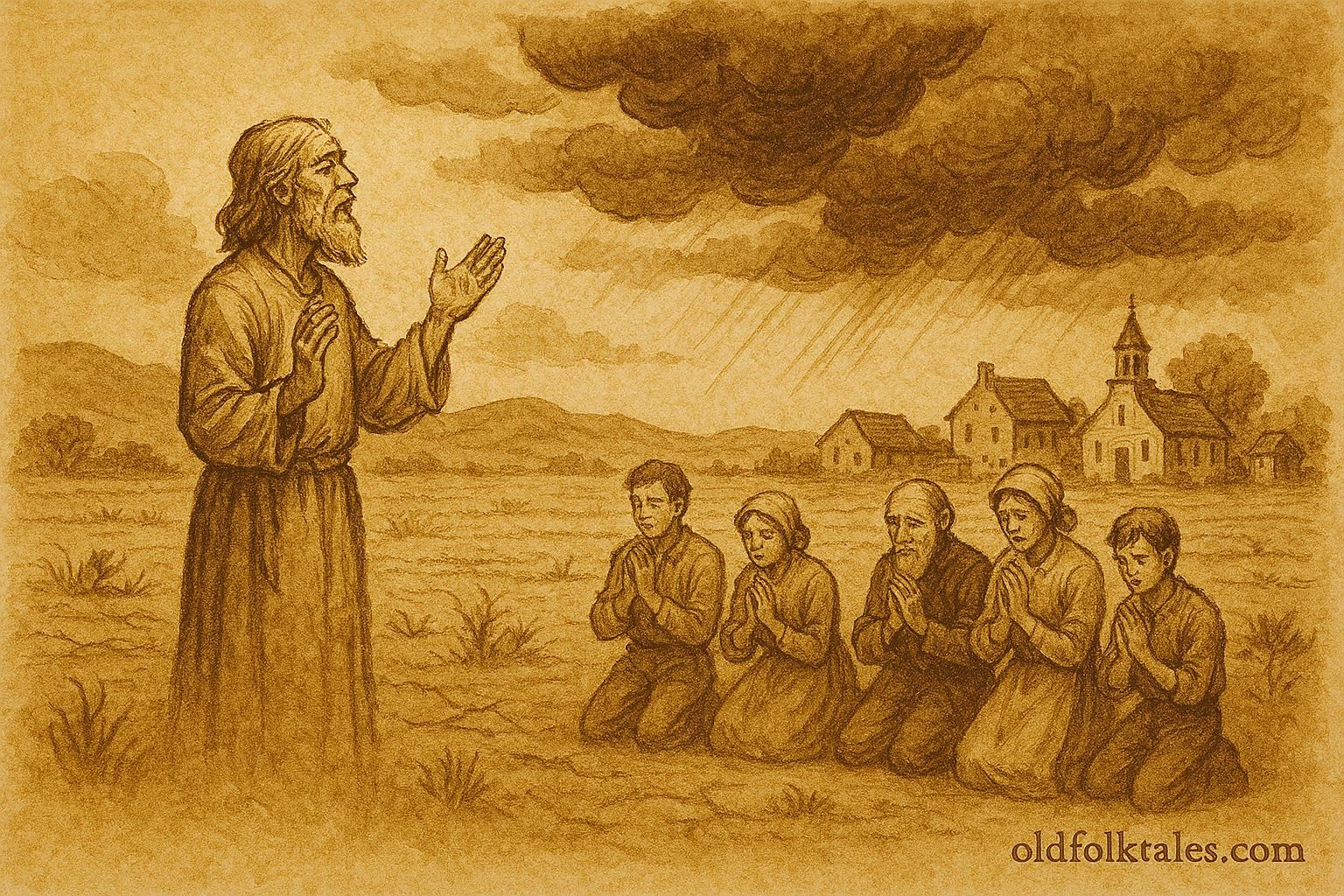
In the dry season, when the sun lingered mercilessly over the colonial village and the earth cracked beneath weary feet, the people spoke of little except the absence of rain. Fields of maize withered into pale stalks, wells sank low, and even the birds seemed to sing less. The adobe homes, built close together around a modest chapel, stood beneath a sky that remained an unbroken blue for weeks on end.
Among the villagers lived a quiet man known simply as the Rainmaker. He was neither wealthy nor powerful. He owned no land and dressed plainly, yet people whispered that he carried an old knowledge passed down through generations, knowledge rooted in the land, the seasons, and prayer. When drought threatened the harvest, villagers came to him seeking help.
Explore French-Canadian legends and First Nations myths in our Canadian Folktales collection
The Rainmaker never promised miracles. He spoke softly, reminding them that rain could not be summoned by force or command. His rituals were careful and humble: offerings of cornmeal, measured chants learned from elders, and prayers spoken with reverence. He often asked the people to join him, not as spectators, but as participants. Some listened. Others doubted.
As the drought deepened, impatience replaced humility. A few villagers began to question whether the Rainmaker truly held any power at all. “If he can call the rain,” they muttered, “why does he wait?” Others believed his knowledge could be used for profit. They imagined controlling the rain for their own fields while neighbors suffered, or selling his services to nearby towns.
These villagers confronted the Rainmaker, demanding that he perform his rituals on their terms. They offered payment, gifts, even pressure. Calmly, the Rainmaker refused. He explained that rain came only when balance was honored—when people approached the land and the heavens with sincerity, patience, and shared purpose. Knowledge misused, he warned, would bring no blessing.
Mockery followed his refusal. Some villagers withdrew their faith entirely, while others tried to imitate his rituals without understanding their meaning. They spoke the words without respect, rushed the prayers, and sought quick reward. The sky remained dry and unchanging.
Yet hunger has a way of softening pride. As supplies dwindled and tensions rose, the village elders called for unity. They asked the Rainmaker to guide them once more, this time with open hearts. He agreed, but only if every family joined willingly, setting aside selfish desires.
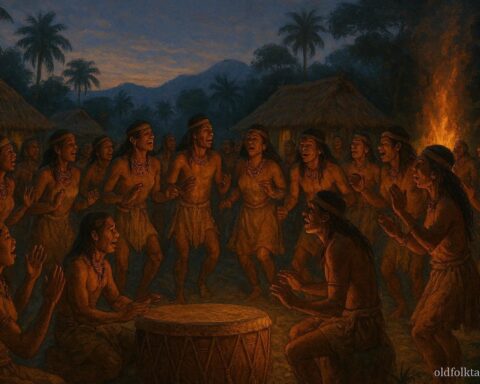
At dawn, the villagers gathered outside the settlement. Together, they prepared offerings, repaired shared fields, and cleansed themselves in quiet reflection. The Rainmaker led them in prayer, not only to the heavens, but to one another. He reminded them that rain nourished all or none, and that survival depended on cooperation.
As the final words faded into the warm air, a breeze stirred. Clouds slowly gathered where the sky had been empty for so long. When the first drops fell, laughter and tears mixed freely. Rain soaked the soil, revived the crops, and restored hope.
The Rainmaker asked for no reward. He returned to his simple life, leaving the villagers with a lesson far greater than rain itself.
Moral Lesson
The Rainmaker’s Secret teaches that knowledge carries responsibility. True wisdom cannot be exploited for selfish gain. Only humility, unity, and sincere respect for spiritual and natural forces bring lasting abundance.
Knowledge Check
1. Who is the Rainmaker in the story?
He is a humble village figure who possesses ritual knowledge to summon rain through prayer and respect.
2. What problem does the village face?
A severe drought threatening crops, water supplies, and survival.
3. Why does the Rainmaker refuse exploitation?
Because spiritual knowledge must be used ethically and collectively, not for personal gain.
4. What causes the rain to finally return?
The village unites sincerely, practicing patience, cooperation, and respect.
5. What does rain symbolize in the story?
Balance, blessing, and the reward of collective responsibility.
6. What cultural traditions influence this folktale?
Indigenous agricultural spirituality blended with Spanish colonial Christian values.
Source: Mesoamerican colonial oral narratives
Cultural Origin: Mexico and Central America (Spanish Colonial folklore)