Long ago, in the emerald lands of the Maya, where ceiba trees touched the clouds and sacred cenotes opened like windows to the underworld, there was a time when the rains ceased to fall.
The maize fields withered under the sun’s cruel gaze. Rivers shrank to shallow veins of mud. The frogs stopped singing, and the air shimmered with heat. Every morning, the people looked to the heavens and prayed, but the skies remained silent and blue.
They knew then that the Rain God, Chaac, had turned away from them.
Immerse yourself in Latin America’s stories of passion, transformation, and spirit.
The Silence of the Sky
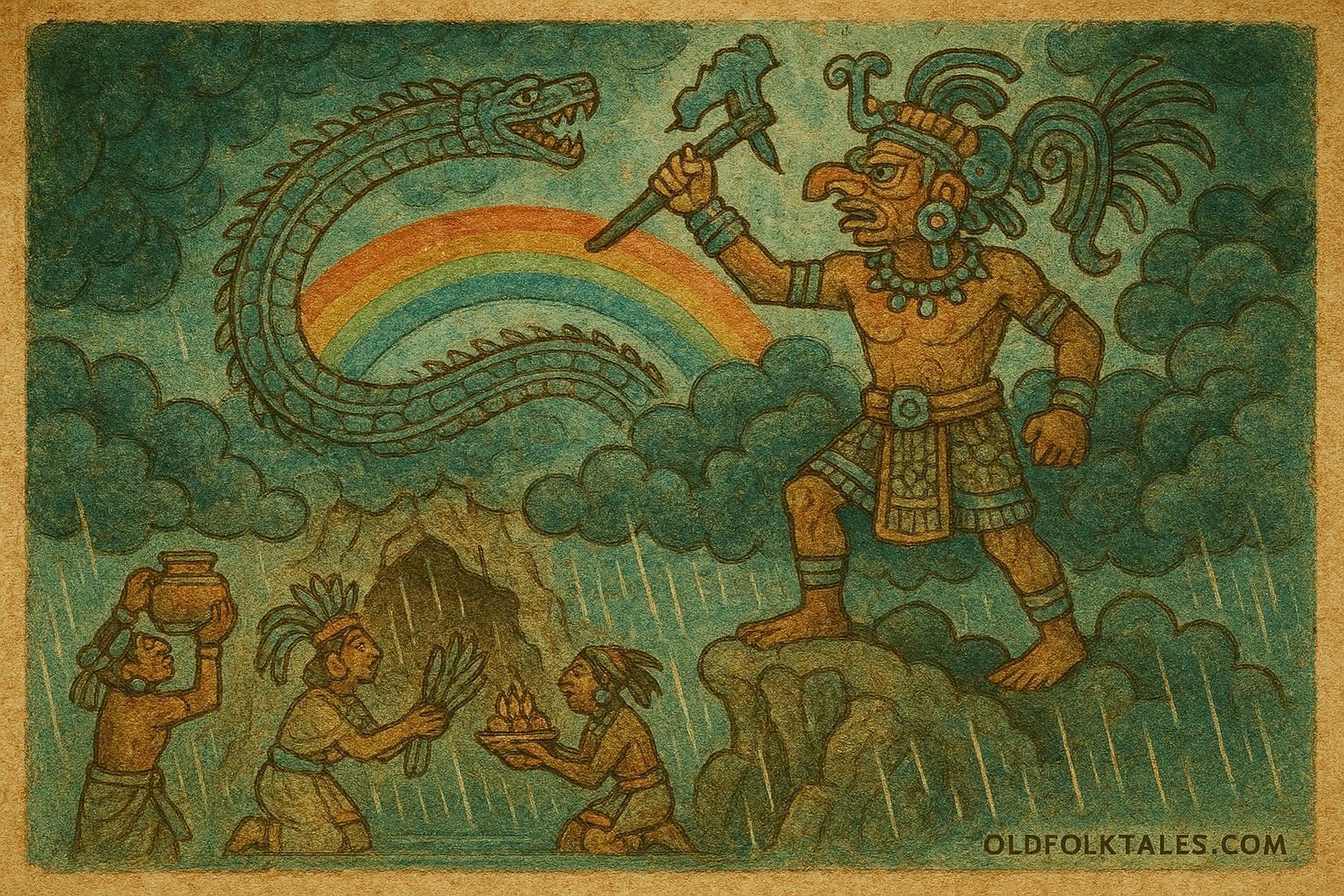
Chaac was the lord of rain and storms, he who dwelled among the thunderclouds and carried an axe of lightning. His laughter was thunder, his tears were rain, and his breath made the air tremble before the coming storm.
For many generations, the people had honored him faithfully. They offered maize gruel, jade beads, and the smoke of copal incense in his name. They sang the old songs in the sacred caves, the mouths of the earth, where the spirit world and the human world meet.
But as years passed, the people grew careless. They built new homes and forgot the ancient rituals. The sacred caves lay silent, the altars covered in dust.
When the drought came, they lifted their eyes to the clouds and cried out, “Chaac! Great giver of rain, have mercy!”
But Chaac heard only the echo of his own thunder.
“Why should I weep upon the earth,” he said from his sky palace, “when those below no longer remember the paths of gratitude?”
So he sent lightning without rain, fire without mercy, to remind them of his power. The trees burned, and the air filled with smoke, but still no water fell.
The Counsel of the Elders
In the village of Yaxuná, the maize had shriveled to husks. The cenote at its edge, once deep and blue, was now a cracked bowl of limestone.
The elders gathered beneath the withered ceiba and said, “We must seek the wisdom of the past, or our children will perish.”
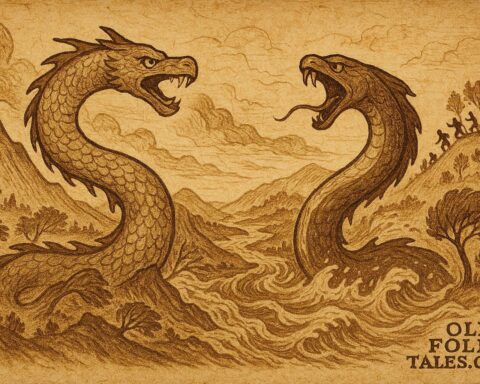
Among them was Ix Tunich, an old priestess whose eyes were like polished stone. She remembered stories older than any temple, stories of the Serpent of the Sky, who carried the waters of Chaac through the clouds.
“It is not Chaac alone who brings the rain,” she said. “It is his companion, the great serpent that coils through the heavens. When we forget the serpent, we forget the balance between sky and earth. Without offerings, it does not move, and the waters do not flow.”
The villagers listened, trembling. “What must we do?” they asked.
“We must go to the sacred cave, the one that breathes the wind of the underworld,” said Ix Tunich. “We must awaken the serpent once more.”
The Journey to the Sacred Cave
At dawn, the villagers gathered offerings: maize bread, honey, feathers, and the first carved gourd of the season. The youngest boys carried torches; the elders carried incense bowls.
They followed Ix Tunich along the dry riverbed to the foot of the great hill called Kabah, where an ancient cave opened like a mouth in the rock.
The air inside was cool and damp, heavy with the scent of limestone and forgotten prayers. Murals on the walls showed the rain god and the serpent entwined, their forms merging into clouds.
Before the altar stone, Ix Tunich knelt. “O Chaac,” she said, “we have failed to honor the paths of our ancestors. Forgive us. We remember now the covenant between sky and earth.”
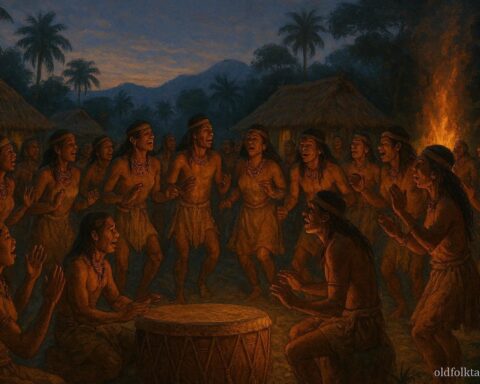
The villagers placed their offerings and began to chant, their voices echoing like thunder in the deep.
For a long time, there was silence, and then, a low rumble shook the cave. The torches flickered, and a wind rose from the depths.
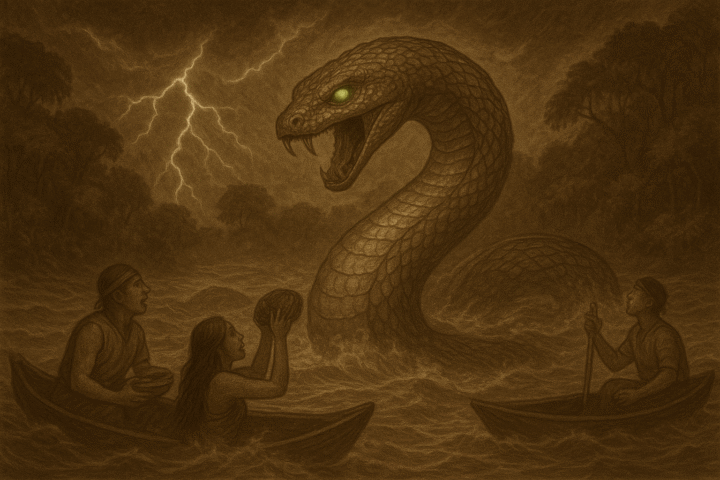
A serpent of shimmering light appeared, coiling above the altar, scales of jade and obsidian, eyes like storm clouds. It rose toward the roof of the cavern, spiraling upward, and vanished into a column of mist that broke through the stone.
Ix Tunich smiled through her tears. “The serpent of the sky has awakened,” she whispered.
The Return of the Rains
Outside, the villagers lifted their eyes to the heavens. Clouds gathered where the sky had been clear. The air thickened, heavy with the scent of wet earth.
Then came the first raindrop, a single bead of silver that struck the dust and hissed. Then another. And another.
Soon the heavens opened, and the rain fell in torrents. The people danced and shouted with joy. The maize fields drank deeply, the cenote filled again, and the frogs sang until the night was full of their voices.
From the clouds, Chaac looked down and smiled. His anger had passed, replaced by pride in the people’s renewed reverence.
“Their hearts remember,” he said to the serpent, whose body arched across the sky in a rainbow of mist and light. “Now life may begin again.”
The serpent shimmered, its voice rolling like thunder: “Let them never forget that gratitude is the key to balance.”
And from that day on, whenever rain fell, the people offered thanks not only to Chaac but also to the Serpent of the Sky, the divine messenger between storm and soil.
Explore the land of La Llorona, trickster coyotes, and magical realism in Mexican folklore
Moral Lesson
The story of Chaac and the Serpent of the Sky reminds us that nature responds to gratitude and balance. When humans honor the sacred cycles, offering respect to the spirits of water, wind, and earth, the world remains generous. But when we take without giving, the harmony between creation and life is broken.
Knowledge Check
- Who is Chaac in Maya mythology?
Chaac is the Maya rain god, ruler of thunder, lightning, and storms, who brings fertility and life to the earth. - What caused the drought in the story?
The people neglected the sacred caves and forgot to make offerings to Chaac and the Serpent of the Sky, breaking the bond of gratitude with nature. - Who is the Serpent of the Sky?
The Serpent of the Sky is Chaac’s celestial companion, a divine being that carries rainwater across the heavens and symbolizes the flow of life between worlds. - How did the villagers restore the rain?
They returned to the sacred cave, offered gifts of maize, honey, and incense, and renewed their prayers, awakening the serpent and restoring divine balance. - What lesson does this story teach?
It teaches the importance of reciprocity with nature, that respect, gratitude, and ritual keep the balance between humankind and the divine. - What does rain symbolize in Maya cosmology?
Rain represents life, fertility, and divine mercy, the link between heaven and earth sustained by ritual devotion.
Source: Maya Gods and Their Symbolism by Herbert J. Spinden, 1928. Cultural Origin: Yucatec and Itzá Maya (Mexico).