Among the vast forests and rolling plains of central Canada, the Nêhiyaw (Cree) people have long held deep respect for the land and the lessons it offers. Stories speak of spirits dwelling along travel routes, testing travelers not by their strength, but by the truthfulness of their hearts. One such story tells of a path that would shorten itself for those who journeyed with honesty and pure intention, revealing the connection between moral character and the spirit of the land.
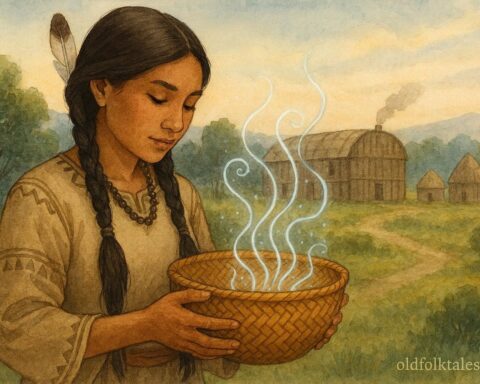
Many generations ago, a young hunter named Mîkisi sought to reach the distant river valley where caribou were plentiful. The elders had warned him that the journey would be long and arduous, crossing thick forests and crossing streams that could swell without warning. The spirits of the land, it was said, could either aid or hinder travelers depending on the state of their hearts. Mîkisi, known in his village for his humility and honesty, carried only what he needed, shared freely with fellow travelers, and spoke truthfully at all times.
As he set out, he encountered a fork in the trail. One route appeared easier but was filled with temptations: fruits too plentiful to resist, shortcuts that promised quick travel but required cutting through sacred groves. The other path was longer, winding, and filled with obstacles. Mîkisi paused to consider the choices. He knew the spirits observed all actions and intentions. With careful thought, he chose the challenging path, confident that honesty and respect would guide him.
Explore the ancestral legends of Canada, Mesoamerica, and South America’s Indigenous tribes.
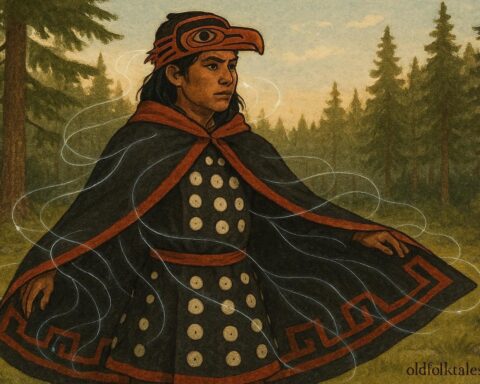
As Mîkisi traveled, he noticed subtle changes in the terrain. Hills seemed less steep than expected, rocks that would have blocked his way were shifted, and streams appeared narrower, allowing him to cross safely. It was as if the forest itself had opened for him. Birds sang as he walked, their melodies calming his mind and strengthening his resolve. Even when night fell and darkness pressed against him, the stars seemed to shine brighter, lighting his path.
Along the way, Mîkisi met other travelers, some impatient and selfish, others weary but sincere. Those who approached with arrogance or greed struggled, finding the path longer and more treacherous. Streams overflowed for them, rocks seemed heavier, and trails twisted in confusing patterns. In contrast, those who moved with humility, aided by Mîkisi’s guidance, found the journey unexpectedly eased, a sign that integrity attracted unseen help from the spirits.
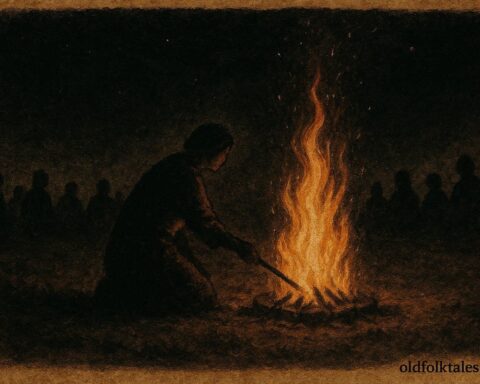
One night, while resting by a small fire, Mîkisi remembered the elders’ words: “The land mirrors the heart. Those who journey with honesty will never walk alone, but those who deceive will carry their burdens in silence.” As he reflected, he realized that the shortened path was not a magical shortcut to reward laziness, but a lesson that living with sincerity allowed one to navigate life with clarity and fewer unnecessary struggles.
Eventually, Mîkisi reached the river valley. The caribou were abundant, yet he shared his findings with the village rather than claiming them for personal gain. His honesty and generosity ensured the village prospered, and the story of the shortened path became a teaching for generations: the land itself recognizes truth, and integrity is a guide through both the physical and moral journey.
Children learned from the story that cutting corners through deceit never leads to success, while honesty opens doors that may otherwise remain closed. Hunters, travelers, and even young learners were reminded that the spirits of the land observe intentions and act accordingly, aiding those whose hearts align with respect and integrity.
Even in modern times, the elders recall this tale when guiding youth through difficult decisions. The path that shortens for the honest is a metaphor for life: integrity eases burdens, aligns one with community, and attracts help when needed. It teaches that the consequences of our choices ripple through the world, and that even unseen forces respond to the purity of intent.
The story continues to inspire travelers and villagers alike. Those who approach tasks, journeys, or challenges with sincerity often find doors opening and obstacles easing. While the path does not literally shorten for everyone, the lesson remains vivid: honesty, humility, and moral alignment shape the course of life in ways both visible and unseen.
Moral lesson
Sincere intentions and honesty ease the journey of life. Integrity aligns individuals with both community and the guiding spirits of the land, creating harmony and reducing unnecessary hardships.
Knowledge check
- What causes the path to shorten for travelers?
Travelers’ honesty, sincerity, and pure intentions cause the spirits to ease their journey. - Who is the main character of the story?
Mîkisi, a young hunter from the Nêhiyaw (Cree) people. - How does the path behave for those with selfish or dishonest intentions?
It becomes longer, more treacherous, and filled with obstacles. - What lesson do children learn from the story?
That deceit brings unnecessary struggle, while integrity attracts help and ease. - Why do the spirits assist honest travelers?
Because the land mirrors the heart, rewarding moral alignment and respect. - Which cultural group does this story originate from?
Nêhiyaw (Cree) First Peoples, central Canada.
Source: Adapted from First Nations journey teachings; Native-Languages.org
Cultural origin: Nêhiyaw (Cree) First Peoples, central Canada