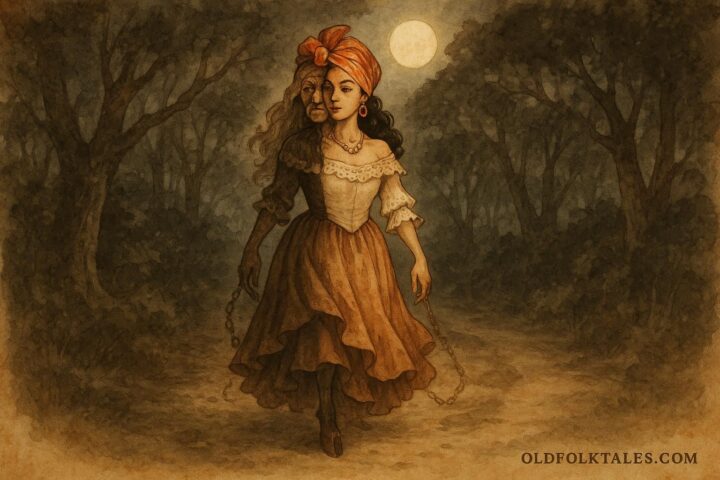
Long ago, in the highlands of Chiapas, the Tzotzil Maya lived in villages nestled between mountains and dense forests. Every river, hill, and trail was believed to hold the presence of spirits who watched over the land and its people. One path in particular was special. Known as the Path That Returned the Traveler, it was said to test those who walked it. Only those whose journey served the needs of the community could pass. Anyone driven by selfish motives would find the path returning them to where they started.
Balam, a young man from one of these villages, was known for his strength and curiosity. He had heard tales of hidden treasures, secret herbs, and forgotten knowledge in the forest beyond the village. Convinced that discovering these things would bring him honor and wealth, he prepared for the journey. He packed a small satchel with food and water and set out at sunrise.
The forest was dense and alive. Towering ceiba trees stretched skyward, their roots curling along the earth like the hands of the ancestors. Ferns brushed against Balam as he walked. Birds sang melodies that seemed to echo warnings. At first, Balam ignored them, confident that determination alone would guide him. But as he ventured deeper, familiar landmarks began to shift. Rocks that had been on the left appeared on the right. Streams curved in directions that made no sense. Soon, Balam realized he was back at the edge of the village. Every path he took seemed to circle back.
Frustrated, he called out to the spirits of the forest, demanding that the path allow him to continue. His voice echoed between the trees. Then, an elderly woman appeared beneath a twisted ceiba. She was small, her hair streaked with gray, but her eyes were bright with wisdom. “Why do you seek what belongs not to you alone?” she asked softly. “The path tests the heart of those who enter it. Only those who travel with purpose for the good of the people may advance.”
Balam’s pride wavered. He had never considered that a journey could be measured by service rather than self-interest. The woman continued, “The spirits guide this forest. If your intentions serve selfish desires, the path will return you. Only those who walk with care, respect, and thought for the community will succeed.”
Humbled, Balam reflected on the needs of his village. He thought of the elders who needed medicinal herbs, the hunters who relied on sustainable practices, and the children who depended on safe water sources. With this new understanding, he approached the path again. This time, he carried no desire for personal glory. Instead, he walked with intention to gather herbs, map safe routes, and observe the land carefully.
As he advanced, the forest responded. The trees seemed to bend slightly, creating a welcoming corridor. Birds sang clearly, guiding him forward. Every careful step, every respectful gesture toward the plants and animals made the path feel lighter. He discovered groves of herbs unknown to his people and water springs tucked away in shaded valleys. These were gifts for the village, not for himself.
Days passed. Balam returned to the village with baskets of herbs, detailed maps, and knowledge he had gained. The elders praised him not for daring the forest but for his thoughtfulness, patience, and dedication to the community. Balam realized that the path had not been about treasure or fame but about understanding one simple truth: journeys are meaningful only when they serve others.
From that day, the villagers spoke of the Path That Returned the Traveler not as a test of strength but as a lesson in responsibility. They taught children to approach the forest with respect, to walk with care, and to consider the effects of their actions on the community. Travelers who approached the path with selfish desires would find themselves returned, not punished, but gently reminded to reflect on their intentions.
The story spread across villages. It became part of teaching for every generation: that ambition without consideration could lead one in circles, but service guided by humility could open paths to unseen wisdom. Travelers who walked thoughtfully would find guidance, treasures for the community, and the trust of the forest spirits.
Even today, Tzotzil Maya elders tell children that the forest is alive with watchful spirits. They say that the Path That Returned the Traveler still exists. It waits silently, teaching anyone who dares to enter the forest that the measure of a journey is not personal gain but the care one brings to the world around them. Those who walk with respect, patience, and responsibility are never lost. Those who act out of pride, greed, or haste will find themselves back at the beginning until their hearts and minds align with the needs of the people.
Through this story, the Tzotzil Maya teach that the land is a living presence, that every path has meaning, and that moral responsibility is as important as physical skill. It is a story of mindfulness, humility, and the interconnectedness of people, community, and the natural world.
Discover ancient tales passed down by the Indigenous peoples of the Americas.
Moral Lesson
True purpose is measured by service to the community, not personal gain. Patience, humility, and responsibility are essential for success and harmony with the natural and spiritual world.
Knowledge Check
1. Who was Balam and what was his initial goal?
Balam was a young man who sought treasures and knowledge in the forest for personal honor and gain.
2. What was unique about the Path That Returned the Traveler?
The path would turn travelers back unless their journey served the good of the community.
3. How did Balam change his approach to succeed on the path?
He focused on gathering herbs, mapping safe routes, and helping the community instead of seeking personal gain.
4. What role did the elderly woman play in the story?
She guided Balam to understand the importance of purpose and service to the community.
5. What lesson did the villagers learn from Balam’s journey?
That respect, mindfulness, and community-minded intentions are more valuable than ambition and pride.
6. How does the path continue to serve as a teaching tool?
It reminds travelers and villagers that selfish desires lead to setbacks while service and humility open the way.
Source
Adapted from Chiapas Indigenous Oral Routes Project; Universidad Nacional Autónoma de México.
Cultural Origin
Tzotzil Maya peoples, Chiapas, Mexico.