Long ago, when humans and animals still understood one another and the boundary between forms was thin, there lived a woman in an Algonquian-speaking community deep within the forests of what is now Canada. Her name has been forgotten, as many names are when time stretches long, but her story has endured.
She was known among her people for her sharp eyes and restless spirit. While others welcomed the daylight and worked together under the sun, she preferred the quiet hours when shadows lengthened and voices softened. She listened more than she spoke, watching everything around her. Some admired her keen awareness, but others found her distant and difficult to understand.
The woman lived alone at the edge of the settlement, close to the forest. At night, while others slept, she often wandered beneath the trees, observing the movements of animals and the shifting patterns of moonlight. The elders warned her that the night was not meant for wandering without purpose. Darkness, they said, carried its own laws and consequences. Still, she did not listen.
Journey into the rhythm, wit, and wonder of Caribbean storytelling — from Haiti to Jamaica
Over time, the woman grew impatient with her community. She felt misunderstood and burdened by expectations she did not accept. She spoke harshly when corrected and mocked the customs that guided others. When elders reminded her to show respect and restraint, she answered with silence or sharp words. Slowly, she withdrew from human company, finding comfort only in solitude.
One evening, during a gathering near the fire, the woman became angry when others questioned her behavior. Her voice rose above the circle, cutting through the calm of the night. She accused her people of blindness and claimed she saw truths they could not. Her words disrupted the balance of the gathering, and the elders exchanged troubled glances.
That night, as the fire died and the village fell silent, the woman walked alone into the forest. Clouds covered the moon, and the darkness felt heavier than usual. She climbed a tall tree, higher and higher, until the ground below disappeared into shadow. There, she cried out in frustration, her voice echoing sharply through the woods.
It was then that the transformation began.
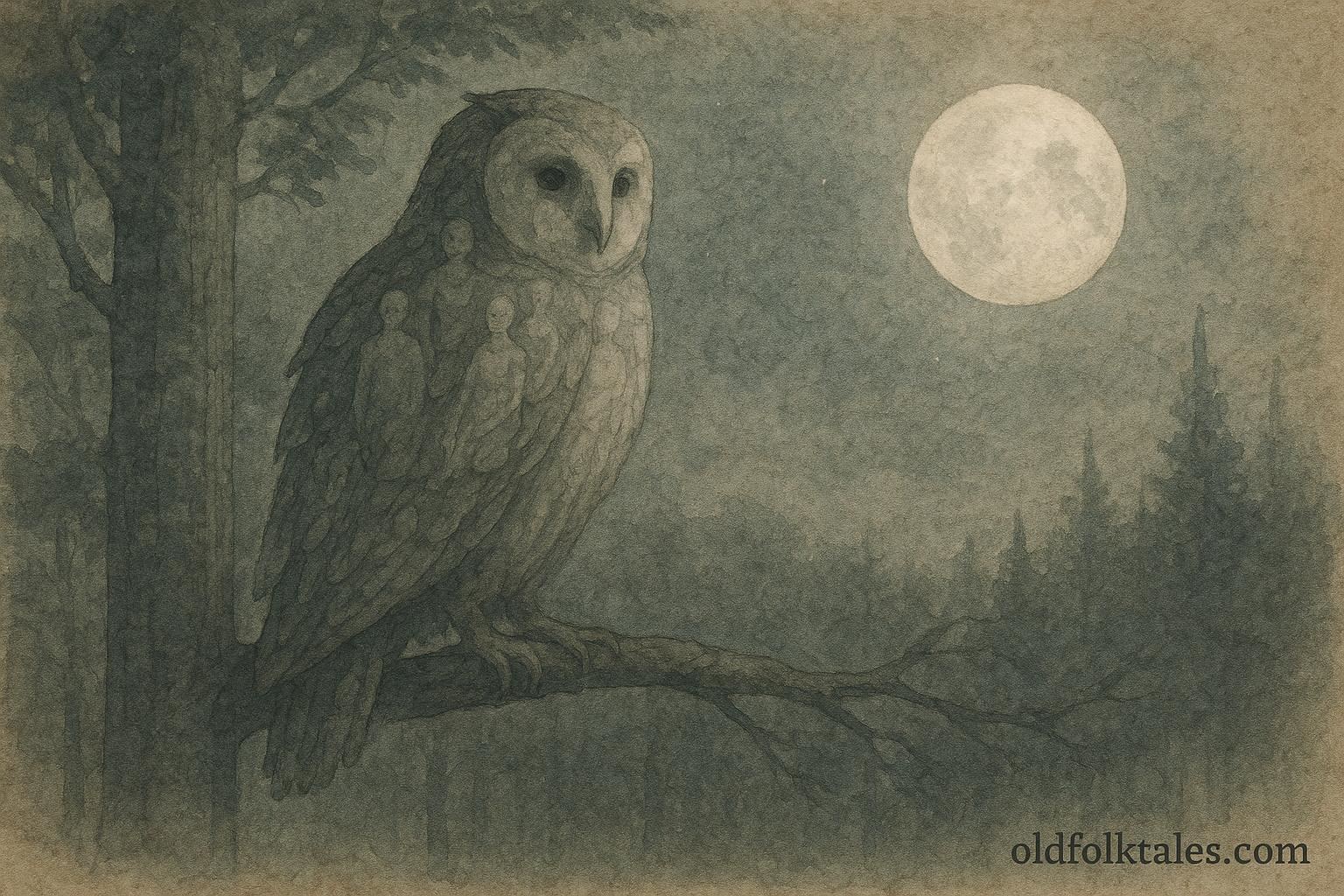
The woman felt her body grow lighter, her arms stretching and reshaping. Her fingers fused into wide wings, and her sharp eyes grew sharper still, adjusting to the darkness around her. Feathers replaced skin, and her voice changed, becoming a haunting call that carried far through the night. By the time dawn approached, the woman was no longer human.
She had become an owl.
When the sun rose, she felt pain in its brightness and retreated deeper into the trees. Her new eyes favored darkness, and her body moved silently through the air. She tried to speak as she once had, but only an eerie hoot emerged. Fear and confusion filled her heart as she realized she could not return to her former life.
As days passed, the owl observed the human world from afar. She watched her former community gather food, share stories, and care for one another. Though she understood their words, she could no longer respond. Regret settled heavily within her. She now saw the value of the teachings she had ignored and the harmony she had broken.
At night, when the forest grew quiet, the owl’s voice echoed through the trees. Her call was not one of menace, but of longing and warning. It reminded listeners that actions carry consequences and that rejecting balance invites transformation beyond one’s control.
The elders recognized the sound. They told the children that the owl had once been human, that she had refused to listen and respect the wisdom of her people. Her nocturnal life, they explained, reflected her separation from the human world and her need to exist where her restless spirit belonged.
From that time on, the owl became a symbol. Her silent flight taught awareness. Her night vision represented insight gained too late. Her haunting call reminded all who heard it that identity is shaped by choices, and consequences follow those choices faithfully.
Even now, when an owl calls through the darkness, it is said she is speaking. She tells of solitude chosen too strongly, of lessons learned through loss, and of the importance of humility. The owl does not return to human form, but her story continues, carried on the wind and whispered through the leaves.
Moral Lesson
Every choice shapes who we become. Disrespect for balance, community, and wisdom can lead to irreversible consequences. True understanding requires humility and listening before it is too late.
Knowledge Check
- Who was the owl before her transformation?
Answer: She was a human woman from an Algonquian-speaking community. - Why did the woman become isolated from her people?
Answer: She rejected communal customs and refused to respect the elders’ guidance. - What triggered her transformation into an owl?
Answer: Her anger, disrespect, and imbalance disrupted the natural order. - Why does the owl live and call at night?
Answer: Her nocturnal nature reflects her separation from human life and her restless spirit. - What does the owl’s call symbolize?
Answer: Warning, regret, and the consequences of ignoring wisdom. - What lesson do elders teach through this story?
Answer: Identity is shaped by choices, and balance must be respected.
Source: Native-Languages.org; First Nations oral tradition collections.
cultural origin : Algonquian-speaking First Nations — Canada.