Long ago, before the world knew the touch of dawn or the breath of dusk, the heavens were shrouded in endless darkness. The forests slept in shadow, the rivers glimmered without reflection, and no creature knew the warmth of light. In this eternal night, the gods gathered in council to bring balance to the world. They spoke of fire, the sacred essence of life, hidden deep within the heart of the earth. It was said that whoever could harness this flame would bring light to the sky and awaken creation.
Among the many beings of the world were two brothers, sons of the same divine lineage, yet different in heart. The elder was proud and bold, his heart burning with ambition. The younger was quiet and humble, seeking harmony rather than glory. When the gods announced their challenge, both brothers stepped forward, declaring their desire to carry the sacred fire.
Explore myths and legends from Brazil, Peru, and Argentina rooted in spirit and survival.
The gods agreed, but warned:
“Whoever carries the fire must offer his very being to the heavens. For light comes through sacrifice, and the world shall be shaped by your courage, or your pride.”
The Trial of Fire
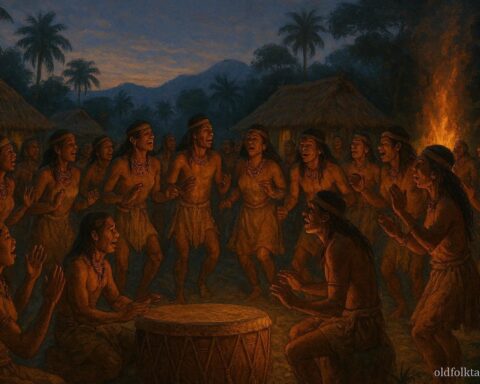
At the center of the earth burned a flame unlike any other, the Heart of the Sun, pure and divine. Its light could not be touched by mortal hands. The gods commanded that a great fire be built on the sacred altar, and before it the brothers would prove their worth. Around the fire, the assembled beings waited in silence, jaguars, eagles, serpents, and spirits of the forest, all eager to see who would become the bringer of light.
The elder brother approached first. His voice was strong, and his posture proud. “I am worthy of the flame,” he declared. “Let all the world see my brilliance.”
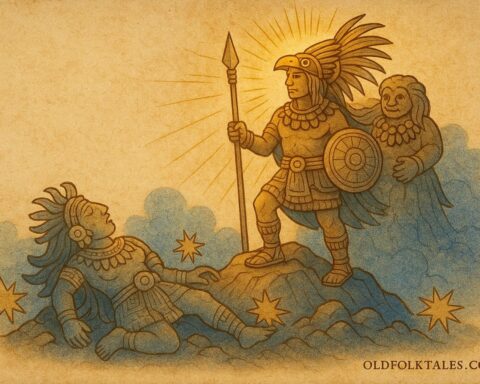
He reached toward the sacred fire, but as his hands neared the burning light, a wave of searing heat struck him down. Flames licked his body, scorching his skin and filling the air with the scent of ash. The gods turned their faces away as the proud brother fell back, his beauty marred by his own arrogance.
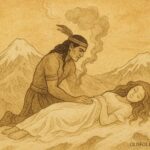
Then came the younger brother. He bowed his head before the flame, his heart steady and full of reverence. Without speaking, he stepped into the fire. For a moment, the onlookers gasped, but instead of being consumed, his body began to shine. His spirit rose, radiant and golden, ascending into the heavens. The darkness broke, and the world witnessed its first dawn.
He had become the Sun, the bearer of warmth and life, whose light awakened the forests and gave voice to the birds. The gods rejoiced, and all living things stirred to greet the new day.
The Birth of the Moon
But the elder brother, consumed by pain and jealousy, watched from the shadows. The golden light of his brother pierced his heart, and in his anger, he sought once more to prove himself. Gathering his strength, he too stepped into the dying embers of the sacred fire.
Yet the flames, no longer pure, could only reflect what was left within him, envy and pride. When he emerged, his light was dim and pale, his burns forever etched upon his spirit. He rose into the sky opposite his brother, glowing softly where the Sun’s brilliance could not reach.
Thus was born the Moon, pale and reflective, destined to wander the night in quiet pursuit of the Sun. The two brothers would forever chase one another across the sky, the Sun bringing day, the Moon following with night, yet they would never meet again.
The Eternal Chase
From that time onward, the sky became the stage of their endless pursuit. When the Sun rose, the Moon fled; when the Sun rested, the Moon returned to claim the heavens for himself. Sometimes, the Moon’s jealousy grew so great that he tried to cover his brother’s light, these moments became eclipses, when the world trembled in shadow before balance was restored once more.
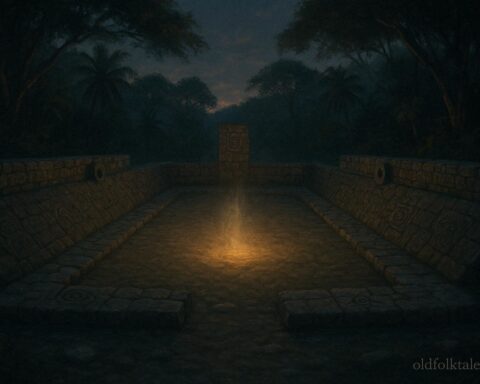
The people of the Yucatán watched this celestial dance and understood its meaning. They built temples and altars aligned with the movements of the Sun and Moon, honoring the brothers’ sacrifice and rivalry. Priests marked the cycles of time, the bright days of maize planting, the cool nights of rest, and the eternal pattern of renewal. The Maya saw that even conflict could give birth to harmony, and that pride and humility both had their place in the grand rhythm of creation.
The Balance of Light
The Sun shone brightly each day, warming the earth and giving life to all things. But without the Moon, the world would have no rest, no coolness, no mystery. The Moon’s pale glow soothed the weary and guided travelers through the dark. Though born of rivalry, both brothers were necessary, one to awaken the day, the other to guard the night. Together, they formed the heartbeat of time, the pulse of existence itself.
The Maya elders taught that this balance was sacred. The Sun and the Moon reminded their people that power and humility must coexist, that light and shadow share the same sky. Even the gods, they said, could not separate them, for their eternal chase ensured the world’s order.
Explore the land of La Llorona, trickster coyotes, and magical realism in Mexican folklore
Moral Lesson
The story of the Sun and the Moon teaches that greatness is born not from pride, but from humility and sacrifice. True light shines from a heart that gives freely, not one that seeks to possess glory. Yet even in jealousy and failure, there is purpose, for balance cannot exist without both brilliance and shadow. Through their eternal dance, the brothers remind humankind to honor both strength and humility in all creation.
Knowledge Check
- Who were the two main characters in the Mayan story of the Sun and the Moon?
Two divine brothers chosen by the gods to bring light to the world. - What did the sacred fire represent in the story?
The divine source of life and light, symbolizing sacrifice, creation, and spiritual purity. - How did the younger brother become the Sun?
Through humility and self-sacrifice, he entered the sacred fire and rose radiant into the sky. - Why did the elder brother become the Moon?
His jealousy and pride led him to enter the fire in anger, leaving him scarred and dim. - What natural phenomena does this myth explain?
The alternation of day and night, the creation of the Sun and Moon, and eclipses. - What is the main moral of the story?
True greatness comes from humility and balance; pride alone leads only to shadow.
Source: Maya and Mexican Mythology by Lewis Spence (1914).
Cultural Origin: Yucatec Maya (Yucatán Peninsula, Mexico).