Long ago, before the great cities of the Aztec empire rose beneath the sun-drenched skies of central Mexico, the people faced a world where the staple of life, maize, was not yet known to them. Villagers struggled to feed their families from the meager wild plants that grew among the hills and valleys. It was during this time that the gods, who watched over humanity from the sacred heavens, decided to bestow a gift: golden maize, a food that would nourish the body and spirit. But the gift was not freely given; it lay deep within a hidden cave, guarded by spirits who tested all who approached.
The gods decreed that only those who demonstrated patience, courage, and gratitude would return with the maize. Many tried, but most were frightened by the cave’s shadows and the spirits’ cunning illusions. The wind whispered strange voices, shadows moved like living things, and the rocks themselves seemed to shift under the travelers’ feet. Those who entered in greed or arrogance never returned.
Journey through Central America’s heartlands and hear its stories of creation, courage, and nature.
In a small village nestled between mountains and rivers, a humble family decided to undertake the sacred quest. The parents, wise and diligent, taught their children the value of patience and respect for the world around them. Together, they approached the mouth of the cave at dawn, when the first rays of the sun gilded the jagged stones in soft gold. Their hearts were steady, not rushed by desire or pride.
As they entered, the spirits tested them. The family faced trials that required courage: narrow passageways that seemed to collapse, illusions of vast chasms, and voices that tempted them to turn back. At every challenge, the family encouraged one another with calm words, reminding themselves that fear must not guide their actions. Gratitude filled their hearts for the very chance to partake in this sacred journey.
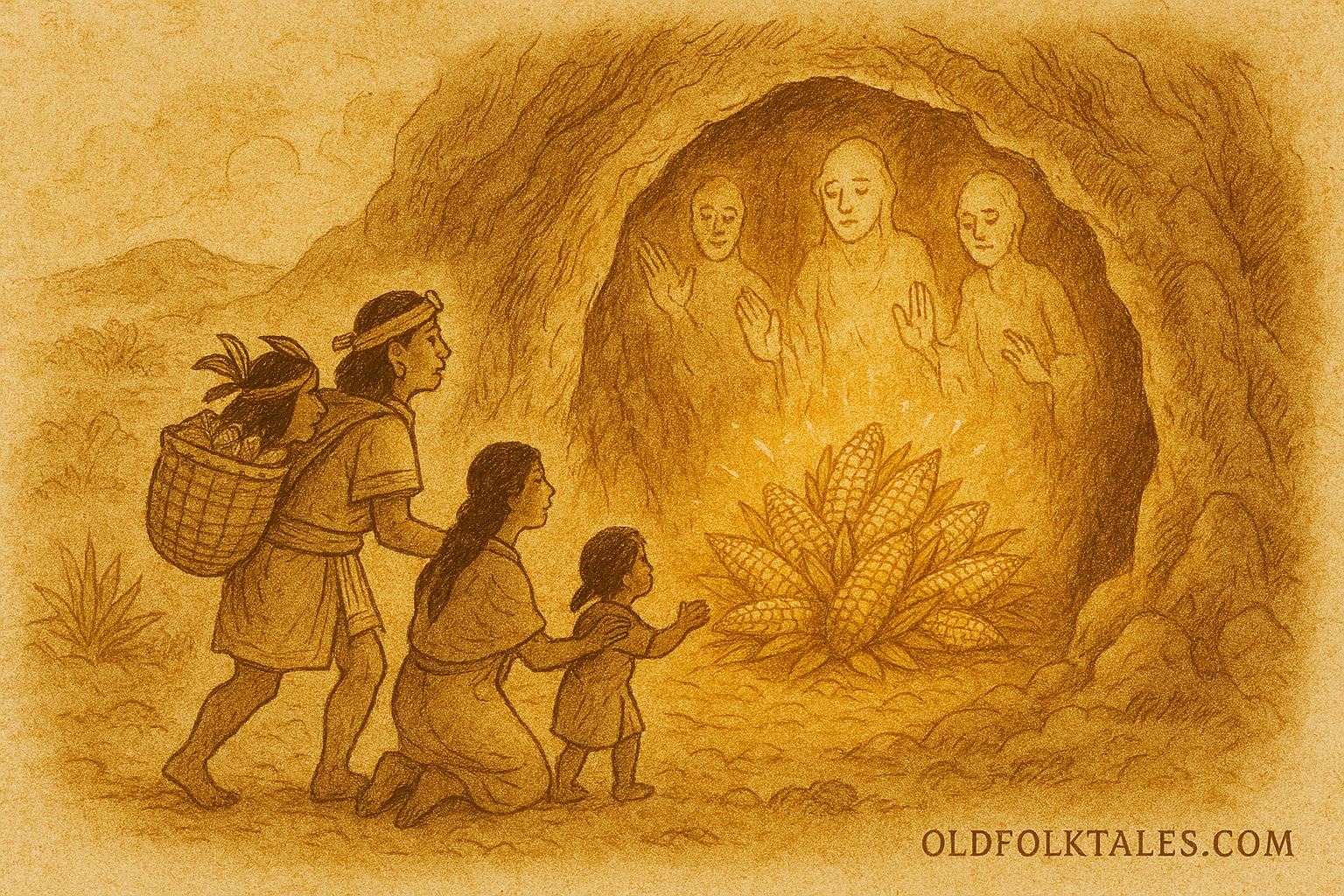
Finally, deep within the cave, they found maize sprouting in luminous stalks, golden and glowing as if touched by the sun itself. The spirits allowed the family to harvest the corn because their perseverance and reverence had proven them worthy. Carefully, the family carried the maize home, mindful of each step, and gave thanks to the gods for this blessing.
Upon returning to their village, the people marveled at the golden maize. Fields planted with the sacred seeds flourished, and the humble family’s wisdom became a model for all. The story of their journey spread throughout the empire, teaching that the prosperity of crops and the well-being of communities depended not only on labor but also on respect for the land and the divine forces that sustain it. Corn was more than sustenance; it was a sacred gift, one that required care, gratitude, and perseverance.
Generations of farmers repeated the tale to their children, emphasizing patience in planting and harvesting, courage in facing adversity, and appreciation for the gifts of the earth. This Aztec folktale became a moral compass, reminding people that enduring effort and humble gratitude ensure life’s true rewards.
Discover Mexico’s timeless tales blending Indigenous roots and Spanish tradition
Moral Lesson
The story of the origin of corn teaches that perseverance, patience, and gratitude bring prosperity. True success comes from steady effort and respect for the gifts of nature and the divine.
Knowledge Check
1. What was the gift the gods wanted humans to obtain?
Golden maize, the staple of Aztec life.
2. How did the gods test the villagers?
By placing the maize in a cave guarded by spirits, testing patience, courage, and gratitude.
3. What happened to those who tried out of greed or arrogance?
They never returned, failing the spirits’ trials.
4. How did the humble family succeed?
They persevered through trials with courage, patience, and gratitude, respecting the divine.
5. Why is maize considered sacred in this folktale?
Because it was a divine gift, essential for life, requiring care and reverence.
6. What lesson does this story teach modern audiences?
That patience, perseverance, and gratitude are necessary for lasting prosperity and success.
Source: Codex Chimalpopoca; oral tradition
Cultural Origin: Mexico (Aztec folklore)