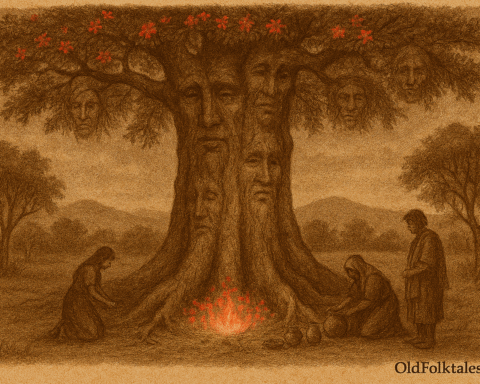
In the vast expanse of the Uruguayan pampas, where the grasslands stretch endlessly toward the horizon and the sky seems to touch the earth at every edge, there stands a tree unlike any other. The ombú tree rises from the plains like a solitary giant, its massive trunk twisted and gnarled with age, its thick canopy spreading wide to offer shade in a landscape where shelter is precious. The gauchos, those legendary horsemen who have roamed these plains for centuries, know this tree well. But they know something else, something whispered around campfires and passed down through generations: the ombú is not merely a tree. It is home to spirits, ancient protectors who watch over those who show proper respect.
The story begins in a time when the pampas seemed infinite, when a gaucho’s only companions were his horse, his knife, and the endless sky above. In those days, a young gaucho named Martín rode across the plains, driving cattle toward the distant markets of Montevideo. He was strong and capable, but he carried with him the arrogance of youth, a belief that he needed nothing and no one to survive in this harsh land.
Click to read all South American Folktales — timeless stories from the Andes to the Amazon.
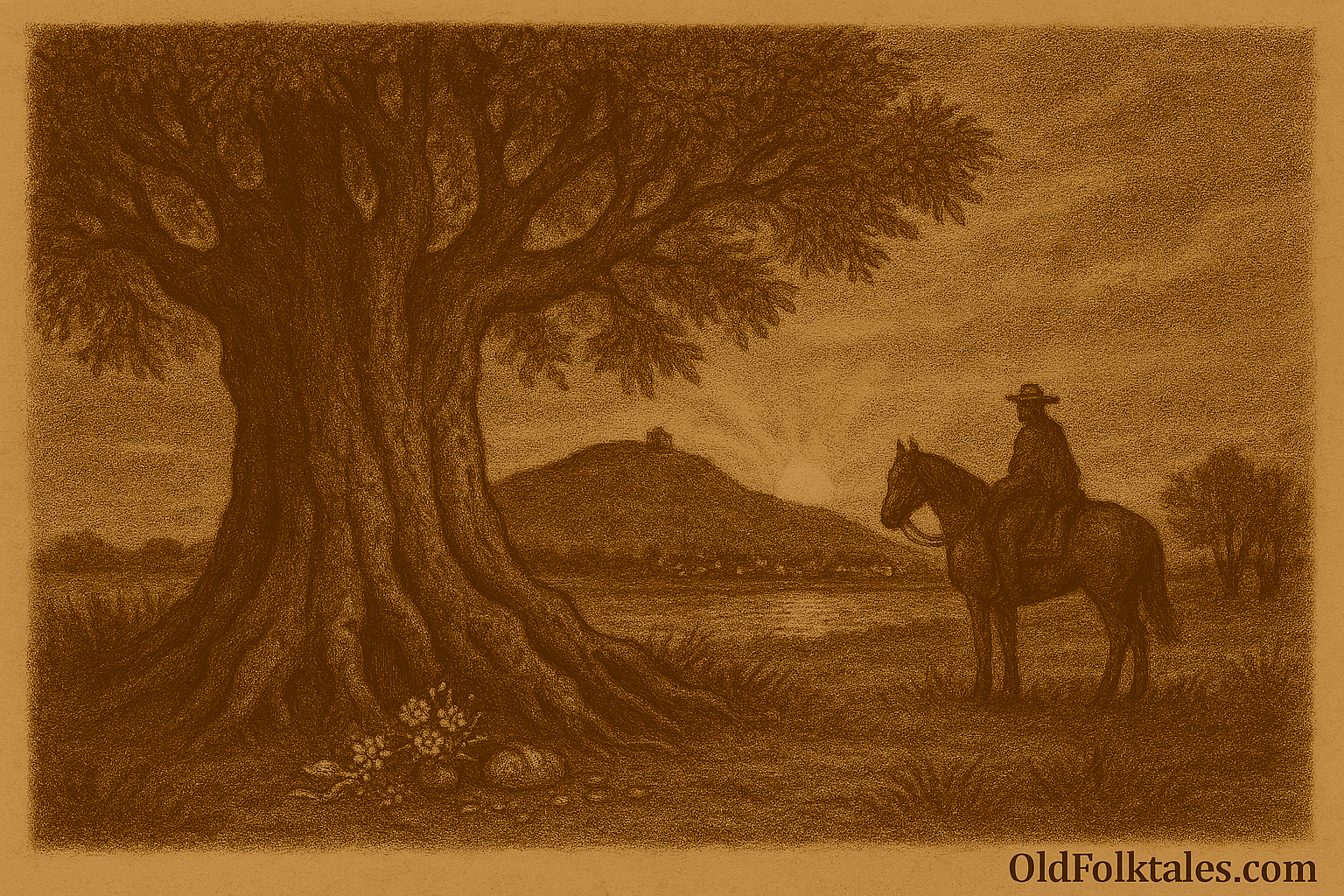
As the sun climbed high and merciless in the sky, baking the earth below, Martín’s throat grew parched, and his horse began to tire. In the distance, he spotted the unmistakable silhouette of an ombú tree, its broad canopy promising relief from the relentless heat. He urged his horse forward, grateful for the sanctuary that awaited.
When he reached the tree, Martín dismounted and collapsed in its shade. The coolness was immediate and profound, as if the tree itself breathed out comfort. He drank from his water skin and lay back against the massive trunk, feeling its rough bark against his shoulders. Around the base of the tree, he noticed small offerings left by other travelers: wildflowers woven into simple crowns, bits of bread wrapped in cloth, coins placed carefully on exposed roots, and ribbons tied to lower branches, fluttering gently in the breeze.
Martín scoffed at these tokens. “Superstitious fools,” he muttered, kicking at a small arrangement of stones someone had carefully placed. “It’s just a tree. Why waste good food and money on wood and leaves?”
He finished his rest, remounted his horse, and rode away without a backward glance, leaving the scattered offerings in disarray behind him.
The afternoon passed uneventfully at first. But as the sun began its descent, painting the sky in shades of orange and purple, Martín realized something troubling. The landmarks he had been following, the distant hills and the familiar patterns of the land, had vanished. Everything looked the same in every direction: endless grass, endless sky, no distinguishing features to guide him.
He had ridden these plains countless times. He knew them as well as he knew his own hands. Yet now, somehow, he was lost.
Night fell, and with it came a chill that seeped into his bones. Martín rode in circles, his horse growing increasingly nervous, tossing its head and snorting with unease. Strange sounds echoed across the darkness: whispers that might have been wind through grass, or might have been something else entirely. Shadows moved at the edge of his vision, shapes that vanished when he turned to look directly at them.
Hours passed like days. Martín’s confidence crumbled, replaced by a fear he had never known. He was utterly, completely lost in a land he thought he knew perfectly. His water ran out. His horse stumbled with exhaustion. And still, the plains offered no landmark, no direction, no hope.
As dawn broke pale and cold across the horizon, Martín found himself back at the ombú tree. He stared at it in disbelief, then in dawning understanding. The scattered offerings still lay where he had kicked them, accusing him with their disorder.
With trembling hands, Martín dismounted. He gathered the offerings he had disturbed, placing them back as carefully as he could. From his saddlebag, he took the last of his bread, his most precious possession in that moment of hunger and thirst, and placed it reverently at the base of the tree. He removed the silver chain his mother had given him, the only valuable thing he owned, and hung it from a low branch.
“Forgive me,” he whispered, his voice hoarse and broken. “I was a fool. I disrespected what I should have honored. Please, spirit of the ombú, show me the way home.”
The moment he spoke these words, the world seemed to shift. The morning light brightened, and suddenly Martín could see clearly. There, to the east, were the hills he had been searching for all night. There was the path, obvious as day, that would lead him to safety. His horse whinnied with relief, as if it too sensed the lifting of whatever confusion had held them captive.
Martín rode away from the ombú tree, but this time he looked back with reverence and gratitude. The tree stood as it had always stood, patient and eternal, its branches moving gently in the morning breeze.
From that day forward, Martín never passed an ombú tree without stopping to leave an offering. He told his story to other gauchos, young men who might have made the same mistake he had. And he taught his children and his children’s children that the pampas were not empty, that spirits dwelt in sacred places, and that respect was the price of safe passage through the land.
The tradition continued through the generations. Even now, travelers crossing the Uruguayan plains will stop at ombú trees, leaving small tokens of respect: a flower, a coin, a piece of food, a whispered prayer. They know what Martín learned the hard way: the spirits of the ombú protect those who honor them, but those who show disrespect will wander lost until they remember that some gifts demand gratitude, and some guardians require acknowledgment.
The ombú trees still stand across the pampas, ancient and watchful, their spirits keeping vigil over the land and those who cross it with humble hearts.
Discover the sacred tales of llamas, condors, and gods who guard the Andes
The Moral Lesson
The legend of the Ombú Tree Spirit teaches us the vital importance of respect for nature and the sacred. Martín’s arrogance and dismissal of traditional wisdom led him to become lost in a land he thought he knew, demonstrating that true knowledge includes humility and reverence for forces greater than ourselves. The story reminds us that protection and guidance are gifts that must be honored, not taken for granted. It emphasizes that traditions and offerings are not mere superstition but acknowledgments of our connection to the natural and spiritual world. When we approach the sacred with humility and gratitude, we find our way. When we approach with arrogance and disrespect, we lose ourselves, no matter how familiar the path may seem.
Knowledge Check
Q1: What is the ombú tree and why is it significant in Uruguayan gaucho culture?
A1: The ombú tree is a distinctive, massive tree that grows in the Uruguayan pampas, providing rare shade in the vast grasslands. In gaucho culture, it is believed to house protective spirits that watch over travelers. The tree is considered sacred, and gauchos traditionally leave offerings at its base to honor the spirits and ensure safe passage across the plains.
Q2: What happened to Martín when he disrespected the ombú tree?
A2: When Martín scoffed at the offerings left by other travelers and scattered them disrespectfully, he became hopelessly lost in the pampas despite knowing the land well. He wandered all night in circles, unable to find any familiar landmarks, while strange sounds and shadows surrounded him. The spirit caused him to lose his way as consequence for his disrespect and arrogance.
Q3: What offerings did gauchos traditionally leave at ombú trees and why?
A3: Gauchos left various offerings including wildflowers, bread, coins, ribbons tied to branches, and carefully arranged stones. These offerings were tokens of respect and gratitude to the tree spirits, acknowledgments of the sacred nature of the ombú. The tradition ensured the spirits’ protection and guidance for travelers crossing the dangerous, vast pampas.
Q4: How did Martín finally find his way after being lost?
A4: Martín found his way only after returning to the ombú tree at dawn and showing genuine remorse. He carefully restored the offerings he had scattered, gave the last of his bread despite his hunger, and offered his mother’s silver chain, his most valuable possession. After humbly asking forgiveness from the tree spirit, the confusion lifted and he could clearly see the path home.
Q5: What does the ombú tree spirit symbolize in Uruguayan folklore?
A5: The ombú tree spirit symbolizes the sacred presence within nature and the importance of respecting forces greater than ourselves. It represents the protective guardians of the pampas and embodies the principle that nature demands reverence, not dominance. The spirit serves as a bridge between the physical and spiritual worlds, teaching that humility and gratitude are essential for safe passage through life.
Q6: What lesson about respect and tradition does this legend teach?
A6: The legend teaches that traditions and rituals are not meaningless superstitions but acknowledgments of our relationship with the sacred and natural world. Disrespecting these traditions, as Martín did, leads to being lost even in familiar territory. True wisdom combines practical knowledge with spiritual humility. The story emphasizes that protection and guidance are gifts that must be honored with gratitude and respect.
Source: Adapted from Uruguayan rural folklore collections and oral traditions documented at the Museo del Gaucho, Montevideo.
Cultural Origin: Gaucho folklore from the pampas region of Uruguay, South America.