In the far Arctic regions of Canada, where the land lay silent under layers of snow and the sun disappeared for long stretches of winter, the Inuit lived in close relationship with the sky. Every movement above was watched carefully, every change in light understood as meaningful. Among all the wonders of the heavens, none commanded more reverence than the Northern Lights.
In one coastal winter camp lived an old woman named Nuliajuq. She was small and bent with age, her hair white as frost, her hands marked by decades of work. Though she no longer hunted or traveled far, the people listened closely when she spoke. Nuliajuq remembered stories older than the camp itself. She had learned them from her grandmother, who had learned them from hers, stretching back beyond memory.
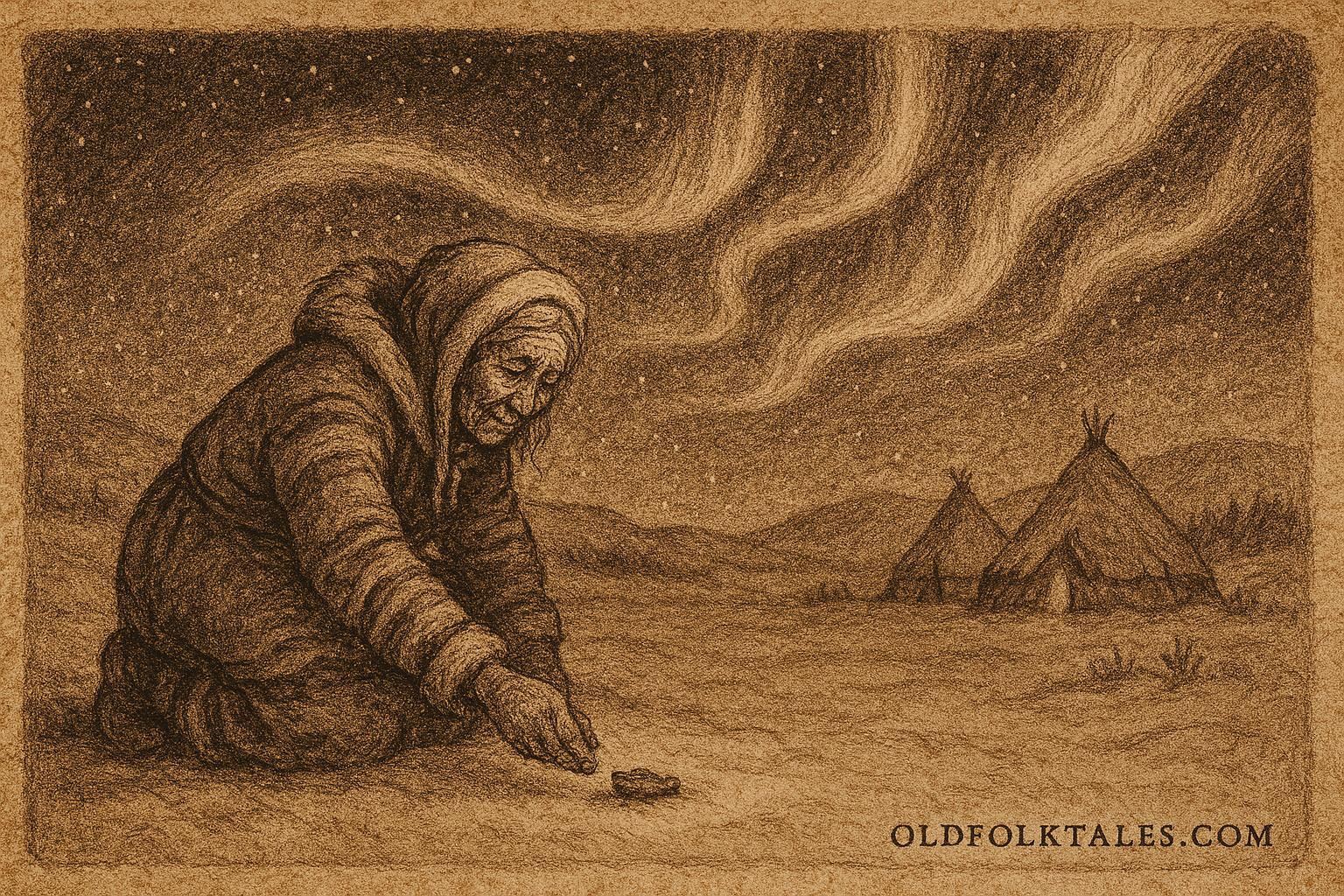
Each winter, when the aurora first appeared in the sky, Nuliajuq prepared quietly. While others gathered indoors, she stepped outside with care, wrapping herself in thick furs. She carried small offerings in her hands, never large or wasteful, always chosen with thought. A piece of dried meat, a carving of bone, or a small bowl of melted snow placed gently on the ground.
Discover ancient tales passed down by the Indigenous peoples of the Americas.
The children watched her with curiosity. They asked why she went out alone at night, why she looked up for so long, and why she whispered words no one else could hear. Nuliajuq told them that the lights were not just colors. They were spirits moving between worlds. They watched how people lived. They responded to respect, but they withdrew from arrogance.
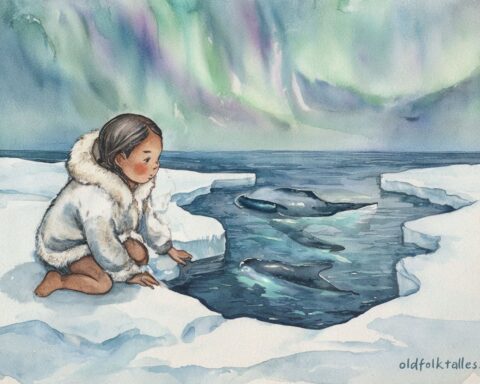
When the aurora appeared, glowing softly across the sky, Nuliajuq spoke quietly. She thanked the lights for returning. She asked them to remember the people below. She offered her gifts not as payment, but as acknowledgment. The wind often softened when she did this, and the lights shimmered more gently, as though listening.
One winter, after Nuliajuq grew very old, some of the younger hunters began to question her ways. They said the lights came whether offerings were given or not. They said survival depended on strength, not rituals. A few laughed when they saw her standing alone beneath the sky.
That same winter, the aurora changed.
The lights grew sharp and restless. They flickered rapidly and glowed red more often than before. Storms followed their appearance. Ice cracked unexpectedly. Hunts failed without clear reason. The elders noticed the change and spoke among themselves, but no one acted at first.
Nuliajuq continued her quiet offerings. She did not scold the younger ones or argue. She believed respect was shown through action, not words. But one night, when the aurora pulsed wildly across the sky, she felt something was wrong.
She went out as usual, but this time the cold bit deeper. The wind circled her sharply, and the lights seemed to press downward, closer to the earth. Nuliajuq placed her offering on the snow and spoke more firmly than before. She reminded the spirits that the people had not forgotten them, even if some had grown careless.
The next morning, a young hunter failed to return from the ice. The camp searched, finding only broken tracks and scattered gear. Fear spread quickly. The elders gathered and spoke of imbalance. They remembered Nuliajuq’s warnings and realized that the bond between sky and people had weakened.
That evening, the entire camp followed Nuliajuq outside. For the first time in many years, they stood together beneath the aurora. Each family brought a small offering. No one laughed. No one spoke loudly. Nuliajuq stepped forward and raised her voice just enough to be heard.
She spoke of humility. She spoke of listening. She reminded them that survival was not earned through strength alone, but through respect for forces beyond human control. The lights slowed. Their sharp movements softened into long waves of green and pale white.
In the days that followed, the missing hunter was found alive, sheltered in a drift, weakened but breathing. The storms eased. The ice grew more predictable. The aurora returned to its gentle patterns.
From then on, the people remembered.
They did not all make offerings, but they no longer mocked those who did. Children were taught to lower their voices when the lights appeared. Hunters paused and watched the sky before traveling. And whenever the aurora shone especially bright, they remembered the old woman who had stood beneath it for so many winters.
When Nuliajuq finally passed away, the aurora filled the sky that night with colors brighter than any living memory. The elders said the lights were welcoming her, honoring the care she had shown them. The children watched in silence, knowing that respect, once learned, must never be forgotten.
Moral Lesson
Harmony is maintained through consistent respect, not grand gestures. When people honor the unseen forces that shape their world, balance is preserved between nature, spirit, and community. Wisdom lies in remembering that survival depends not only on strength and skill, but on humility, gratitude, and attention to the signs around us.
Knowledge Check
- Who was Nuliajuq in the story?
An elder who maintained harmony by showing respect to the Northern Lights. - What did her offerings represent?
Acknowledgment and reverence, not payment or control. - Why did the aurora change its behavior?
Because some people began to show disrespect and forget spiritual balance. - How did the community restore harmony?
By collectively showing respect and listening to elder wisdom. - What happened when balance was restored?
Storms eased, hunts improved, and the missing hunter was found. - What cultural value does the story emphasize?
Respect for spiritual forces and the importance of elder knowledge.
Source:
Adapted from The Canadian Encyclopedia and Inuit astronomy traditions.
Cultural Origin:
Inuit folklore, Arctic Canada.