Along the wind-cut coast of Newfoundland and Labrador, where the sea presses hard against rock and memory clings to every inlet, tools were never considered lifeless. An oar was more than wood. A net was more than rope. Anything that worked the sea long enough learned its weight, its dangers, and its truths.
This story is told of an oar that would not move.
It began in a small outport village tucked between cliffs and cold water, a place where boats were pulled high at night and everyone knew the history of every family, whether spoken aloud or not. Among the villagers lived a man named Garrick Hale. He was strong, capable, and quick to anger. In his youth, Garrick had been feared as much as respected, for he was skilled at sea but careless with restraint.
Years earlier, during a bitter fishing season when catches were low and tempers high, Garrick had come to blows with another man over a disputed net line. Words turned to shoving. Shoving turned to violence. In the struggle, an oar was raised, and before Garrick understood what he had done, blood struck the wood and spilled into the water below.
Immerse yourself in Latin America’s stories of passion, transformation, and spirit.
The injured man survived, but the harm was lasting. Garrick was never charged, never formally punished, but the village remembered. So did the sea.
The oar was rinsed and returned to use. Salt washed away the visible stain, but something remained.
Years passed. Garrick aged. His anger dulled into regret. He married, lost his wife young, and raised his son quietly. By then, he no longer fought, no longer boasted. He worked, slept, and spoke little. Yet the memory followed him, heavy as fog.
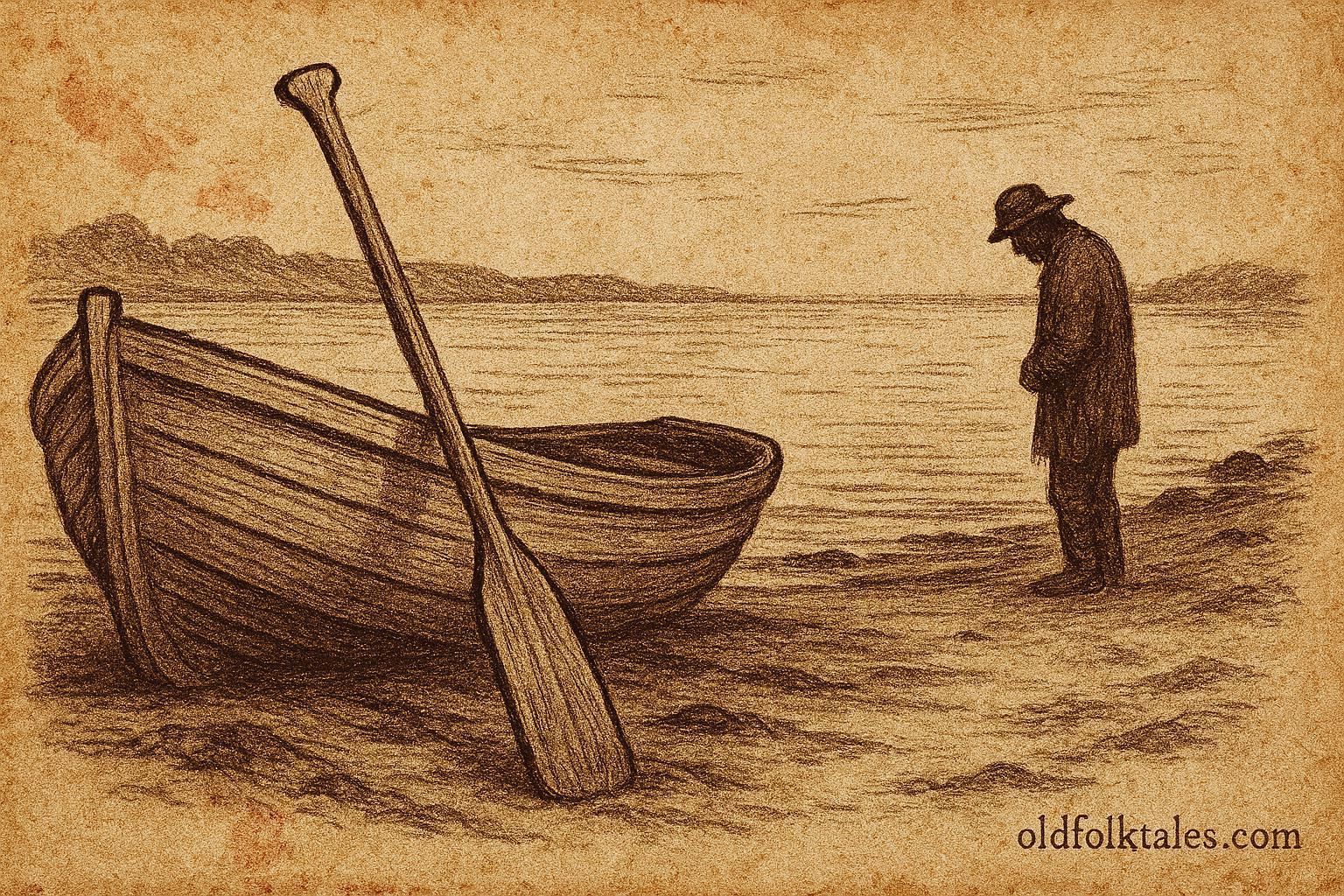
One spring morning, Garrick prepared to row out before dawn. His son had fallen ill, and Garrick needed fish badly. He pushed his boat into the water, took his place, and gripped the oars.
One moved easily.
The other did not.
No matter how he pulled, the oar would not bite the water. It dragged uselessly, heavy as stone. Garrick shifted his grip, adjusted the lock, and tried again. Still nothing. The boat spun in place, stubborn and slow.
Cursing under his breath, Garrick returned to shore. He examined the oar closely. There were no cracks, no warping. It was sound wood. Yet when he returned to the water, the oar resisted him again.
Others noticed.
“You rowing circles now?” one man called.
Garrick said nothing.
He tried again the next day. And the next. Always the same result. The oar refused to work for him. But when another fisherman borrowed it, it moved freely, cutting the water cleanly.
Whispers began.
An elder woman, one who remembered the old seasons and the old mistakes, watched Garrick struggle and finally spoke.
“That oar remembers,” she said.
Garrick stiffened.
“You marked it once,” she continued quietly. “Salt and blood. Some things don’t forget.”
The words struck deeper than anger ever had. Garrick went home and did not fish for days. He sat alone, staring at the oar propped against his wall, its surface smooth, ordinary, and accusing.
At last, he understood.
Before dawn one morning, Garrick carried the oar down to the shoreline. The tide was low. The water barely stirred. He stood where the incident had happened years before, the place he had avoided since.
“I was wrong,” he said aloud, his voice breaking. “I used strength where I should have used restraint. I took more than I was owed.”
The wind did not answer. The sea did not rise. But Garrick felt something loosen inside him.
He sought out the man he had injured, now older, slower, but alive. Garrick did not defend himself or explain. He apologized plainly. He offered labor, help, whatever was needed.
The apology was not accepted immediately. But it was not rejected either.
Weeks passed. Garrick worked where he could, helping repair boats, hauling nets, mending docks. He used the oar only for shared work, never for himself alone. Slowly, it began to respond.
One morning, after months of quiet effort, Garrick took the boat out again. He placed the oar in the water. This time, it moved.
Not easily. Not smoothly. But it moved.
The village noticed.
From then on, Garrick fished honestly. He took only what he needed. He shared when others lacked. The oar never forgot entirely. On days when Garrick grew impatient or careless, it grew heavy again, reminding him.
When Garrick died years later, the oar was placed in the boathouse, unused but not discarded. No one burned it. No one broke it. It had served its purpose.
Old fishermen say that some tools remember the hands that shape them. And that redemption is not given once, but earned repeatedly, through honest labor and restraint.
Moral Lesson
Wrongdoing leaves traces that time alone cannot erase. The story teaches that true atonement requires humility, acknowledgment, and sustained effort. Redemption is possible, but it demands honesty in action, not just regret in silence.
Knowledge Check
- Why was the oar marked by salt and blood?
It was used during an act of violence at sea. - Why did the oar refuse to move for Garrick?
Because it carried the memory of his wrongdoing. - Could others use the oar normally?
Yes, it only resisted Garrick. - What changed the oar’s behavior?
Garrick’s acknowledgment, apology, and honest labor. - Did the oar ever fully forget?
No, it continued to respond to Garrick’s intentions. - What does the oar symbolize?
Moral memory and the cost of unresolved harm.
Source:
Adapted from Memorial University Folklore and Language Archive and Newfoundland coastal oral narratives.
Cultural Origin:
Newfoundland and Labrador folklore.